



Peripheral neuropathy refers to any condition that affects the nerves outside your brain or spinal cord. This can happen for several reasons, from trauma and infections to inherited conditions. There are also many possible symptoms. Treatment can help relieve symptoms.
Advertisement
Cleveland Clinic is a non-profit academic medical center. Advertising on our site helps support our mission. We do not endorse non-Cleveland Clinic products or services. Policy
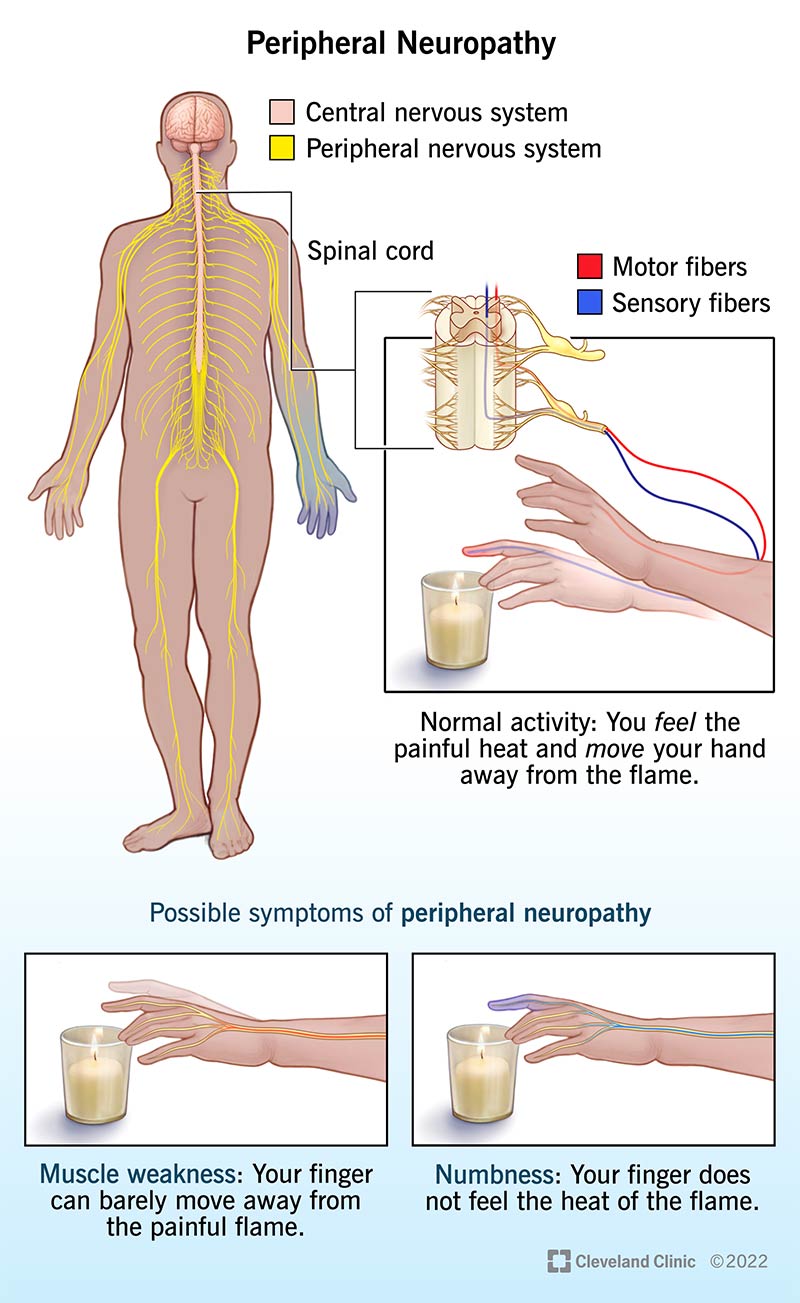
Image content: This image is available to view online.
View image online (https://my.clevelandclinic.org/-/scassets/images/org/health/articles/14737-peripheral-neuropathy.jpg)
“Peripheral neuropathy” is the term for any type of nerve damage outside of your brain and spinal cord. It can lead to a range of symptoms, like numbness, pain and movement issues. It’s a common condition that has several possible causes.
Advertisement
Cleveland Clinic is a non-profit academic medical center. Advertising on our site helps support our mission. We do not endorse non-Cleveland Clinic products or services. Policy
When your peripheral nerves are damaged, it disrupts the way your brain “talks” to your body and/or vice versa. The communication issues may include:
Peripheral neuropathy can happen for minor reasons that aren’t serious, like a slightly compressed nerve. But it can also develop due to dangerous conditions, like Guillain-Barré syndrome. Diabetes is the most common cause overall, often affecting the nerves in your feet first. Regardless of the cause, the symptoms can disrupt your life.
It’s possible to stop or reverse certain types of neuropathies if you get diagnosed and treated quickly. Because of this, you should see a provider at the first signs of peripheral neuropathy. Treatment may include medication, physical therapy and other therapies.
Providers may also classify it as:
Video content: This video is available to watch online.
View video online (https://cdnapisec.kaltura.com/p/2207941/sp/220794100/playManifest/entryId/1_b7bgpswl/flavorId/1_5f3sgelj/format/url/protocol/https/a.mp4)
Learn more about peripheral neuropathy.
Peripheral neuropathy can lead to many different symptoms. You may notice changes in one area of your body or in several areas. Depending on the underlying cause, these symptoms can develop slowly or suddenly, ranging from hours to years.
Advertisement
Healthcare providers classify peripheral neuropathy based on the type of nerve it affects. The three types include:
Sensory and movement symptoms are the most common. They may include:
Peripheral neuropathy can also affect your body’s automatic functions. It can lead to signs and symptoms of dysautonomia, like:
Damage to your peripheral nerves causes peripheral neuropathy. But damage can happen in many ways.
The most common cause of peripheral neuropathy is diabetes. Long-term high blood sugar damages small blood vessels that provide oxygen and nutrients to your nerves. Over time, nerve cells can die.
Other causes include:
When there’s an unknown cause, healthcare providers call it idiopathic neuropathy.
Age is an overarching risk factor for peripheral neuropathy. The older you are, the more likely you’ll develop it. You’re also at risk if you have any of the underlying causes, like diabetes and alcohol use disorder.
Advertisement
Peripheral neuropathy complications are more likely to develop if the condition is severe. They may include:
Neuropathy that affects your autonomic nerves tends to have the most severe complications. They may include:
A healthcare provider will ask about your symptoms and medical history. They’ll do physical and neurological exams.
Your provider may suggest certain tests to help diagnose it and the cause, like:
Treatment for peripheral neuropathy largely depends on the cause and its severity. Your healthcare provider will tailor a plan to fit your needs.
In general, treatments may include:
Advertisement
Peripheral neuropathy can be a temporary concern, or it can be permanent. How long it lasts depends on many factors, including the cause and your overall health. The more severe and the longer lasting it is, the less likely it’ll be reversible.
Peripheral neuropathy usually isn’t life-threatening. But it can disrupt your life. Pain is often the most bothersome symptom. But medications or other treatments may help. Autonomic symptoms are among the most serious because they involve your body’s vital functions.
Lean on your healthcare provider for guidance. They can let you know what to expect based on your unique situation.
Some of the causes of peripheral neuropathy are preventable. In general, preventive steps you can take include:
You know your body. So, it’s important to listen to it when something feels off. With peripheral neuropathy, symptoms may be specific, like pain or a tingly feeling. Or it may involve a general sense of feeling unwell. Don’t put off telling a healthcare provider. They’ll figure out the cause and offer a treatment plan to help you feel better.
Advertisement



Sign up for our Health Essentials emails for expert guidance on nutrition, fitness, sleep, skin care and more.
Learn more about the Health Library and our editorial process.
Cleveland Clinic’s health articles are based on evidence-backed information and review by medical professionals to ensure accuracy, reliability and up-to-date clinical standards.
Cleveland Clinic’s health articles are based on evidence-backed information and review by medical professionals to ensure accuracy, reliability and up-to-date clinical standards.
Neuropathy, or nerve pain, can make daily life challenging. We can treat the causes of nerve pain and get you back to living life as pain-free as possible.
