What is Schizophrenia?
Schizophrenia is a chronic, severe, and disabling brain disorder that has
been recognized throughout recorded history. It affects about 1 percent of
Americans.1
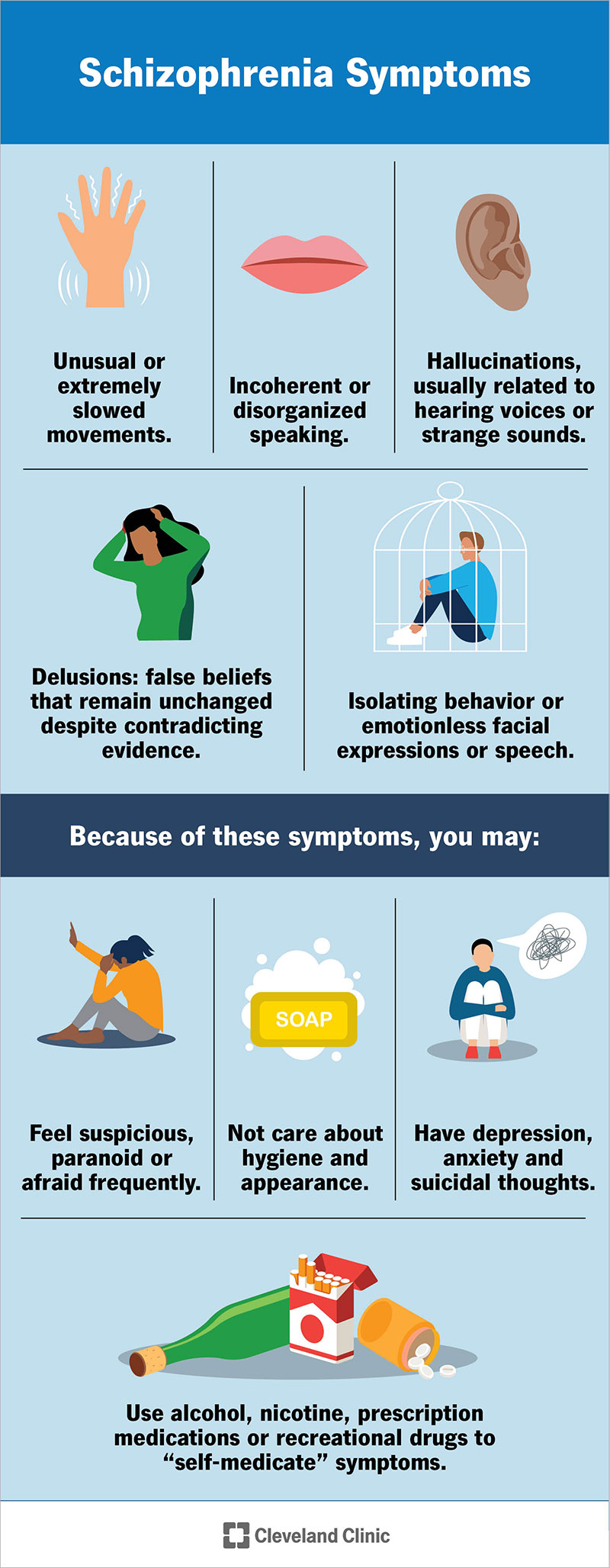
People with schizophrenia may hear voices other people don't hear or they may
believe that others are reading their minds, controlling their thoughts, or
plotting to harm them. These experiences are terrifying and can cause
fearfulness, withdrawal, or extreme agitation. People with schizophrenia may not
make sense when they talk, may sit for hours without moving or talking much, or
may seem perfectly fine until they talk about what they are really thinking.
Because many people with schizophrenia have difficulty holding a job or caring
for themselves, the burden on their families and society is significant as well.
Available treatments can relieve many of the disorder's symptoms, but most
people who have schizophrenia must cope with some residual symptoms as long as
they live. Nevertheless, this is a time of hope for people with schizophrenia
and their families. Many people with the disorder now lead rewarding and
meaningful lives in their communities. Researchers are developing more effective
medications and using new research tools to understand the causes of
schizophrenia and to find ways to prevent and treat it.
This document presents information on the symptoms of schizophrenia, when the
symptoms appear, how the disease develops, current treatments, support for
patients and their loved ones, and new directions in research.
What are the symptoms of schizophrenia?
The symptoms of schizophrenia fall into three broad categories:
- Positive symptoms are unusual thoughts or perceptions, including
hallucinations, delusions, thought disorder, and disorders of movement.
- Negative symptoms represent a loss or a decrease in the ability to
initiate plans, speak, express emotion, or find pleasure in everyday
life. These symptoms are harder to recognize as part of the disorder and
can be mistaken for laziness or depression.
- Cognitive symptoms (or cognitive deficits) are problems with
attention, certain types of memory, and the executive functions that
allow us to plan and organize. Cognitive deficits can also be difficult
to recognize as part of the disorder but are the most disabling in terms
of leading a normal life.
Positive symptoms
Positive symptoms are easy-to-spot behaviors not seen in healthy people and
usually involve a loss of contact with reality. They include hallucinations,
delusions, thought disorder, and disorders of movement. Positive symptoms can
come and go. Sometimes they are severe and at other times hardly noticeable,
depending on whether the individual is receiving treatment.
Hallucinations. A hallucination is something a person sees, hears, smells,
or feels that no one else can see, hear, smell, or feel. "Voices" are the most
common type of hallucination in schizophrenia. Many people with the disorder
hear voices that may comment on their behavior, order them to do things, warn
them of impending danger, or talk to each other (usually about the patient).
They may hear these voices for a long time before family and friends notice that
something is wrong. Other types of hallucinations include seeing people or
objects that are not there, smelling odors that no one else detects (although
this can also be a symptom of certain brain tumors), and feeling things like
invisible fingers touching their bodies when no one is near.
Delusions. Delusions are false personal beliefs that are not part of the
person's culture and do not change, even when other people present proof that
the beliefs are not true or logical. People with schizophrenia can have
delusions that are quite bizarre, such as believing that neighbors can control
their behavior with magnetic waves, people on television are directing special
messages to them, or radio stations are broadcasting their thoughts aloud to
others. They may also have delusions of grandeur and think they are famous
historical figures. People with paranoid schizophrenia can believe that others
are deliberately cheating, harassing, poisoning, spying upon, or plotting
against them or the people they care about. These beliefs are called delusions
of persecution.
Thought Disorder. People with schizophrenia often have unusual thought
processes. One dramatic form is disorganized thinking, in which the person has
difficulty organizing his or her thoughts or connecting them logically. Speech
may be garbled or hard to understand. Another form is "thought blocking," in
which the person stops abruptly in the middle of a thought. When asked why, the
person may say that it felt as if the thought had been taken out of his or her
head. Finally, the individual might make up unintelligible words, or
"neologisms."
Disorders of Movement. People with schizophrenia can be clumsy and
uncoordinated. They may also exhibit involuntary movements and may grimace or
exhibit unusual mannerisms. They may repeat certain motions over and over or, in
extreme cases, may become catatonic. Catatonia is a state of immobility and
unresponsiveness. It was more common when treatment for schizophrenia was not
available; fortunately, it is now rare.2
Negative symptoms
The term "negative symptoms" refers to reductions in normal emotional and
behavioral states. These include the following:
- flat affect (immobile facial expression, monotonous voice),
- lack of pleasure in everyday life,
- diminished ability to initiate and sustain planned activity, and
- speaking infrequently, even when forced to interact.
People with schizophrenia often neglect basic hygiene and need help with
everyday activities. Because it is not as obvious that negative symptoms are
part of a psychiatric illness, people with schizophrenia are often perceived as
lazy and unwilling to better their lives.
Cognitive symptoms
Cognitive symptoms are subtle and are often detected only when
neuropsychological tests are performed. They include the following:
- poor "executive functioning" (the ability to absorb and interpret
information and make decisions based on that information),
- inability to sustain attention, and
- problems with "working memory" (the ability to keep recently learned
information in mind and use it right away)
Cognitive impairments often interfere with the patient's ability to lead a
normal life and earn a living. They can cause great emotional distress.
When does it start and who gets it?
Psychotic symptoms (such as hallucinations and delusions) usually emerge in
men in their late teens and early 20s and in women in their mid-20s to early
30s. They seldom occur after age 45 and only rarely before puberty, although
cases of schizophrenia in children as young as 5 have been reported. In
adolescents, the first signs can include a change of friends, a drop in grades,
sleep problems, and irritability. Because many normal adolescents exhibit these
behaviors as well, a diagnosis can be difficult to make at this stage. In young
people who go on to develop the disease, this is called the "prodromal" period.
Research has shown that schizophrenia affects men and women equally and
occurs at similar rates in all ethnic groups around the world.3
Are people with schizophrenia violent?
People with schizophrenia are not especially prone to violence and often
prefer to be left alone. Studies show that if people have no record of criminal
violence before they develop schizophrenia and are not substance abusers, they
are unlikely to commit crimes after they become ill. Most violent crimes are not
committed by people with schizophrenia, and most people with schizophrenia do
not commit violent crimes. Substance abuse always increases violent behavior,
regardless of the presence of schizophrenia (see sidebar). If someone with
paranoid schizophrenia becomes violent, the violence is most often directed at
family members and takes place at home.
What about suicide?
People with schizophrenia attempt suicide much more often than people in the
general population. About 104 5 percent (especially young
adult males) succeed. It is hard to predict which people with schizophrenia are
prone to suicide, so if someone talks about or tries to commit suicide,
professional help should be sought right away.
What causes schizophrenia?
Like many other illnesses, schizophrenia is believed to result from a
combination of environmental and genetic factors. All the tools of modern
science are being used to search for the causes of this disorder.
Can schizophrenia be inherited?
Scientists have long known that schizophrenia runs in families. It occurs in
1 percent of the general population but is seen in 10 percent of people with a
first-degree relative (a parent, brother, or sister) with the disorder. People
who have second-degree relatives (aunts, uncles, grandparents, or cousins) with
the disease also develop schizophrenia more often than the general population.
The identical twin of a person with schizophrenia is most at risk, with a 40 to
65 percent chance of developing the disorder.7
Our genes are located on 23 pairs of chromosomes that are found in each cell.
We inherit two copies of each gene, one from each parent. Several of these genes
are thought to be associated with an increased risk of schizophrenia, but
scientists believe that each gene has a very small effect and is not responsible
for causing the disease by itself. It is still not possible to predict who will
develop the disease by looking at genetic material.
Although there is a genetic risk for schizophrenia, it is not likely that
genes alone are sufficient to cause the disorder. Interactions between genes and
the environment are thought to be necessary for schizophrenia to develop. Many
environmental factors have been suggested as risk factors, such as exposure to
viruses or malnutrition in the womb, problems during birth, and psychosocial
factors, like stressful environmental conditions.
Do people with schizophrenia have faulty brain chemistry?
It is likely that an imbalance in the complex, interrelated chemical
reactions of the brain involving the neurotransmitters dopamine and glutamate
(and possibly others) plays a role in schizophrenia. Neurotransmitters are
substances that allow brain cells to communicate with one another. Basic
knowledge about brain chemistry and its link to schizophrenia is expanding
rapidly and is a promising area of research.
Do the brains of people with schizophrenia look different?
The brains of people with schizophrenia look a little different than the
brains of healthy people, but the differences are small. Sometimes the
fluid-filled cavities at the center of the brain, called ventricles, are larger
in people with schizophrenia; overall gray matter volume is lower; and some
areas of the brain have less or more metabolic activity.3
Microscopic studies of brain tissue after death have also revealed small changes
in the distribution or characteristics of brain cells in people with
schizophrenia. It appears that many of these changes were prenatal because they
are not accompanied by glial cells, which are always present when a brain injury
occurs after birth.3 One theory suggests that problems during brain development lead to faulty connections that lie dormant until puberty. The brain undergoes major changes
during puberty, and these changes could trigger psychotic symptoms.
The only way to answer these questions is to conduct more research.
Scientists in the United States and around the world are studying schizophrenia
and trying to develop new ways to prevent and treat the disorder.
Substance abuse
Some people who abuse drugs show symptoms similar to those of schizophrenia,
and people with schizophrenia may be mistaken for people who are high on drugs.
While most researchers do not believe that substance abuse causes schizophrenia,
people who have schizophrenia abuse alcohol and/or drugs more often than the
general population.
Substance abuse can reduce the effectiveness of treatment for schizophrenia.
Stimulants (such as amphetamines or cocaine), PCP, and marijuana may make the
symptoms of schizophrenia worse, and substance abuse also makes it more likely
that patients will not follow their treatment plan.
Schizophrenia and Nicotine
The most common form of substance abuse in people with schizophrenia is an
addiction to nicotine. People with schizophrenia are addicted to nicotine at
three times the rate of the general population (75–90 percent vs. 25–30
percent).6
Research has revealed that the relationship between smoking and schizophrenia
is complex. People with schizophrenia seem to be driven to smoke, and
researchers are exploring whether there is a biological basis for this need. In
addition to its known health hazards, several studies have found that smoking
interferes with the action of antipsychotic drugs. People with schizophrenia who
smoke may need higher doses of their medication.
Quitting smoking may be especially difficult for people with schizophrenia
since nicotine withdrawal may cause their psychotic symptoms to temporarily get
worse. Smoking cessation strategies that include nicotine replacement methods
may be better tolerated. Doctors who treat people with schizophrenia should
carefully monitor their patient's response to antipsychotic medication if the
patient decides to either start or stop smoking.
How is schizophrenia treated?
Because the causes of schizophrenia are still unknown, current treatments
focus on eliminating the symptoms of the disease.
Antipsychotic medications
Antipsychotic medications have been available since the mid-1950s. They
effectively alleviate the positive symptoms of schizophrenia. While these drugs
have greatly improved the lives of many patients, they do not cure
schizophrenia.
Everyone responds differently to antipsychotic medication. Sometimes several
different drugs must be tried before the right one is found. People with
schizophrenia should work in partnership with their doctors to find the
medications that control their symptoms best with the fewest side effects.
The older antipsychotic medications include chlorpromazine (Thorazine®),
haloperidol (Haldol®), perphenazine (Etrafon®, Trilafon®), and fluphenzine
(Prolixin®). The older medications can cause extrapyramidal side effects, such
as rigidity, persistent muscle spasms, tremors, and restlessness.
In the 1990s, new drugs, called atypical antipsychotics, were developed that
rarely produced these side effects. The first of these new drugs was clozapine
(Clozaril®). It treats psychotic symptoms effectively even in people who do not
respond to other medications, but it can produce a serious problem called
agranulocytosis, a loss of the white blood cells that fight infection.
Therefore, patients who take clozapine must have their white blood cell counts
monitored every week or two. The inconvenience and cost of both the blood tests
and the medication itself has made treatment with clozapine difficult for many
people, but it is the drug of choice for those whose symptoms do not respond to
the other antipsychotic medications, old or new.
Some of the drugs that were developed after clozapine was introduced—such as
risperidone (Risperdal®), olanzapine (Zyprexa®), quietiapine (Seroquel®),
sertindole (Serdolect®), and ziprasidone (Geodon®)—are effective and rarely
produce extrapyramidal symptoms and do not cause agranulocytosis; but they can
cause weight gain and metabolic changes associated with an increased risk of
diabetes and high cholesterol.8
People respond individually to antipsychotic medications, although agitation
and hallucinations usually improve within days and delusions usually improve
within a few weeks. Many people see substantial improvement in both types of
symptoms by the sixth week of treatment. No one can tell beforehand exactly how
a medication will affect a particular individual, and sometimes several
medications must be tried before the right one is found.
When people first start to take atypical antipsychotics, they may become
drowsy; experience dizziness when they change positions; have blurred vision; or
develop a rapid heartbeat, menstrual problems, a sensitivity to the sun, or skin
rashes. Many of these symptoms will go away after the first days of treatment,
but people who are taking atypical antipsychotics should not drive until they
adjust to their new medication.
If people with schizophrenia become depressed, it may be necessary to add an
antidepressant to their drug regimen.
A large clinical trial funded by the National Institute of Mental Health
(NIMH), known as CATIE (Clinical Antipsychotic Trials of Intervention
Effectiveness), compared the effectiveness and side effects of five
antipsychotic medications—both new and older antipsychotics—that are used to
treat people with schizophrenia.
Length of Treatment. Like diabetes or high blood pressure, schizophrenia
is a chronic disorder that needs constant management. At the moment, it cannot
be cured, but the rate of recurrence of psychotic episodes can be decreased
significantly by staying on medication. Although responses vary from person to
person, most people with schizophrenia need to take some type of medication for
the rest of their lives as well as use other approaches, such as supportive
therapy or rehabilitation.
Relapses occur most often when people with schizophrenia stop taking their
antipsychotic medication because they feel better, or only take it occasionally
because they forget or don't think taking it regularly is important. It is very
important for people with schizophrenia to take their medication on a regular
basis and for as long as their doctors recommend. If they do so, they will
experience fewer psychotic symptoms.
No antipsychotic medication should be discontinued without talking to the
doctor who prescribed it, and it should always be tapered off under a doctor's
supervision rather than being stopped all at once.
There are a variety of reasons why people with schizophrenia do not adhere to
treatment. If they don't believe they are ill, they may not think they need
medication at all. If their thinking is too disorganized, they may not remember
to take their medication every day. If they don't like the side effects of one
medication, they may stop taking it without trying a different medication.
Substance abuse can also interfere with treatment effectiveness. Doctors should
ask patients how often they take their medication and be sensitive to a
patient's request to change dosages or to try new medications to eliminate
unwelcome side effects.
There are many strategies to help people with schizophrenia take their drugs
regularly. Some medications are available in long-acting, injectable forms,
which eliminate the need to take a pill every day. Medication calendars or
pillboxes labeled with the days of the week can both help patients remember to
take their medications and let caregivers know whether medication has been
taken. Electronic timers on clocks or watches can be programmed to beep when
people need to take their pills, and pairing medication with routine daily
events, like meals, can help patients adhere to dosing schedules.
Medication Interactions. Antipsychotic medications can produce unpleasant
or dangerous side effects when taken with certain other drugs. For this reason,
the doctor who prescribes the antipsychotics should be told about all
medications (over-the-counter and prescription) and all vitamins, minerals, and
herbal supplements the patient takes. Alcohol or other drug use should also be discussed.
Psychosocial treatment
Numerous studies have found that psychosocial treatments can help patients
who are already stabilized on antipsychotic medications deal with certain
aspects of schizophrenia, such as difficulty with communication, motivation,
self-care, work, and establishing and maintaining relationships with others.
Learning and using coping mechanisms to address these problems allows people
with schizophrenia to attend school, work, and socialize. Patients who receive
regular psychosocial treatment also adhere better to their medication schedule
and have fewer relapses and hospitalizations. A positive relationship with a
therapist or a case manager gives the patient a reliable source of information,
sympathy, encouragement, and hope, all of which are essential for for managing
the disease. The therapist can help patients better understand and adjust to
living with schizophrenia by educating them about the causes of the disorder,
common symptoms or problems they may experience, and the importance of staying
on medications.
Illness Management Skills. People with schizophrenia can take an active
role in managing their own illness. Once they learn basic facts about
schizophrenia and the principles of schizophrenia treatment, they can make
informed decisions about their care. If they are taught how to monitor the early
warning signs of relapse and make a plan to respond to these signs, they can
learn to prevent relapses. Patients can also be taught more effective coping
skills to deal with persistent symptoms.
Integrated Treatment for Co-occurring Substance Abuse. Substance abuse is
the most common co-occurring disorder in people with schizophrenia, but ordinary
substance abuse treatment programs usually do not address this population's
special needs. Integrating schizophrenia treatment programs and drug treatment
programs produces better outcomes.
Rehabilitation. Rehabilitation emphasizes social and vocational training
to help people with schizophrenia function more effectively in their
communities. Because people with schizophrenia frequently become ill during the
critical career-forming years of life (ages 18 to 35) and because the disease
often interferes with normal cognitive functioning, most patients do not receive
the training required for skilled work. Rehabilitation programs can include
vocational counseling, job training, money management counseling, assistance in
learning to use public transportation, and opportunities to practice social and
workplace communication skills.
Family Education. Patients with schizophrenia are often discharged from
the hospital into the care of their families, so it is important that family
members know as much as possible about the disease to prevent relapses. Family
members should be able to use different kinds of treatment adherence programs
and have an arsenal of coping strategies and problem-solving skills to manage
their ill relative effectively. Knowing where to find outpatient and family
services that support people with schizophrenia and their caregivers is also
valuable.
Cognitive Behavioral Therapy. Cognitive behavioral therapy is useful for
patients with symptoms that persist even when they take medication. The
cognitive therapist teaches people with schizophrenia how to test the reality of
their thoughts and perceptions, how to "not listen" to their voices, and how to
shake off the apathy that often immobilizes them. This treatment appears to be
effective in reducing the severity of symptoms and decreasing the risk of
relapse.
Self-Help Groups. Self-help groups for people with schizophrenia and
their families are becoming increasingly common. Although professional
therapists are not involved, the group members are a continuing source of mutual
support and comfort for each other, which is also therapeutic. People in
self-help groups know that others are facing the same problems they face and no
longer feel isolated by their illness or the illness of their loved one. The
networking that takes place in self-help groups can also generate social action.
Families working together can advocate for research and more hospital and
community treatment programs, and patients acting as a group may be able to draw
public attention to the discriminations many people with mental illnesses still
face in today's world.
Support groups and advocacy groups are excellent resources for people with
many types of mental disorders.
What is the role of the patient’s support system?
Support for those with mental disorders can come from families, professional
residential or day program caregivers, shelter operators, friends or roommates,
professional case managers, or others in their communities or places of worship
who are concerned about their welfare. There are many situations in which people
with schizophrenia will need help from other people.
Getting Treatment. People with schizophrenia often resist treatment,
believing that their delusions or hallucinations are real and psychiatric help
is not required. If a crisis occurs, family and friends may need to take action
to keep their loved one safe.
The issue of civil rights enters into any attempt to provide treatment. Laws
protecting patients from involuntary commitment have become very strict, and
trying to get help for someone who is mentally ill can be frustrating. These
laws vary from state to state, but, generally, when people are dangerous to
themselves or others because of mental illness and refuse to seek treatment,
family members or friends may have to call the police to transport them to the
hospital. In the emergency room, a mental health professional will assess the
patient and determine whether a voluntary or involuntary admission is needed.
A person with mental illness who does not want treatment may hide strange
behavior or ideas from a professional; therefore, family members and friends
should ask to speak privately with the person conducting the patient's
examination and explain what has been happening at home. The professional will
then be able to question the patient and hear the patient's distorted thinking
for themselves. Professionals must personally witness bizarre behavior and hear
delusional thoughts before they can legally recommend commitment, and family and
friends can give them the information they need to do so.
Caregiving. Ensuring that people with schizophrenia continue to get
treatment and take their medication after they leave the hospital is also
important. If patients stop taking their medication or stop going for follow-up
appointments, their psychotic symptoms will return. If these symptoms become
severe, they may become unable to care for their own basic needs for food,
clothing, and shelter; they may neglect personal hygiene; and they may end up on
the street or in jail, where they rarely receive the kind of help they need.
Family and friends can also help patients set realistic goals and regain
their ability to function in the world. Each step toward these goals should be
small enough to be attainable, and the patient should pursue them in an
atmosphere of support. People with a mental illness who are pressured and
criticized usually regress and their symptoms worsen. Telling them what they are
doing right is the best way to help them move forward.
How should you respond when someone with schizophrenia makes statements that
are strange or clearly false?
Because these bizarre beliefs or hallucinations
are real to the patient, it will not be useful to say they are wrong or
imaginary. Going along with the delusions will not be helpful, either. It is
best to calmly say that you see things differently than the patient does but
that you acknowledge that everyone has the right to see things in his or her own
way. Being respectful, supportive, and kind without tolerating dangerous or
inappropriate behavior is the most helpful way to approach people with this disorder.
What is the outlook for the future?
The outlook for people with schizophrenia has improved over the last 30 years
or so. Although there still is no cure, effective treatments have been
developed, and many people with schizophrenia improve enough to lead
independent, satisfying lives.
This is an exciting time for schizophrenia research. The explosion of
knowledge in genetics, neuroscience, and behavioral research will enable a
better understanding of the causes of the disorder, how to prevent it, and how
to develop better treatments to allow those with schizophrenia to achieve their
full potential.
How can a person participate in schizophrenia research?
Scientists worldwide are studying schizophrenia so they will be able to
develop new ways to prevent and treat the disorder. The only way it can be
understood is for researchers to study the illness as it presents itself in
those who suffer from it. There are many different kinds of studies. Some
studies require that medication be changed; others, like genetic studies,
require no change at all in medications.
To receive information about federally and privately supported schizophrenia
research, go to www.clinicaltrials.gov/ct/gui. The information provided should be used in
conjunction with advice from your health care professional.
NIMH conducts a Schizophrenia Research Program, which is located at the
National Institute of Mental Health in Bethesda, Maryland. Travel assistance and
study compensation are available for some studies. In addition, NIMH staff
members can speak with you to help you determine whether their current studies
are suitable for you or your family member. Simply call the toll free line at
1-888-674-6464.
For more information
National Institute of Mental Health
Public Information and Communications Branch
6001 Executive Boulevard
Room 8184, MSC 9663
Bethesda, MD 20892-9663
Phone: 301-443-4513, 1-866-615-NIMH (6464) toll-free
TTY: 1-866-415-8051 toll free
Fax: 301-443-4279
E-mail: nimhinfo@nih.gov
website: www.nimh.nih.gov
Addendum to Schizophrenia January 2007
Aripiprazole (Abilify) is another atypical antipsychotic medication used to
treat the symptoms of schizophrenia and manic or mixed (manic and depressive)
episodes of bipolar I disorder. Aripiprazole is in tablet and liquid form. An
injectable form is used in the treatment of symptoms of agitation in
schizophrenia and manic or mixed episodes of bipolar I disorder.
References
- Regier DA, Narrow WE, Rae DS, Manderscheid RW, Locke BZ, Goodwin FK. The de
facto US mental and addictive disorders service system. Epidemiologic catchment
area prospective 1-year prevalence rates of disorders and services. Arch Gen
Psychiatry. 1993 Feb;50(2):85-94.
- Catatonic Schizophrenia. (1992). The ICD-10 Classification of Mental and
Behavioural Disorders: Clinical descriptions and diagnostic guidelines. Geneva,
Switzerland: World Health Organization.
- Mueser KT, McGurk SR. Schizophrenia. Lancet. 2004 Jun
19;363(9426):2063-72.
- Meltzer HY, Alphs L, Green AI, Altamura AC, Anand R, Bertoldi A, Bourgeois M,
Chouinard G, Islam MZ, Kane J, Krishnan R, Lindenmayer JP, Potkin S;
International Suicide Prevention Trial Study Group. Clozapine treatment for
suicidality in schizophrenia: International Suicide Prevention Trial
(InterSePT). Arch Gen Psychiatry. 2003 Jan;60(1):82-91.
- Meltzer HY, Baldessarini RJ. Reducing the risk for suicide in schizophrenia
and affective disorders. J Clin Psychiatry. 2003 Sep;64(9):1122-9.
- Jones RT & Benowitz NL. (2002).Therapeutics for Nicotine Addiction. In Davis
KL, Charney D, Coyle JT & Nemeroff C (Eds.), Neuropsychopharmacology: The
Fifth Generation of Progress (pp1533-1544). Nashville, TN:American College
of Neuropsychopharmacology.
- Cardno AG, Gottesman II. Twin studies of schizophrenia: from bow-and-arrow
concordances to star wars Mx and functional genomics. Am J Med Genet.
2000 Spring; 97(1):12-7.
- Lieberman JA, Stroup TS, McEvoy JP, Swartz MS, Rosenheck RA, Perkins DO,
Keefe RS, Davis SM, Davis CE, Lebowitz BD, Severe J, Hsiao JK; Clinical
Antipsychotic Trials of Intervention Effectiveness (CATIE). Effectiveness of
antipsychotic drugs in patients with chronic schizophrenia. N Engl J Med.
2005 Sep 22;353(12):1209-23.
Source: National Institutes of Health; National Institute of Mental Health
Can't find the health information you’re looking for?
Ask a Health Educator, Live!
Know someone who could use this information?...send them this link.
This information is provided by the Cleveland Clinic and is not intended to replace the medical advice of your doctor or health care provider. Please consult your health care provider for advice about a specific medical condition. This document was last reviewed on: 4/2/2009...#5777