You can develop trichinosis (trichinellosis) by eating undercooked meat infected with Trichinella roundworms. You may have digestive symptoms at first. But you can later develop symptoms like muscle soreness, eye swelling and fatigue. Cooking meat at recommended temperatures can help prevent this food-borne illness.
Advertisement
Cleveland Clinic is a non-profit academic medical center. Advertising on our site helps support our mission. We do not endorse non-Cleveland Clinic products or services. Policy
Trichinosis (trichinellosis) is an illness you can get if you eat undercooked meat from infected animals, particularly pork. The larvae of a type of roundworm called Trichinella cause it.
Advertisement
Cleveland Clinic is a non-profit academic medical center. Advertising on our site helps support our mission. We do not endorse non-Cleveland Clinic products or services. Policy
An estimated 10,000 people per year get trichinosis worldwide. It’s very rare in the U.S. due to the proper meat preparation.
You can’t tell if the meat you’re eating has worms just by looking at it. But taking precautions when handling and cooking meat can greatly reduce your risk of getting trichinosis.
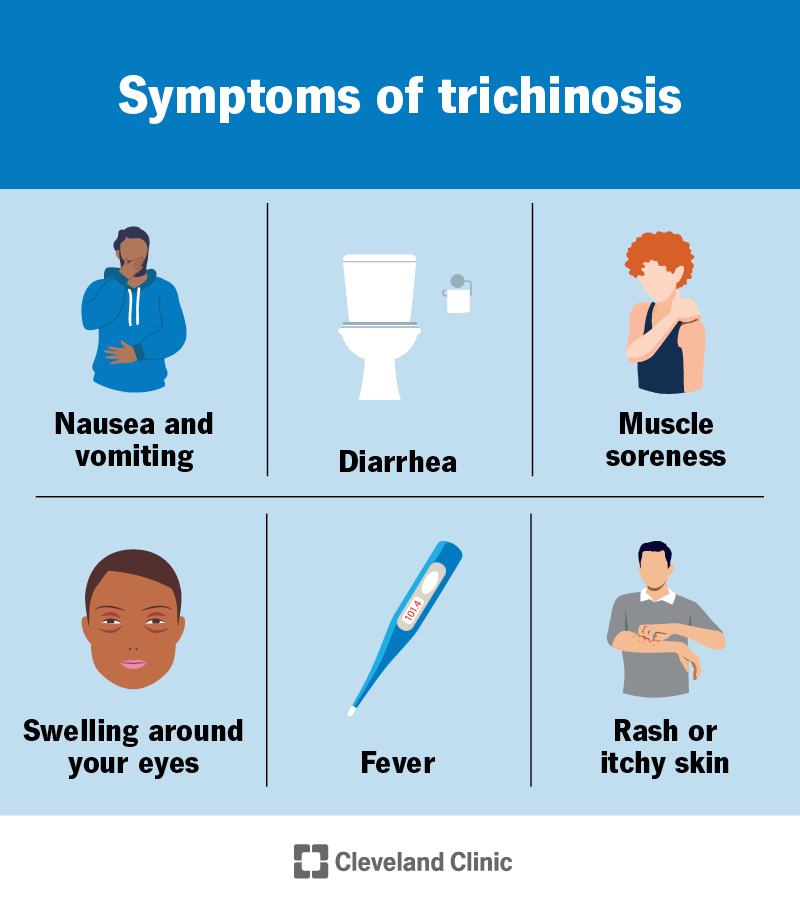
Image content: This image is available to view online.
View image online (https://my.clevelandclinic.org/-/scassets/images/org/health/articles/7142-trichinosis.jpg)
Symptoms of trichinosis range from very mild to severe. You may mistake a mild case of it for the flu or other common illnesses.
Early symptoms of trichinosis, which start a few days after eating infected meat, may include:
Later symptoms may begin about two weeks after you eat the infected meat. They may last for several weeks. They include:
If you’ve eaten raw or undercooked meat and have these symptoms, contact your healthcare provider.
The larvae of the Trichinella roundworm cause trichinosis. They’re a type of parasite.
If you eat Trichinella-infected meat, your stomach acid and enzymes break down the hard outside shell (cyst) of the larvae. This frees the adult worms. The worms then make larvae. The larvae live in your body tissues, especially your muscles. Your body then has an allergic reaction to the larvae.
Advertisement
These larvae can get into your body from:
Animals that can be infected with Trichinella roundworm include:
You can only get trichinosis if you eat raw or undercooked meat of an infected animal.
Severe cases of trichinosis can cause serious complications, like inflammation and damage to your:
In rare cases, heart and brain inflammation can lead to death.
Your healthcare provider might diagnose you with trichinosis based on:
Antibodies to Trichinella don’t show up at first. But your provider might order blood tests later that will find the antibodies and confirm the diagnosis. Stool (poop) samples don’t help diagnose trichinosis.
In very rare cases, your provider may do a muscle biopsy to confirm it.
Trichinosis treatment should begin as soon as possible. Some cases of trichinosis go away on their own. But severe, untreated cases can be fatal.
Your healthcare provider might prescribe:
If you take medication to deal with the parasites within the first three days of being infected, they can stop the infection from getting to your muscles.
The prognosis (outlook) for someone with trichinosis is generally good with treatment. But it may take two to six months to feel completely better. Even with treatment, you might have long-term complications, including issues with your eyes, muscles and nerves.
The outlook for severe cases that result in brain or heart damage is poor. These cases can be fatal.
You can take several steps to prevent trichinosis. These mainly involve preparing, cooking and storing meat properly. Be sure to:
Advertisement
If you feel unwell and think it might be related to something you ate, don’t wait. Reach out to your healthcare provider. Trichinosis is rare. But it’s still possible to get it from eating undercooked meat, especially pork. Early diagnosis and treatment can make a big difference. Your health and peace of mind matter.
Advertisement



Sign up for our Health Essentials emails for expert guidance on nutrition, fitness, sleep, skin care and more.
Learn more about the Health Library and our editorial process.
Cleveland Clinic’s health articles are based on evidence-backed information and review by medical professionals to ensure accuracy, reliability and up-to-date clinical standards.
Cleveland Clinic’s health articles are based on evidence-backed information and review by medical professionals to ensure accuracy, reliability and up-to-date clinical standards.
Need care fast? Cleveland Clinic’s Express Care and Urgent Care locations treat everything from sprains to sinus infections — no appointment needed.