



An abdominal aortic aneurysm (AAA) is a bulge in the part of your aorta that runs through your belly. It usually causes no symptoms, but some people have deep pain in their lower backs or a pulsing sensation in their bellies. Older age and tobacco use are important risk factors. You may need surgery if the aneurysm is large and at risk of rupturing.
Advertisement
Cleveland Clinic is a non-profit academic medical center. Advertising on our site helps support our mission. We do not endorse non-Cleveland Clinic products or services. Policy
An abdominal aortic aneurysm (AAA) is an enlargement or bulge in the part of your aorta that extends through your belly or abdomen (abdominal aorta). The bulge forms in an area where your aorta’s wall has grown weak. Normally, your aorta’s wall is strong and flexible enough to manage the constant pressure of blood your heart pumps out. But various factors like aging, tobacco use and certain medical conditions can weaken your aorta’s wall. When the wall is weak, it can’t handle the forces of blood flow as well it should.
Advertisement
Cleveland Clinic is a non-profit academic medical center. Advertising on our site helps support our mission. We do not endorse non-Cleveland Clinic products or services. Policy
As a result, the weakened part of your aorta’s wall expands outward and enlarges. This expansion, or ballooning, continues to grow wider over time. Your healthcare provider will diagnose you with an AAA if a segment of your aorta expands to at least 50% of its normal diameter. For many people, this means the bulge is about 3 centimeters (cm) wide.
The larger an aneurysm grows, the more likely it is to burst open (rupture) and cause life-threatening internal bleeding. AAAs larger than 5.0 centimeters in females and 5.5 centimeters in males are particularly at risk. The larger they grow, the more dangerous they become. AAAs usually have no symptoms until they rupture or are close to rupturing. That’s why it’s essential to learn if you have risk factors for an AAA and work with a healthcare provider to manage them.
An AAA rupture is a medical emergency. Call 911 or your local emergency number if you have sudden, severe pain in your belly or lower back. Symptoms may also include shortness of breath, dizziness and nausea.
Abdominal aortic aneurysms are a common condition.
Advertisement
Research has also shown:
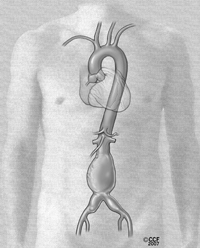
Image content: This image is available to view online.
View image online (https://my.clevelandclinic.org/-/scassets/images/org/health/articles/abdominal-aortic-aneurysm)
An abdominal aortic aneurysm is a bulge in the part of your aorta that travels through your belly (abdomen). It forms in an area where your aorta's wall is weak.
Most people with an AAA don’t have symptoms until the aneurysm is close to rupturing. At that point, you may have:
A ruptured AAA is a medical emergency. Symptoms begin suddenly and can include:
Call 911 or your local emergency number if you have symptoms of an aneurysm rupture.
An underlying weakness in your aorta’s wall causes an AAA to form. Many environmental and hereditary factors come together to cause this weakness. Overall, the exact reason they form isn’t understood.
For example, tobacco use causes your aorta’s wall to lose proteins that provide its structure. This reduces its strength. Your aorta’s wall can also grow weaker due to plaque buildup (atherosclerosis). Plaque formation and growth over time can cause inflammation and cell death in the layers of the artery wall. As the building blocks of your aorta’s wall break down, your aorta grows weaker and more vulnerable to abnormal expansion.
These risk factors play the biggest role in determining who develops an AAA:
Advertisement
Other risk factors that can play a role include:
The most common complication is an aneurysm rupture, which causes 150,000 to 200,000 deaths each year around the world. AAA rupture leads to potentially fatal internal bleeding. Your risk goes up the larger an aneurysm grows.
Since AAAs don’t usually cause symptoms, healthcare providers often diagnose unruptured AAAs through tests ordered for other health conditions. If your provider suspects you have an AAA due to test results or other reasons, they may perform:
Healthcare providers recommend an ultrasound screening for people at risk for an AAA. This imaging test is simple and painless and shows if you have an AAA. If you do, your provider will recommend additional ultrasounds at regular intervals (usually every six to 12 months) to monitor the aneurysm. If it grows too large or you have other risk factors for aneurysm rupture, your provider will recommend surgery.
Advertisement
Treatment depends on the size of the aneurysm, which is the main factor that determines its risk of rupturing. Small aneurysms may not need treatment right away. Instead, your provider will monitor the aneurysm through regular ultrasound tests or CT (computed tomography) scans. This approach is called surveillance. Larger aneurysms may need surgery.
Surveillance is typically appropriate when the AAA has a diameter of less than 5.5 centimeters in males or less than 5.0 centimeters in females. The aneurysm also shouldn’t be causing any symptoms.
You’ll have an ultrasound or CT scan at regular intervals depending on the size of the aneurysm. Larger aneurysms need imaging more often. If you’re close to the treatment threshold, you may get CT scans and not ultrasounds. Be sure to follow your provider’s instructions on when you need your imaging tests. Your provider will also tell you:
Lifestyle changes and medications won’t shrink the aneurysm (currently there’s no treatment that can do this). But these measures may help slow aneurysm growth and lower your risk of other cardiovascular problems. Researchers continue to explore medications and other treatments that may limit or stop the growth of small AAAs.
Advertisement
You may need surgery for your AAA if:
Surgery lowers your risk for aneurysm rupture by replacing the aorta or relining the aorta from the inside with a new graft. There are two surgical methods available to do this:
Surgeons and patients generally prefer EVAR for elective surgery because it offers an easier recovery and a better short-term survival rate. When the anatomy is appropriate, an EVAR can provide a long-lasting repair. But you’ll need evaluation with ultrasound or CT scans of the repair on a yearly basis. Certain factors (like your age or anatomy) may make open surgery a safer option. Each method has benefits and risks. Your provider will discuss these with you, and together, you can reach a decision.
Ruptured aneurysms need immediate surgery to give you a chance at survival.
Your outlook depends on many factors, including the size of the aneurysm, when you receive treatment and your overall health. Your healthcare provider is the best person to ask about what you can expect going forward. They know you and your unique medical history best.
We have no known ways to prevent development of an AAA. Talk to your healthcare provider if your biological parent, sibling or child had an AAA. They may recommend an ultrasound screening to check for signs of aneurysm formation.
Whether or not you have a family history of AAA, you can take action to lower other risk factors and support your overall cardiovascular health. Talk to your provider about ways to:
If you have an AAA, it’s important to follow your provider’s guidance for taking care of yourself. They’ll tailor advice to your needs. In general, here are some tips:
Call your provider if you have:
Your provider will tell you how often you need to come in for appointments. You may need imaging tests at regular intervals to check:
Be sure to go to all of your appointments so your provider can keep an eye on your condition and help you stay healthy.
Call 911 or your local emergency number if you have signs of an AAA rupture, including sudden and severe pain in your belly or lower back.
You may want to ask your provider:
If your provider diagnosed you with an AAA, you can learn more by asking:
Learning you have an abdominal aortic aneurysm can make you feel stressed and worried about the future. The good news is that your healthcare provider knows this aneurysm is there. Simply knowing it’s there is the first step toward keeping you healthy.
Your provider will monitor your condition and recommend treatment when necessary. They’ll also tell you what you can do in your daily life to help keep the aneurysm from growing or rupturing.



Sign up for our Health Essentials emails for expert guidance on nutrition, fitness, sleep, skin care and more.
Learn more about the Health Library and our editorial process.
Cleveland Clinic’s health articles are based on evidence-backed information and review by medical professionals to ensure accuracy, reliability and up-to-date clinical standards.
Cleveland Clinic’s health articles are based on evidence-backed information and review by medical professionals to ensure accuracy, reliability and up-to-date clinical standards.
Vascular disease may affect your life in big and small ways. Cleveland Clinic’s specialists treat the many types of vascular disease so you can focus on living.
