



Anaphylaxis is when you have a severe allergic reaction. Most commonly, it happens after you eat certain foods or get stung by an insect. Going into anaphylactic shock can be life-threatening. If you notice symptoms of anaphylaxis, such as having trouble breathing, use an epinephrine injector. This anaphylaxis treatment can save your life.
Advertisement
Cleveland Clinic is a non-profit academic medical center. Advertising on our site helps support our mission. We do not endorse non-Cleveland Clinic products or services. Policy
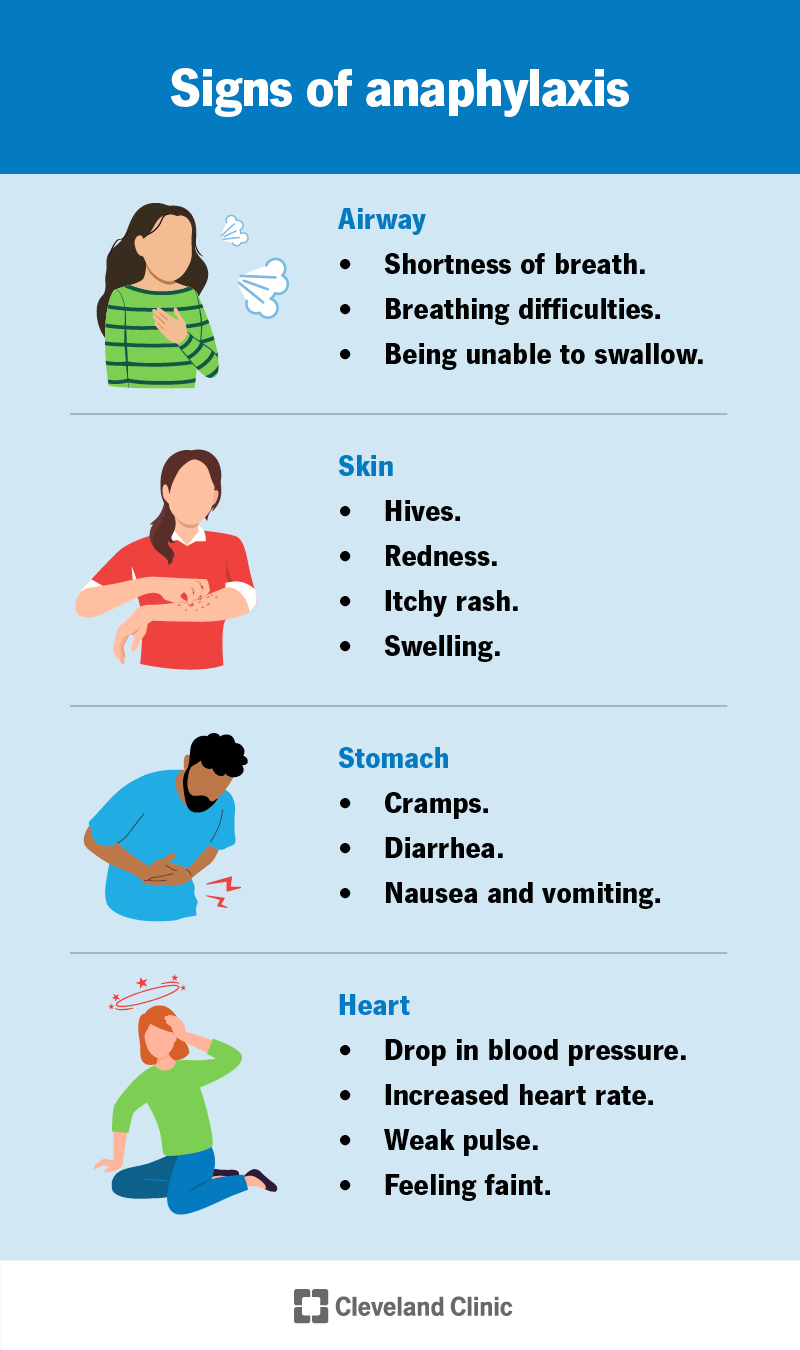
Image content: This image is available to view online.
View image online (https://my.clevelandclinic.org/-/scassets/images/org/health/articles/anaphylaxis)
Anaphylaxis (pronounced “an-ah-fi-LAK-sis”) is a severe allergic reaction. It can be life-threatening if you don’t get treatment right away. Food allergies are one of the main causes of anaphylaxis. Other causes include stinging insects, medications and latex.
Advertisement
Cleveland Clinic is a non-profit academic medical center. Advertising on our site helps support our mission. We do not endorse non-Cleveland Clinic products or services. Policy
The only treatment for anaphylaxis is epinephrine, which comes as a shot you inject into your thigh. Even with treatment, a person experiencing anaphylaxis needs to go to the nearest emergency room. With prompt treatment, most people make a full recovery.
When you’re allergic to something, your immune system overreacts by releasing chemicals like histamine. Symptoms of anaphylaxis include swelling, wheezing, shortness of breath and difficulty swallowing. An anaphylactic reaction may affect several areas of your body at once.
Call 911 (or your emergency services number) and go to the nearest emergency room if you, or someone around you, are experiencing anaphylaxis, even if you’ve already administered epinephrine.
Anaphylaxis tends to happen suddenly and quickly. There often isn’t a warning period, but there can be mild signs like hives or flushed skin. Some healthcare providers break the stages of anaphylaxis into four categories:
Advertisement
A person who has an anaphylactic reaction can go into anaphylactic shock when their blood pressure drops dangerously low. Bronchial tissues, which help carry air, may begin to swell and cause wheezing, shortness of breath and even loss of consciousness. Anaphylactic shock requires immediate treatment to save the person’s life.
Estimates vary, but the most recent data suggests that people in the U.S. have a 0.05% and 2% lifetime chance of experiencing anaphylaxis.
Anaphylaxis usually begins with skin symptoms of hives or itching. Within a few minutes, you may start experiencing more severe symptoms, including:
If you notice symptoms, get medical help right away or use your allergy medication. Without treatment, more severe, life-threatening anaphylaxis symptoms may occur:
Usually, symptoms start within five to 30 minutes of coming into contact with the allergen. For example, getting stung by a bee or eating a food you’re allergic to such as peanuts. But symptoms can sometimes start more than an hour later.
Biphasic anaphylaxis is when you have a second wave of symptoms after the first symptoms go away. This second wave can be hours or even days after the first wave. About 20% of people who have anaphylaxis get biphasic anaphylaxis.
Food allergies are one of the main causes of anaphylaxis. Foods that can cause this severe anaphylactic reaction include:
Other allergens (substances that cause allergies) that can lead to anaphylaxis include:
People who have asthma and who have previously had a severe allergic reaction are most at risk for anaphylaxis.
Allergic reactions can be unpredictable. Even if you don’t experience severe symptoms the first time, the second allergic reaction could be life-threatening. That’s why it’s important to always have epinephrine with you.
Advertisement
Pollen and other allergens that you breathe in rarely cause anaphylaxis. They can cause allergy symptoms, but the chances of pollen or other environmental allergies causing anaphylaxis are very low.
Severe anaphylaxis is potentially life-threatening, especially in people with underlying medical conditions like heart disease or lung disease (especially asthma). It’s a medical emergency that should be taken seriously to minimize the risk of serious complications.
If you’ve had an allergic reaction, or suspected allergic reaction, to food or insect stings (even a mild one), talk to a healthcare provider. A provider can often diagnose anaphylaxis based on your symptoms. They should refer you to an allergist, who can perform additional tests, determine triggers and teach you how to avoid those triggers.
Taking this important step can protect your health and even save your life. It applies to anyone who’s had any type of allergic reaction.
An allergist may recommend performing a skin test or a blood test to confirm an allergy and identify the specific allergic trigger. A skin test places a small amount of the allergen on your skin to see if it causes a reaction. A blood allergy test involves your provider taking a blood sample from a vein in your arm.
Advertisement
If you’ve had allergic reactions to food or a stinging insect, your provider will prescribe an epinephrine autoinjector injection (EpiPen® or a generic version of EpiPen). It’s an injectable medication, about the size of a larger marker, that you always keep with you. Some people have multiple EpiPens in case they need two injections to control their symptoms or as a backup.
If you experience an anaphylactic reaction, you inject yourself with the medication into the large muscle of your upper outer thigh. Epinephrine works quickly to reverse symptoms.
After injecting yourself, immediately get medical help or call 911. If symptoms don’t improve after five to 15 minutes, give yourself a second injection if you have one available. Although very effective, the effect of epinephrine is short-lived. Therefore, it’s important that you immediately seek medical care after having an anaphylactic reaction, even if the injection helps your symptoms.
Look for these signs, usually involving their nose, mouth, skin or digestive system:
Advertisement
If you’re nearby when someone is having an anaphylactic reaction, call 911 or get medical help immediately. The person may need CPR as well.
Other ways to help:
If the person can’t breathe, emergency healthcare providers may need to:
Providers may need to give other treatments for shock, including:
Benadryl® and other antihistamines can treat symptoms of mild, non-anaphylactic allergic reactions like hay fever. It’s not a substitute for epinephrine when treating anaphylaxis.
When people don’t get treatment in time, anaphylaxis may lead to unconsciousness and even death. But if you get prompt treatment with epinephrine, the prognosis is good. You’ll likely make a full recovery.
The exact time varies between individuals, but you can expect it to peak within five to 30 minutes. But symptoms can continue for several hours, even with treatment.
It’s important that you not wait to see if anaphylaxis goes away. Time is crucial when someone is experiencing anaphylaxis and a slight delay could cost them their life.
Unfortunately, allergies that cause anaphylaxis last a lifetime. You can usually manage anaphylactic reactions with prompt use of epinephrine. But if you’ve had a severe allergic reaction, you can anticipate having that allergy for life.
You can’t prevent anaphylaxis, but certain steps can minimize your risk of accidental exposure to an allergen.
Some tips to avoid triggers include:
If you have severe allergies, make sure you carry an epinephrine injection wherever you go. You should know what triggers your allergies and let your friends and family members know where you keep your injection.
Sometimes, you need to take a medication that you’re allergic to. There may be no safe alternative. Drug desensitization helps your body temporarily accept the medicine. An allergy specialist gives you small doses of a drug in gradual amounts until you receive a full dose. You continue to take the medicine regularly. Doing so keeps you in this temporary non-allergic state. Once you stop taking the medication, you’ll be allergic to it again.
Venom immunotherapy is a highly effective method of eliminating, or greatly reducing, anaphylactic reactions to stinging insects. An allergist injects small doses of the venom under your skin. You get a series of these shots, which decrease your sensitivity to the allergen.
This newer therapy can decrease food sensitivities in people with severe allergies. An allergist with special expertise in food desensitization performs oral immunotherapy. The provider starts by giving you a small dose of the allergen, then slowly increases it over a period of several months. Food oral immunotherapy doesn’t “cure” food allergies, but it can decrease the occurrence or severity of accidental ingestion of foods that cause anaphylaxis. People who have oral immunotherapy should still carry their epinephrine injector with them.
If you know you have severe allergies to food or other things, prepare ahead of time:
If you think you’re having an anaphylactic reaction, don’t wait to use your injector. Do not take an antihistamine instead to see if that helps. Use your injector immediately.
Your life depends on taking quick action. You also need to call 911 or get to a hospital. Even after you inject yourself, you need medical evaluation and treatment.
If you’re not sure you’re having an anaphylactic reaction, it’s better to inject yourself. The risk of an unnecessary injection is less than the risk of not getting the medicine in time.
If you accidentally inject yourself with an epinephrine autoinjector, you may experience an increase in your blood pressure and heartbeat. Call your provider or get medical help if that happens.
Call 911 or find a way to get to the hospital. You need to get to the nearest emergency room if you have an anaphylactic reaction.
An allergist is a healthcare provider specially trained to diagnose and treat people with allergies. If you experience or think you’ve experienced an allergic/anaphylactic reaction, you should see an allergist. They can confirm if a reaction was due to an allergen and identify triggers. They can also help educate you on potential treatment options and avoidance of triggers. And they’ll provide you with a plan to manage an anaphylactic reaction in case of an accidental exposure.
If your child has allergies, you should take these steps to keep them safe:
It can be scary knowing you can have an allergic reaction to an everyday food, but there are things you can do to lessen your chances of a severe reaction. If you notice anaphylaxis symptoms, inject yourself with epinephrine right away. Then, call 911 or get to the emergency room. Prompt anaphylaxis treatment can save your life. Make sure to carry your injector wherever you go. Try to avoid triggers. If you have allergy symptoms that are hard to manage or you think you went into anaphylactic shock, talk to your healthcare provider.



Sign up for our Health Essentials emails for expert guidance on nutrition, fitness, sleep, skin care and more.
Learn more about the Health Library and our editorial process.
Cleveland Clinic’s health articles are based on evidence-backed information and review by medical professionals to ensure accuracy, reliability and up-to-date clinical standards.
Cleveland Clinic’s health articles are based on evidence-backed information and review by medical professionals to ensure accuracy, reliability and up-to-date clinical standards.
Allergies can wreak havoc on your life. At Cleveland Clinic, our team of experts can help create a treatment plan that’ll help you breathe easier.
