



Vaginal dryness is a painful and common symptom. Some of its causes include a decrease in hormone levels, breastfeeding or certain medications. It’s commonly linked to menopause. Over-the-counter and prescription therapies can help increase moisture and relieve pain.
Advertisement
Cleveland Clinic is a non-profit academic medical center. Advertising on our site helps support our mission. We do not endorse non-Cleveland Clinic products or services. Policy
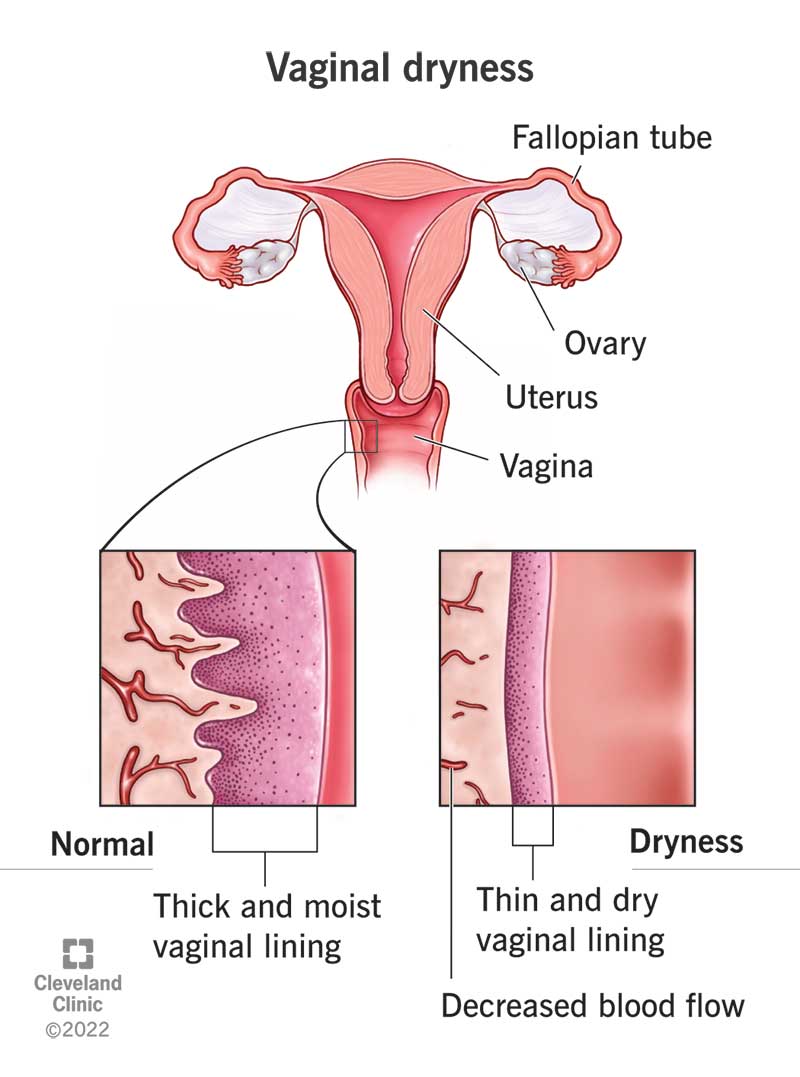
Image content: This image is available to view online.
View image online (https://my.clevelandclinic.org/-/scassets/images/org/health/articles/21027-vaginal-dryness)
Vaginal dryness happens when the tissues in your vagina are dry, thin and not well-moisturized. This leads to discomfort, especially during sex. It can cause pain while sitting, exercising and peeing, too.
Advertisement
Cleveland Clinic is a non-profit academic medical center. Advertising on our site helps support our mission. We do not endorse non-Cleveland Clinic products or services. Policy
Vaginal dryness can occur at any age. More than 15% of females have it before menopause. Over half experience vaginal dryness after menopause.
It’s most common during this period of life because your estrogen levels decline. Estrogen helps keep your vaginal lining moisturized and healthy. Low levels of this hormone cause your vaginal walls to become thin and dry. This is a common condition of menopause called vaginal atrophy.
You don’t have to live in discomfort. Many safe and effective treatments are available for vaginal dryness. Ask your healthcare provider for guidance. They want to help you feel your best.
Vaginal dryness causes discomfort and pain in your vagina, especially during sex. It may also cause:
Less moisture in your vagina leads to less moisture in your vulva. So, you may feel dryness or irritation when putting on your underwear or during activities like walking or sitting.
In many cases, vaginal dryness happens when estrogen levels decrease. This occurs naturally as you age or during menopause. Other things that can lower estrogen levels include:
Advertisement
Other conditions or situations that may cause vaginal dryness or increase your risk of it include:
Many treatments can help vaginal dryness and the painful sex associated with it. If you just have vaginal dryness, you may want to first try over-the-counter (OTC) moisturizers and lubricants:
Don’t use products that aren’t meant for your vagina (like face and body lotion).
If you have vaginal dryness with other menopause symptoms, medical treatments may be a better option. Most of these treatments work by either replacing or acting like estrogen in your body. They’re prescription-only. Medical treatments include:
Talk to your healthcare provider about the risks and benefits of these treatments.
Vaginal dryness isn’t dangerous. But it can greatly affect your quality of life. Without treatment, it can lead to:
It’s not always possible to prevent vaginal dryness. But you can take certain actions to help improve it, like:
Advertisement
You may feel embarrassed to talk to your healthcare provider about vaginal dryness. But many treatments can provide relief. Contact your provider if vaginal dryness:
Vaginal dryness is a common symptom you’ll likely face at some point in your life. You may find it difficult to talk about sexual problems. But healthcare providers are a good resource to help you have a healthy and comfortable sex life. Many treatments can bring relief. It’s OK to ask for help.
Advertisement
Learn more about the Health Library and our editorial process.
Cleveland Clinic's health articles are based on evidence-backed information and review by medical professionals to ensure accuracy, reliability, and up-to-date clinical standards.
Cleveland Clinic's health articles are based on evidence-backed information and review by medical professionals to ensure accuracy, reliability, and up-to-date clinical standards.
Menopause is natural, but it also can disrupt your life. Cleveland Clinic is here to help you get relief.
