



Understanding High-Risk Aortic Valve Endocarditis
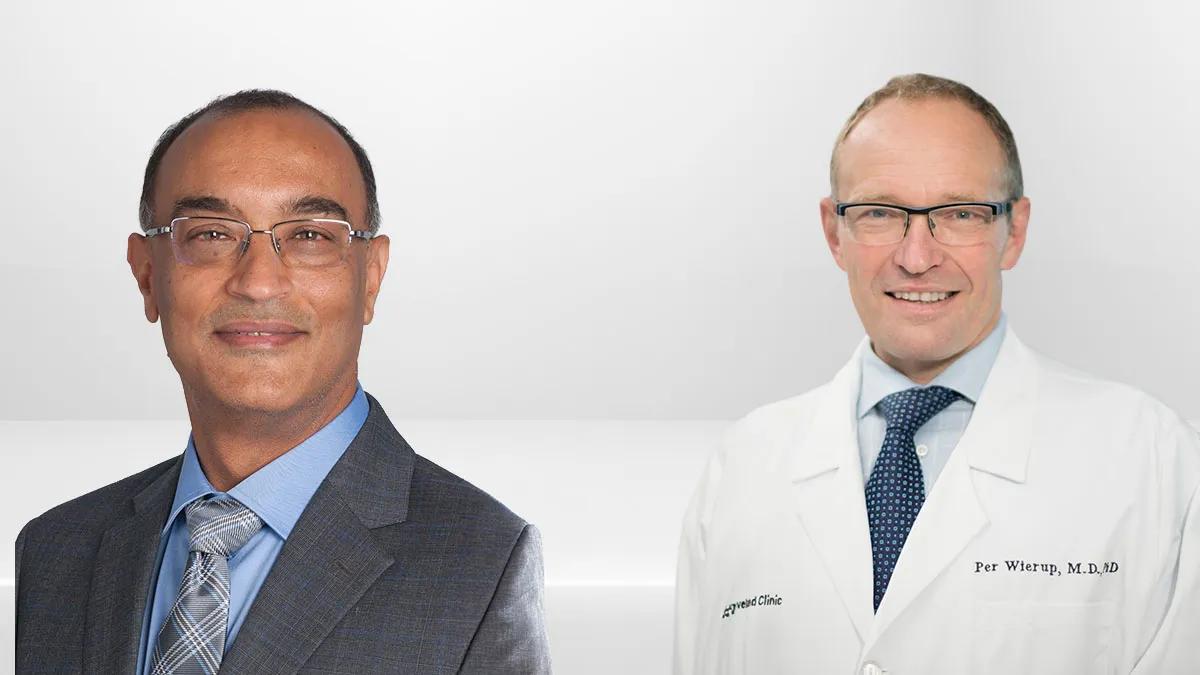
Milind Desai, MD, and Per Wierup, MD, discuss high-risk aortic valve endocarditis, a serious infection that can affect heart valves and lead to life-threatening complications if not recognized early. They explain symptoms, risk factors, diagnostic testing and the multidisciplinary approach used to treat patients and support long-term recovery.
Schedule an appointment at Cleveland Clinic by calling 844.868.4339.
Advertisement
Cleveland Clinic is a non-profit academic medical center. Advertising on our site helps support our mission. We do not endorse non-Cleveland Clinic products or services. Policy
Recent Episodes
Robotic Heart Valve Surgery
Marc Gillinov, MD, and Per Wierup, MD, discuss how robotic heart valve surgery allows surgeons to repair or replace heart valves through sma…
How Robotic Technology is Changing Heart Bypass Surgery
Donna Kimmaliardjuk, MD, and Gianluca Torregrossa, MD, discuss robotic and totally endoscopic coronary artery bypass grafting (TECAB). These…
Aspirin for Prevention: Latest Recommendations
Luke Laffin, MD, and Vikas Sunder, MD, discuss the latest recommendations for using low-dose aspirin to help prevent heart disease, includin…
Video content: This video is available to watch online.
View video online (https://cdnapisec.kaltura.com/p/2207941/sp/220794100/playManifest/entryId/1_dmbh6y8s/flavorId/1_5f3sgelj/format/url/protocol/https/a.mp4)
Transcript
Announcer:
Welcome to Love Your Heart, brought to you by Cleveland Clinic's Sydell and Arnold Miller Family Heart, Vascular & Thoracic Institute. This podcast will explore disease prevention, testing, medical and surgical treatments, new innovations and more. Enjoy.
Advertisement
Cleveland Clinic is a non-profit academic medical center. Advertising on our site helps support our mission. We do not endorse non-Cleveland Clinic products or services. Policy
Dr. Milind Desai:
Hello, everybody. It is our privilege to welcome you to this edition of Love Your Heart. My name is Dr. Milind Desai. I am Vice Chair for the Heart, Vascular & Thoracic Institute at Cleveland Clinic.
Dr. Per Wierup:
I'm Per Wierup. I'm a cardiac surgeon at the Cleveland Clinic.
Dr. Milind Desai:
Yes. Today, we are discussing a very important topic of high-risk aortic valve endocarditis. Per, we take care of a lot of these patients. A lot of them tend to be complicated and follow a full spectrum. Let's take it, let's have some fun while we entertain, while we educate our consumers and our audience as to what this is.
Dr. Per Wierup:
So, could you elaborate a little bit on what is aortic valve endocarditis and how does it develop?
Dr. Milind Desai:
Yes. Fundamentally, endocarditis is where the endocardium of the heart, endocardium is the inner lining of the heart, develops an infection, along with inflammation. In this case, we are specifically talking about aortic valve, which is one of the four valves in the heart, which gets infected, where a bacteria or a fungus invades this endothelium and causes a major infection. As it will become clearer in our discussion, often this tends to become a high risk situation.
So, how does it develop? The first thing that has to happen is a break in the endocardium, a break in the lining. Often, the trigger for that is the valve is calcified, is aging, or there is some foreign tissue, meaning the patient has had prior valvular surgery. You put these kinds of patients in a situation where bacteria invade the blood, bacteria or fungus invades the blood, very commonly seen with dental extractions or tooth infections, etc. Then the infection goes into the blood and tends to settle into the damaged endocardial layer, especially in this case, we are talking about the aortic valve.
Advertisement
Dr. Per Wierup:
Then I wonder, what symptoms should the patient and the family look after that might signal a serious infection?
Dr. Milind Desai:
Yeah. This is the unique part of endocarditis, and often the clinical diagnosis is as much art as science. The symptoms can range from the full spectrum of non-specific, people may have malaise, fatigue, loss of appetite, low-grade fever, just night sweats, etc., to a full-on presentation of an acute stage if the infection is of a major proportion that destroys the aortic valve very rapidly, and the valve starts to leak suddenly. Then you may end up with acute congestive heart failure, you may end up in shock in a cardiac ICU. The spectrum could be full, very wide.
The most common presentation is fever and chills. A few weeks ago or a few days ago, they had dental work done, and now all of a sudden, they are presenting with these kinds of symptoms. Especially if these patients tend to be higher risk, meaning they have congenital heart disease or they've had prior valve replacement or valve repair, then the diagnostic antenna goes off, that we could be dealing with endocarditis.
Dr. Per Wierup:
So, explain a little bit more to the audience. How do these underlying conditions like prior valve disease or implanted devices increase the risk?
Dr. Milind Desai:
Foreign tissue in the body is the biggest nidus for infection, bacteria or fungus to settle on. Nature-made is always better than foreign-made, than manmade, for the lack of a better term. There is a group of individuals who are at higher risk, ones with prosthetic material, ones with a damaged valve from something, if they have aortic stenosis, or they have just the surface of the valve, the endocardial layer of the valve is damaged for some reason. The other group we've seen with a common higher risk is people with congenital heart disease. All these folks tend to be, we know, at a higher risk.
So, it's, unfortunately, a two-step tango. One is that the substrate is a problem or defective. The other problem is that they then undergo a higher-risk procedure. The most common high risk procedure which results in endocarditis is indeed dental extractions that commonly people observe. Of course, then you could have an infection somewhere else, and then it seeds into the blood. Then once it enters the bloodstream, we are off to the races, and in a predisposed valve, you could develop endocarditis.
Dr. Per Wierup:
What tests do you use to establish the diagnosis? How quickly can you get the diagnosis?
Dr. Milind Desai:
Yes, yes. The most important first step is clinical intuition. If you suspect it, you'll think about the right next steps. I'll tell you what happens, what's the wrong thing that often ends up happening. These patients have symptoms. They go to the primary care doctor or the emergency room, and the doctor prescribes them a three or seven-day course of antibiotics. What that does is, it doesn't cure the problem, and it may mask the correct diagnosis. What we tell, the education here is, if you are suspecting endocarditis, don't just give antibiotics upfront, draw blood cultures first. Three sets of blood cultures are important within set times apart. That way, the cultures are cooking, and then you can think about the next steps.
Advertisement
So, blood work, blood cultures, inflammatory markers are important, but the key test for diagnosis is echocardiography. Surface echocardiography can be good enough in many cases, but it is not the gold standard. What ends up happening is often we may not have good windows. Very often, if you're suspecting endocarditis and echocardiography, surface echocardiography is not the most diagnostic. Or you don't make a diagnosis, then you need to move to transesophageal echocardiography, which is a semi-invasive test where you pass a probe down your throat and take pictures, some ultrasound pictures.
Often, in a high risk situation or a complicated acute care hospital, we may end up needing additional tests. A common test we are now doing for high-risk cases, especially aortic valve endocarditis, is because the aortic valve lies very close to a lot of important structures, including the pacemaker structure within the heart. If it turns into an abscess, pus collection, then it can compress the remainder of the structure and can lead to bad complications, including heart block and often, death. We are also fairly liberal now in using four-dimensional contrast-enhanced CT, which, especially in prosthetic valve material, helps us to come to a more precise diagnosis. Of course, using techniques, nuclear tracer-based techniques like a PET scan will also help us detect inflammation, acute inflammation.
Advertisement
So often, what ends up happening is that it may be a simple diagnosis with one test, or you may need multiple tests. Once you make the diagnosis and once you think that we are headed towards surgery, then another important thing we need to think about, which often is missed, is that these patients are also at a high risk for developing something called mycotic aneurysms, small infected aneurysms in the brain. If you take these people without appropriate care to surgery, they may bleed at the time of surgery. At least at Cleveland Clinic, it is our practice that such patients would also have some form of cerebral angiogram to make sure there are no mycotic aneurysms.
So, I walked you through the thought process. The important thing is to suspect the diagnosis, make the diagnosis, rule in or rule out high risk features. Once that is done, we realize, Houston, we have a problem. When we have a problem, we call Dr. Wierup.
Dr. Per Wierup:
Yeah.
Dr. Milind Desai:
So, I have admitted the patient, I worked up the patient, I put the patient on an appropriate IV antibiotic. Of course, our collaboration with infectious disease is absolutely crucial, because this is not going to be something that you treat with antibiotics for three to seven days. This requires at least six weeks, sometimes IV home antibiotics, and culture-driven. What the organism is, we may have to have a tailored approach. It is important. This is a team sport, and infectious disease colleagues are just as important.
Advertisement
But in this team sport, there very often comes a time when our backs are against the wall, and we need to call our expert surgeon. Dr. Wierup, I call you or, as I often do, walk to your office and say, "I have this complicated patient who needs your expert surgical eyes." So, when I come to you and let's just say I am not very experienced at this, what makes you decide, okay, this can be handled by our infectious disease friends alone, or yes, I need to book an OR? And what are the steps? What are the thought processes go through your head?
Dr. Per Wierup:
Yeah. When we have that, we get really many of these patients here at Cleveland Clinic, and we approach it in a very structural way. The indications for surgery are to avoid creating more problems for patients.
One big risk for patients with endocarditis is that this infection forms some so-called vegetation, some growth on the valves, and they can break off and go through the blood, and unfortunately, often to the brain. We are looking, and if we see these vegetations, growth on the valves, that is a clear surgical indication. Then we really try to move on to have the surgery done expeditiously.
The other is if the infection has started to chew up the valve, so that the valve is not working anymore, typically starts to leak a lot. But we can also have, especially in a prosthesis, that it becomes very narrow, so-called stenotic. That's another indication for surgery.
Then we also look at if the antibiotics are simply not working, and no matter how good and advanced the antibiotics we are giving directly in the blood are, the infection is just persistent. That is also a clear indication for surgery.
Dr. Milind Desai:
The other couple of things I'm going to mention, so a couple of pearls we have learned over the years. If it's a prior valve prosthesis, somehow the bacteria are smart, and they create a biofilm around them, such that antibiotics may not work. Under those circumstances, surgery may be the primary option.
The other thing, I've learned it the hard way, and I know you know this, we have to pay attention to their ECG changes. Often, because it's so close to the electrical structures, abscess especially can invade there, and patients can develop complete heart block and die. My threshold for putting these patients in the critical care ICU with a temporary wire while we are waiting for the surgical workup to be complete is very, very low. I get very nervous watching them without a careful game plan.
Dr. Per Wierup:
As soon as we see that they have a threatening rupture of their, so say, conduction system to the nerves, they need this temporary pacemaker, that mandates us to take them to surgery.
There's another indication. We see more and more patients with pacemakers or defibrillators. They tend to get, in the same way, infection on their leads. That's another indication for us to do open surgery and remove it and replace it.
Dr. Milind Desai:
I'm glad you mentioned those patients. These kind of patients tend to present with a lot more complicated scenario. They have a pacemaker because they need a pacemaker, and now the thing is infected. Extracting a pacemaker, which is scarred into the tissue, is a much bigger deal. Often, if they have another valve that is replaced, it is very likely that valve is going to quickly get infected. Now, the surgery becomes a major and they were a multi-valve surgery, etc. Yes, these are high-risk patients that require complicated care, comprehensive and complicated care.
How long is the recovery process, and what are the challenges that you observe in your post-op rounds?
Dr. Per Wierup:
In surgery here for endocarditis, Cleveland Clinic works very well, so normally, that is not a problem. What dictates the post-op course is how sick the patient is coming to surgery. Unfortunately, there are really many who, before they come to the Cleveland Clinic, have already developed a stroke, and they're bringing their stroke, so we have to help them out with that. That affects a little bit how they recover after surgery.
The other is if they have had a severe heart failure due to severe leakage of the valve, then they might be so volume overloaded that they need to stay on the ventilator a little bit longer. Others are also that the circulation is affecting the kidneys, including the antibiotic treatment, so they might need temporary dialysis. So, really dependent upon in what shape we get them, that dictates how complicated. However, if we get them early on, with suspicious and great cardiologists we have here, then we can make it a very smooth post-op phase.
Dr. Milind Desai:
So I think, so you raised a couple of very important points. The patient, the better the shape they are, the earlier the diagnosis, the less complications that occur, the better the chances of them coming through surgery here. We can get a lot of sick patients through surgery, but it's the long-term recovery. There's two aspects you mentioned and I'm going to allude to.
One is yes, if they've had a stroke, then we get put in a very difficult conundrum because during open heart surgery, we are giving a lot of heparin. If they've had a stroke, then we are worried about them turning into a hemorrhagic stroke, so we may have to wait often about six to eight weeks. There, a neurologist has to dictate what we are going to be able to do and how quickly we are going to be able to do.
The other perioperative conundrum that the modern world faces is that of an unfortunate scenario where patients have an addiction problem with IV drug use and shared needles, etc. This is a very common group of patients who develop endocarditis. So, not only are we treating the infection and the surgical aspect of it, but there's the psychosocial aspect of it, including their de-addiction and treating their withdrawal symptoms, and really a long-term plan which prevents them from bouncing right back.
So, we approach this follow-up care. What are some of the important pearls to long-term follow-up care? Surgery is not going to be a walk in the park. It requires that you recover well, you do cardiac rehab, and get back to ship shape. As I alluded to, the drug addiction problem, we need to have psychiatry, and we need to have everybody engaged as part of the team, because otherwise these patients are going to bounce right back.
Another absolutely important thing, if you have prosthetic material, a prosthetic valve, and if you are going for a dental procedure, you need antibiotic prophylaxis, lifelong. There is no substitute to that. Your local doctors and dentists, it is incumbent upon you to ask your local doctors and dentists, or inform them that you have a prosthetic material that requires antibiotic prophylaxis.
So, I think you covered a lot. I'll summarize in literally a short summary. This is not uncommon, especially in predisposed, high-risk individuals: those with prosthetic valves or congenital heart disease, etc., undergoing, the most common scenario being, dental extractions or oral work. Index of suspicion should be high and once that is the case, the first thing that needs to happen is cultures, followed by serial testing or by expanded multi-modality testing as directed by the clinical scenario. Recognize the high-risk features that put the patients in harm's way and develop a multidisciplinary team plan, including antibiotics long-term, surgery where it's needed, psychosocial help, electrophysiology help with pacemaker backup if it is needed, etc. Once that is done, a long ranging plan of careful follow-up.
Thanks a lot, and thank you for listening to Love Your Heart.
Dr. Per Wierup:
Thank you so much.
Announcer:
Thank you for listening to Love Your Heart. We hope you enjoyed the podcast. For more information or to schedule an appointment at Cleveland Clinic, please call 844.868.4339. That's 844.868.4339. We welcome your comments and feedback. Please contact us at heart@ccf.org. Like what you heard? Subscribe wherever you get your podcasts, or listen at clevelandclinic.org/loveyourheartpodcast.
Recent Episodes
Robotic Heart Valve Surgery
Marc Gillinov, MD, and Per Wierup, MD, discuss how robotic heart valve surgery allows surgeons to repair or replace heart valves through sma…
How Robotic Technology is Changing Heart Bypass Surgery
Donna Kimmaliardjuk, MD, and Gianluca Torregrossa, MD, discuss robotic and totally endoscopic coronary artery bypass grafting (TECAB). These…
Aspirin for Prevention: Latest Recommendations
Luke Laffin, MD, and Vikas Sunder, MD, discuss the latest recommendations for using low-dose aspirin to help prevent heart disease, includin…
Never miss a moment - subscribe now.
Listen to the Health Essentials Podcast on your favorite streaming platform.
Other Podcasts You May Love
Beyond Leadership
Hosts Jim Pae and Elizabeth Pugel escort you through a network of thought leaders, sharing world-cla…

Beyond the Pages: CCJM Podcast
Beyond the Pages: CCJM Podcast takes the listener more in-depth into Cleveland Clinic Journal of Med…

Butts & Guts
A Cleveland Clinic podcast exploring your digestive and surgical health from end to end. You’ll lear…
Cancer Advances
A Cleveland Clinic podcast for medical professionals exploring the latest innovative research and cl…