



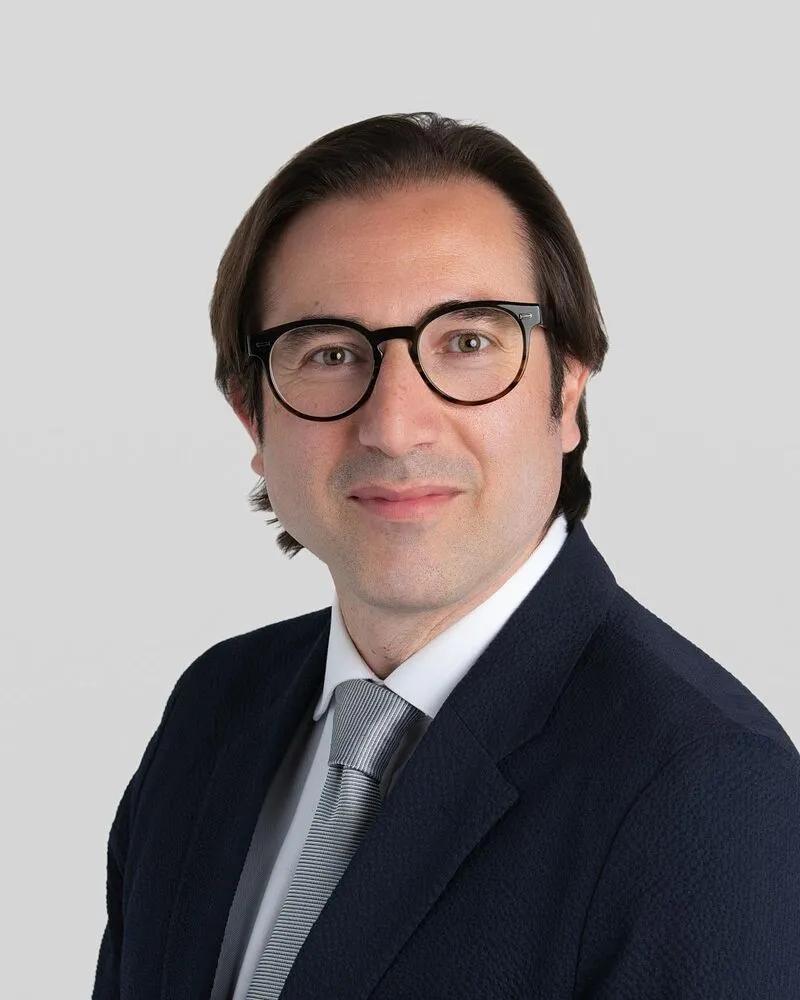
Quick Questions: Coronary Artery Bypass Grafting
Gianluca Torregrossa, MD, explains coronary artery bypass grafting, how it compares with stenting and the questions patients should ask when considering treatment for blocked heart arteries. He discusses advances in surgical techniques and what patients can expect during recovery.
Schedule an appointment at Cleveland Clinic by calling 844.868.4339.
Advertisement
Cleveland Clinic is a non-profit academic medical center. Advertising on our site helps support our mission. We do not endorse non-Cleveland Clinic products or services. Policy
Recent Episodes
Quick Questions: Coronary Artery Bypass Grafting
Gianluca Torregrossa, MD, explains coronary artery bypass grafting, how it compares with stenting and the questions patients should ask when…
Understanding New Cholesterol Guidelines for Better Heart Health
Ashish Sarraju, MD, and Leslie Cho, MD, discuss the latest cholesterol guidelines and why understanding lifetime risk is key to preventing h…
Quick Questions Abdominal Aortic Aneurysm
Francis Caputo, MD, explains how abdominal aortic aneurysms are monitored and when treatment is recommended based on size, risk and overall…
Video content: This video is available to watch online.
View video online (https://cdnapisec.kaltura.com/p/2207941/sp/220794100/playManifest/entryId/1_2tkr6i1v/flavorId/1_5f3sgelj/format/url/protocol/https/a.mp4)
Transcript
Announcer:
Welcome to Love Your Heart, brought to you by Cleveland Clinic's Sydell and Arnold Miller Family Heart, Vascular and Thoracic Institute. This podcast will explore disease prevention, testing, medical and surgical treatments, new innovations and more. Enjoy.
Advertisement
Cleveland Clinic is a non-profit academic medical center. Advertising on our site helps support our mission. We do not endorse non-Cleveland Clinic products or services. Policy
Gianluca Torregrossa, MD:
Welcome everyone. My name is Gianluca Torregrossa. I'm a cardiothoracic surgeon and the Director of the Robotic and Minimally Invasive Coronary Artery Bypass Grafting (CABG) Program at the Cleveland Clinic. My journey started in Italy, where I was born and raised. After medical school and residency in cardiothoracic surgery, I spent one year in Africa with Doctors Without Borders performing pediatric cardiothoracic surgery in Sudan. After that incredible experience, I joined New York City Mount Sinai Hospital, where I stayed for six years. I further specialized in robotic cardiothoracic surgery at the University of Chicago. During the last five years, my major focus has been performing bypass grafting without opening the chest for patients with multi-vessel coronary artery bypass grafting.
Today, I want to bring you with me on a quick journey of what coronary artery bypass grafting is, what to expect when you, yourself, your loved one or your neighbor needs to go through this process. What are the options out there? What I would personally ask the surgeon if I needed coronary artery bypass grafting? What are the questions you need to ask your surgeon, and how to prepare yourself physically and mentally for this experience? So, let's begin.
Advertisement
Coronary artery bypass grafting was invented here at Cleveland Clinic thanks to a surgeon named René Favaloro. We are now celebrating a big birthday since the first procedure that was done by Dr. Favaloro. The concept was simple. When an artery that, like a road, brings food, brings nutrition to the heart gets obstructed, a bypass is a way to build a new highway, to build a new road, to recreate a new pipe. Our heart is supplied by three arteries that bring blood, nutrition and oxygen to the muscle of the heart. With certain risk factors, including our diet, high cholesterol, obesity, smoking and genetics, sometimes these pipes can develop obstruction.
When the obstruction is severe, patients can get symptoms of lacking oxygen to their own heart, which we call angina. The pain that can happen when you are at rest or when you are making some effort. In those cases, we need to find a solution for this type of problem.
In medicine, we have mostly two types of intervention for this obstruction in the pipes that bring blood to the heart. One is coronary stenting. The other one is bypass grafting. When the lesions are very focal, when the lesions are very small, coronary stenting has been shown to be a good solution, a good alternative to bypass. But bypass has always shown in every study performed in the last 40 years the best medium- and long-term outcome. At five and 10 years after bypass, particularly when done with arteries, always outperforms any other type of treatment.
A bypass is performed by a surgeon traditionally by opening the chest of the patients, stopping the heart and building these new pipes using the arteries and vein that come from the same patients. They come from somewhere else, another district of the body: arteries from the chest wall, veins from the legs, an artery from the arm, all areas where there is a surplus, an extra artery that can still irrorate, that can still supply that specific region so the surgeon can safely remove that vein and yet the leg will still work perfectly fine even after surgery.
Once that vein is out, once the artery inside the chest wall is out, we can use this pipe literally as a new bypass, as a new bridge, as a new pipe, as a new highway to bring blood above and after that obstruction that is causing the problem.
There have been new trends even in open sternotomy bypass grafting. Even in the bypass performed with an open chest, there are some techniques that can offer better long-term outcomes. The first technique is something that I will definitely ask my own surgeon if I personally need a bypass surgery or if someone in my family needs bypass surgery: how many arteries are you going to use for my bypass? What this question means is that the surgeon at the time of surgery has the option to choose veins or arteries. The arteries traditionally come from the chest wall of the patients or the arms of the patients. These arteries have been shown to be so much better than veins that come from the legs of the patients.
Advertisement
Unfortunately, veins are still very highly used in coronary artery bypass grafting by surgeons, despite huge evidence that arteries outperform veins at five years, six years and 10 years. The reason why is that veins are generally easier to be used by the surgeon. It's a microsurgery. It's very technical, and sometimes the surgeon prefers to use an easier conduit like a vein that comes from the leg of the patient. But particularly if you are a young patient, and by young, I mean anything below the age of 75, you need to demand that your surgeon or come to Cleveland Clinic to get your surgery performed with multiple arterial bypass grafting. If you need more than one bypass, the first and second bypass and the third one need to be performed with arteries and not with veins.
The second important technological advancement is what has been called off-pump bypass grafting. Off-pump refers to the fact that certain surgeons with certain special abilities can perform this conduit, this connection of these conduits to the heart of the patients without stopping the heart. We are still talking about open chest surgery, sternotomy, open chest surgery, but instead of getting to the heart and connecting the heart to an external machine and stopping the heart, the heart will stay beating through the entire time of the procedure. This type of technique has been shown that in an experienced hand performs the best and provides the best outcomes, particularly in respect of protecting the brain of patients. Can you go back to playing Sudoku in the same way you played Sudoku before? Will your chess game be at the same level as your chess game before? Will you still remember the eight items that your wife asked you to pick up from Costco that weekend when you are going to grocery?
Advertisement
So off-pump is the second thing that I will ask my own surgeon, particularly anaortic off-pump. I will not touch the aorta, and I use the two arteries inside your chest to bring all of the blood supply to perform the three, four, five bypasses that your anatomy needs. This off-pump has been shown to have the least risk for any stroke or neurocognitive decay, alteration of your overall mental performance after surgery. This is the second question I will ask.
The first question, how many arteries are you going to use during my surgery? And I want to hear is a number that is greater than two. The second is, can you perform off-pump bypass surgery? Can you provide me anaortic, a no aortic touch bypass surgery? These are definitely the most important types of procedure techniques, advanced techniques in the setting of open chest.
The third and most important thing, the third other technical element that I will ask my surgeon is, can you provide intraoperative assessment of the bypass? Once the surgery is completed, the surgeon has the opportunity to use a certain flow meter, certain probes to check how much blood passes through these bypasses. Unfortunately, even if it seems like it's a very easy procedure, not many surgeons adhere to the guidelines that recommend the use of this flow probe. They can quantify how much blood is going through this bypass. Most importantly, they can tell the surgeon at the time of the surgery if something is wrong, or something should be redone in one of the bypasses, making sure that once you leave the operating room, your bypasses are just perfect, ready to bring you back to be the best taxpayer of the United States tax system or whatever national tax system you live in. A long life is guaranteed when you leave the operating room with all of the bypasses perfectly done, perfectly patent, perfectly working, and the surgeon can assess the perfect job that he just did using this intraoperative flow assessment.
Advertisement
The fourth and most important innovation in the world of coronary artery bypass grafting has definitely been robotic bypass. Robotic is the opportunity to perform the same number of bypasses that you need without opening the chest, without stopping your heart, so still off-pump and without opening your chest. With three small incisions in the left side of your chest wall, we can connect a special device that we call a robotic platform. It has one camera and two arms, and the surgeon sits in the same room where the patient is completely asleep and controls through a special joystick the camera and instruments. It can enter inside the chest of the patients, take the arteries that are needed and perform the bypass that the anatomy requires.
This is a procedure that is not available for everybody, but now in experienced centers and in my own personal experience, 50% of my own patients, 55% of my own patients receive a robotic bypass. Just a few years ago, we were capable only of serving 10% to 20% of our patient population, so very restricted anatomy, only very few patients were qualified for robotic. Nowadays, with new techniques and new technologies, we can offer it to a greater and larger number. More and more, there are more alternatives and more patients that can benefit from this type of procedure.
Again, it is performing the same quality surgery, testing the bypass, the same type of anastomosis, the same type of connection without opening the chest. This is particularly interesting because now the recovery does not entail the recovery from opening the chest, opening the major bone, the longest bone of your own body that is the sternum, the big bone that protects your heart and your lung in the front space of your chest.
So, how does your recovery look after a sternotomy bypass and after a robotic bypass? Well, first of all, even if your surgeon or even if I have decided that your anatomy requires a sternotomy and cannot be performed robotically, you need to walk into that operating room with what I call the “good juju”, the good energy. I'm a man of science. I perform science every day, but I believe in the energy that you bring in the operating room. When you sign a consent for me the day before surgery, this is always the last sentence that I tell my patients before seeing them the day of surgery. Come with good juju. It is not true that it all depends on your surgeon. The patient that goes to sleep before a procedure has a huge role that day. You need to go to sleep thinking something positive, knowing that it is a procedure that will take some time to get better, but we need your mental positive engagement. You are part of the team that performs that surgery, and your mindset is absolutely fundamental for the good outcome of that surgery.
If you have had heart surgery via a sternotomy, if you have had bypass by opening the chest and a sternotomy bypass, let's say both off-pump and on-pump, the recovery looks similar. Off-pump does generally better, but overall, what you have to expect is that after surgery you will go to an intensive care unit. It's a special place where a nurse is dedicated only to you. At the early beginning, you are connected with a lot of tubes, cannulas, catheters that control a lot of parameters of your heart and your body, but the recovery is faster than most of the patients expected. Generally, within one or two days, patients are outside of the intensive care unit and the amount of devices that connect these patients with the screens that surround them is less and less.
Most of my patients, after a sternotomy, so after an open chest surgery, they start walking the day after surgery, and they're sitting in a chair the same day of surgery by the night. If you have surgery at 8:00 in the morning, generally surgery takes four or five hours – open heart surgery, open chest surgery – and then you are sitting in a chair the same night, and by the next day you start walking. The first time you walk, everybody congratulates you. It will require a lot of effort, but little by little things start to get better. By day four, day five, the last tubes, the last cannulas, the last catheter are all out, and you are begging your own surgeon and your own team to go home, sleep on your own pillow, get your own food and try to get back to your own life.
Most of our patients are discharged home generally on day five or day six after their open heart surgery, their open chest bypass. Once you go home, generally, I will say the first six weeks are the most high-intensity ones, the ones in which you really need to focus on yourself and your recovery. After that, most of the patients describe that within three months, three to six months, there is a full recovery from the surgery that you had. The best thing, the best partner, the best habit you can have in your post-op recovery is walking. Walking is the most important thing that a patient can do after surgery. I always tell them to walk, take the medication that your doctor prescribes, and maintain your mindset throughout these three months, six to nine weeks of recovery, extremely positive, extremely focused on your end results.
Overall, even after an open chest surgery, nowadays pain is not any more a major concern. You definitely don't feel fantastic. I don't want to sell a used car. I'll tell you the truth, you don't feel great, but there is not any more excruciating pain. Even in the immediate post-surgery, there are no patients that scream in pain in our intensive care unit. For sure, taking deep breaths after your sternum has been split is not easy. But walking, breathing, doing your breath exercises that your doctor will teach you, or the team before being discharged will teach you, is absolutely important habits to recovering very well. I tell my patients immediately after they go home, on day five or six after surgery, they need to walk five minutes every hour of the day. They wake up at 7:00 in the morning, you go to sleep at 10:00 PM, every hour in between.
You do not sit for two hours in front of Netflix after dinner watching your show. You pause that show at 55 minutes, and you stand up, and you walk inside the house, outside the house, wherever you like according to the temperature that is outside. If it's too cold or too slippery outside, if it is too hot, it's clear that you shouldn't walk there. In the first period, don't see too many relatives and other individuals. Your ability to fight against infection is still low, so you need to protect yourself. Eat well. There is no special diet at the beginning other than, of course, respecting your diabetes, but just make sure to have a high protein based diet and just stay positive and walk.
After a robotic bypass, the type of recovery is very different. I generally discharge patients after one or two days, and most of my patients are driving their car in a week after surgery. After an open chest surgery, we generally require you not to drive for four, five, six weeks after surgery. This is mostly because we have concerns about your chest, your sternum, the integrity of the chest wall in case of a car accident. But with the robotic, we don't have any type of breaking of any bone. We pass through the ribcage so we can enter inside your chest wall, and the chest comes back exactly intact as it was before. Most of my patients after robotic surgery, the full recovery happens within three to four weeks. They're back to work, flying, taking airplanes, and having discussions with their own partners. We are all married; we know how it works, and making sure that their kids are happy and doing their own job.
So, it's definitely a different type of recovery. That's why, if you hear from your surgeon, or one only surgeon, “Oh, no, your anatomy cannot be done robotically,” you really need to make the effort to look for alternatives and listen to more than one opinion. This is a conversation I always have with my own parents. They live in Italy, they're in their 80s, and every time they need some medical attention, they just go to one person, they trust him, and they just do what that person tells them to do. Instead, when it's time for this big surgery, you need to understand that it's extremely important to hear more than one opinion. We travel for leisure, we go around the world, we do vacations, we take airplanes. Then when it's time for having the most important surgery of our life, that surgery that is going to define if I will still be alive five years from now, 10 years from now and what my life will look like. If you have a certain type of surgery, your 10 years are still excellent, independent from which age you have had surgery.
But instead, if your surgery has been done mostly with veins, stopping your heart or if your bypasses have never been tested during surgery, well, your 10 years might look like you going back and forth from the hospital in what we call heart failure. Your heart is not working because most of those bypasses are not working properly. So, it's extremely important you shop around, and you don't just sign on the first opinion. Look for alternatives. Ask for a second opinion. Educate yourself. I know that it's scary. When you hear the sentence pronounced by a doctor that you need open heart surgery, you get very flustered and scared. You just want an anchor, someone to grab and to feel comfort with. But it's very important that instead you just maintain your full bright mind, your open vision, and that's when families and people around you can really help you in maintaining this attitude, and they try to bring you back to alternatives that might not be available at your local hospital.
This is what the entire journey will look like. I think that it's very important you get, before signing for a surgery, even if it is a sternotomy bypass surgery, a second opinion to make sure that another surgeon can offer the same quality surgery in a better way with more arteries and without stopping your heart. I think that the most important final message is, if you or one of your loved ones ever needs surgery, stay positive.
Nowadays, when you look at the overall risk of mortality, what are the risks of the surgery? Well, the overall risks are very low for an elective bypass surgery, meaning patients that are not in an impending condition that requires surgery within the next 24 hours, but they can go back home, and we can schedule the surgery in a couple of weeks from the day in which we made the diagnosis. For those patients, the risk of any type of complication is generally below 0.5%. I generally tell my patients less than one percent. 99% chance that everything goes well.
Nothing that we do in life is risk-free. Not driving back and forth from work to home, not taking the airplane to go a beach during summertime, not taking our bicycle to go out for a bike ride with our kids. But the risk associated with a coronary artery bypass grafting performed by experience hand is really, in the current era, extremely low. Very importantly, just try not to, for being scared of the procedure, look only to alternatives, mainly stenting of your coronaries that do not require the opening of the chest yet , but do not offer you the five-year, the 10-year, the 15-year outcomes that bypass grafting offers.
Too many times we see these patients who come with all of this metal inside the coronary arteries. After that, the quality of the bypass that we can do is definitely worse than the quality of the bypass we could have done right at the first time. This is still a very important type of surgery, so make sure that you ask for a second opinion. Come to Cleveland Clinic, request to have a five-minute talk with me. I'm always happy to talk to patients, to educate, to make sure that everybody has a full plan of action. I always love to spend time with my patients, being in the room with them, trying to understand what they've done in life and what they expect and what they should expect from the surgery. I will say bring “good juju”, stay positive, look around, come to Cleveland Clinic. It's the only center in the world that can offer every type of procedure, every type of surgery done in any way, from a total endoscopic coronary artery bypass grafting multi-vessel robotic to a sternotomy total arterial revascularization.
So, with this, I'd like to thank you for this incredible opportunity to speak today on this podcast. The most important message is, again, bring your good juju, stay positive. You have a problem for which there is a very good solution, and coronary artery bypass grafting has proven that there is an excellent solution for the long term to bring you back to be the best taxpayer of your own state taxes. Thank you so much.
Announcer:
Thank you for listening to Love Your Heart. We hope you enjoyed the podcast. For more information or to schedule an appointment at Cleveland Clinic, please call 844.868.4339. That's 844.868.4339. We welcome your comments and feedback. Please contact us at heart@ccf.org. Like what you heard? Subscribe wherever you get your podcasts or listen at clevelandclinic.org/loveyourheartpodcast.
Recent Episodes
Quick Questions: Coronary Artery Bypass Grafting
Gianluca Torregrossa, MD, explains coronary artery bypass grafting, how it compares with stenting and the questions patients should ask when…
Understanding New Cholesterol Guidelines for Better Heart Health
Ashish Sarraju, MD, and Leslie Cho, MD, discuss the latest cholesterol guidelines and why understanding lifetime risk is key to preventing h…
Quick Questions Abdominal Aortic Aneurysm
Francis Caputo, MD, explains how abdominal aortic aneurysms are monitored and when treatment is recommended based on size, risk and overall…
Never miss a moment - subscribe now.
Listen to the Health Essentials Podcast on your favorite streaming platform.
Other Podcasts You May Love
Beyond Leadership
Hosts Jim Pae and Elizabeth Pugel escort you through a network of thought leaders, sharing world-cla…
Beyond the Pages: CCJM Podcast
Beyond the Pages: CCJM Podcast takes the listener more in-depth into Cleveland Clinic Journal of Med…
Butts & Guts
A Cleveland Clinic podcast exploring your digestive and surgical health from end to end. You’ll lear…
Cancer Advances
A Cleveland Clinic podcast for medical professionals exploring the latest innovative research and cl…