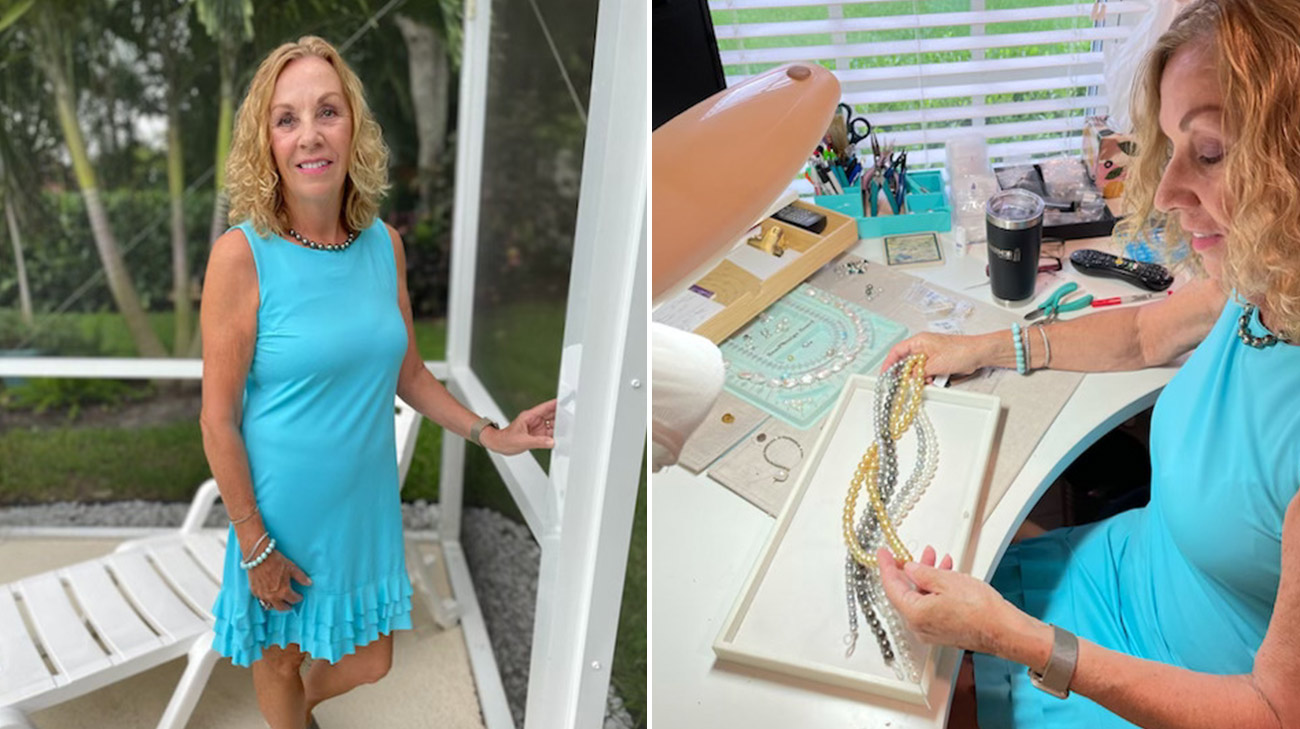
Ovarian cancer often shows no symptoms, and the few symptoms present can be mistaken for other ailments. Ann Larkin Roy’s first symptom was a combination of abdominal bloating and a noticeable change in appetite. After seeing her primary care doctor in Stuart, Florida, she eliminated several possible causes, including digestive issues.
Months later, in September 2022, a scan revealed abdominal lesions. Doctors drained 3.5 liters of fluid which provided relief, but a diagnosis of ovarian cancer was confirmed.
Further testing showed that Ann was positive for the BRACA 2 gene. Another test revealed her CA125 tracker, which measures the amount of a protein called CA-125 (cancer antigen 125) and works as a tumor marker, was at a whopping 1,699. Her doctors at Cleveland Clinic Martin Health referred her to Dr. Joel Cardenas, Medical director, gynecologic oncology at Cleveland Clinic Weston Hospital, for his expertise in treating ovarian cancer.
Dr. Cardenas recommended 4 rounds of chemotherapy, followed by surgery in January 2023. During surgery, doctors performed debulking, a process that removes cancer tumors and surrounding tissue including ovaries and uterus.
Specialists at Cleveland Clinic perform HIPEC surgery at the same time as debulking surgery. Hyperthermic Intraperitoneal Chemotherapy (HIPEC) is a specialized, intensive treatment for advanced ovarian cancer that involves bathing the abdominal cavity with heated chemotherapy drugs during surgery. Heated chemotherapy drugs are pumped into the abdomen and moved around to reach any microscopic cancer cells that may remain following the debulking.
After the surgery, Ann received an additional two rounds of traditional chemotherapy. Her CA-125 values showed the treatment was successful.
“Ann received the most advanced treatment through comprehensive cancer care, achieving excellent outcomes,” Dr. Cardenas said. “Our goal is to improve survival and quality of life and help patients return to a normal life.”
Following surgery and the two rounds of traditional chemotherapy, Ann was prescribed two years of maintenance therapy consisting of 650 mgs per day of olaparib (Lynparza). She handled the treatment extremely well, with few side effects.
Throughout the last two years Ann has pushed herself to stay active, working in her home-based jewelry design and production business each day and staying active with regular two-mile walks and bicycling on a regular basis.
“I feel fortunate to have developed such a passion for my jewelry business which helped me focus on that rather than the illness,” Ann said. While she did lose her hair and encountered some fatigue and minor neuropathy, this was the extent of the side effects.
Ann said she does have a family history of cancer on her father's side. Her dad had lung cancer, and several relatives had breast cancer. “It’s possible that's where the BRCA2 gene came from,” Ann said.
Ann is active and undeterred. She'll tell you she’s not a person who says, "Why me?" In her words, “there was no boohoo.”
While she was undergoing treatment, she consciously avoided conversations that compared her experience with others with a similar diagnosis. She consistently reminded people that every diagnosis is unique as is their plan for recovery.
She was focused “on the job at hand which was following Dr. Cardenas’ instructions to the T.”
Ann says she felt happy and blessed with her medical team led by Dr. Cardenas. Currently, after 36 months, Ann’s follow-ups include a series of scans and blood tests on a quarterly basis to ensure any recurrence is identified immediately. Thankfully, none has occurred. Ann remains active and grateful, committed to raising awareness of ovarian cancer.
Background on medications:
A BRCA2 gene mutation significantly increases a woman's lifetime risk of developing ovarian cancer, with a lifetime risk of about 20% compared to the general population. The mutation prompts heightened surveillance, including clinical exams and the possibility of risk-reducing surgeries. A BRCA2 mutation is inherited from either parent and has a 50% chance of being passed to each child. PARP inhibitors like olaparib and rucaparib are approved to treat certain cancers including those with BRCA1 or BRCA2 mutations. Lynparza’s generic name is olaparib. It's a prescription medicine to treat adults who have advanced ovarian cancer, fallopian tube cancer, or primary peritoneal cancer with a certain type of inherited or acquired abnormal BRCA gene. Lynparza is used alone as maintenance treatment after the cancer has responded to your first treatment with platinum-based chemotherapy.
Patient Stories

Young Girl Overcomes Rare Cancer That Spread to Her Lungs and Spine
Sep 30, 2026
Boy Thriving After Complex Surgery for Rare Criss-Cross Heart Condition
Sep 29, 2026