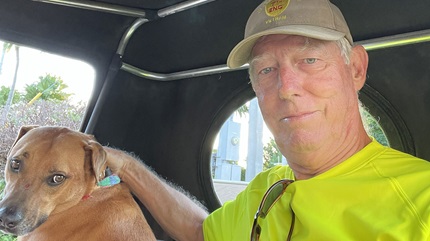
Kurt Stallcup was two years into retirement and enjoying another day on Feb. 13, 2023, when the unexpected happened. The Vero Beach resident and his wife Debra were pulling into a local car wash when “everything went downhill.”
He suffered a stroke, lost control of his car, went down a ravine and landed back on the road before Debra was able to get her foot on the brake to stop the car. Within four minutes paramedics arrived, assessed that Kurt had had a stroke and transported him to Cleveland Clinic Indian River Hospital.
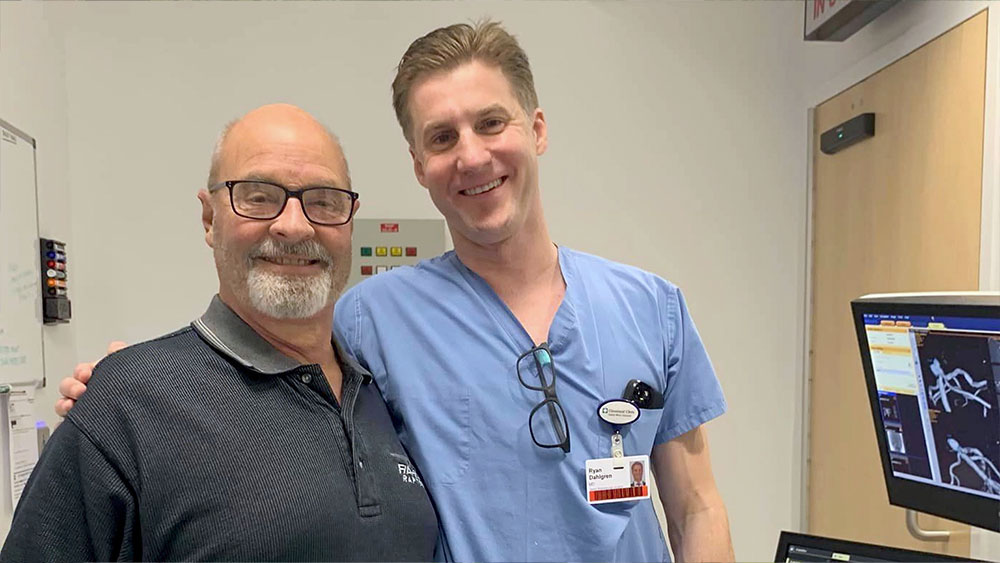
Ryan Dahlgren, MD, a neuroendovascular surgeon, was waiting there with his team, which he affectionately compares to a Formula 1 racing pit crew.
“It’s an orchestra of people all working in sync,” Dr. Dahlgren says. “It begins with our EMS colleagues out in the field recognizing patients having a stroke and transporting them quickly to the ER where physicians and staff triage and assess the patient. Stroke neurologists and my team initiate treatment as quickly as possible when seconds matter.”
For Kurt, the swift treatment he received made the difference between death or low quality of life and the life he is thankful to currently be living.
“When Kurt arrived, he was unable to use his right arm or leg and couldn’t understand what we were saying,” Dr. Dahlgren says. “He was in dire straits with a blockage to the dominant side of his brain.”
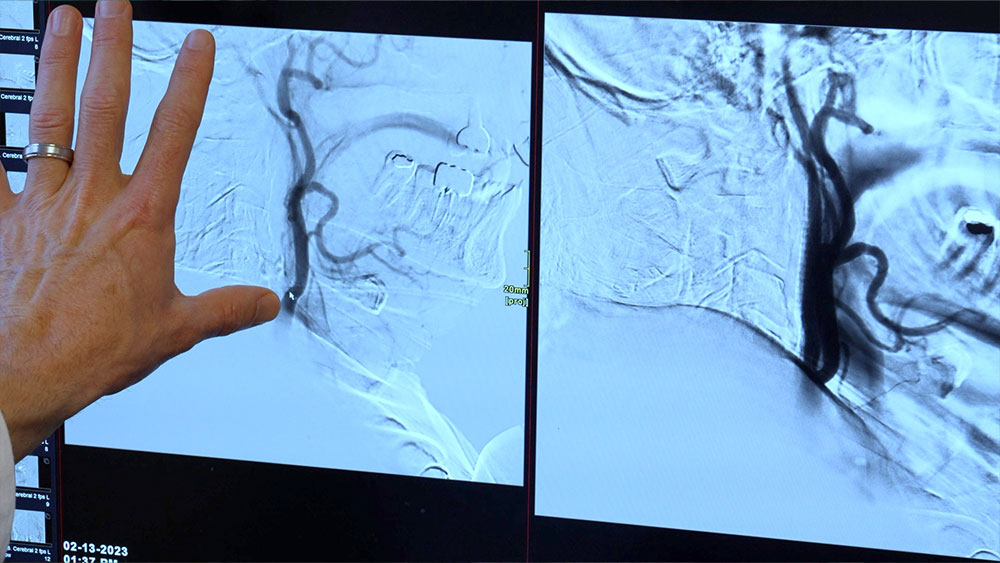
Within 20 minutes Dr. Dahlgren and his team were able to administer medication to break up the blood clot causing the stroke and put in stents to open up the blood vessels. When the blood flow was restored, Dr. Dahlgren said he could see that Kurt would be okay.
When Kurt woke up the next day and learned he had had a stroke, he said it was “difficult to accept.” He had no warning signs.
“This hit me like a brick. It hit and hit hard,” he says. “But I’m so grateful to be alive.”
He says he still has a slight limp, some issues with his toes and difficulty thinking of words sometimes. But he is in tremendously better shape than was initially expected.
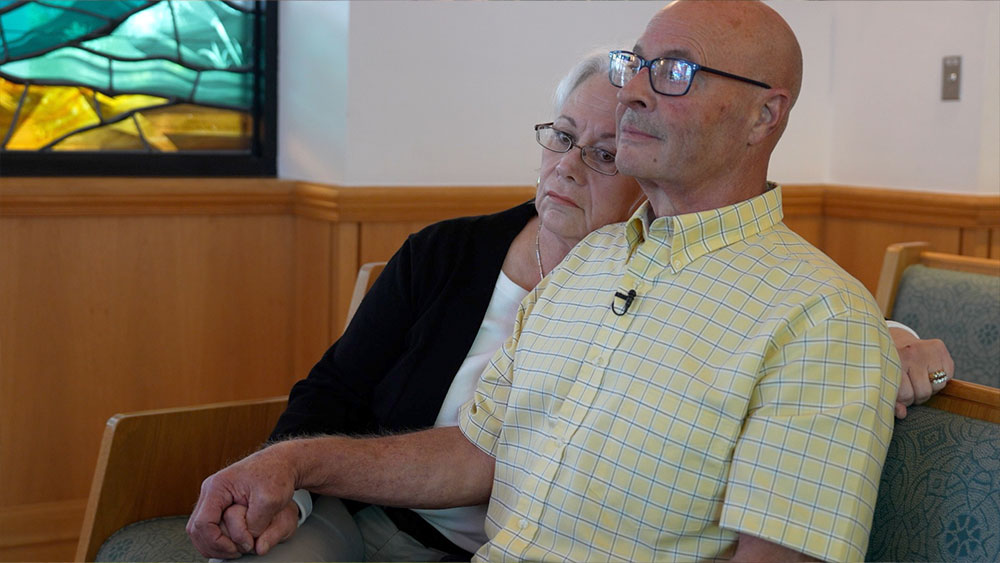
“What could have happened to Kurt – not being able to use his right arm and leg, not being able to communicate or understand what people were saying to him – would have been an awful situation,” Dr. Dahlgren says. “That’s what is so miraculous about these endovascular surgeries that we perform. The advancements in the field allow us to take care of patients for whom there were previously no solutions. They are now walking out of the hospital.”
Kurt is looking forward to a healthy journey ahead, getting back to an active life that includes swimming, bicycling, fishing and boating.
“Cleveland Clinic saved my life, saved my quality of life,” he says. “I am so thankful for Dr. Dahlgren and his team.”
Related Institutes: Neurological InstitutePatient Stories
Cleveland Clinic Team Helps Florida Patient Breathe Easier After Complex Lung Surgery
Oct 21, 2026

Teen Athlete Returns to Sports After Two Head Injuries Trigger Yearlong Headache
Oct 19, 2026