As a mother, Kristen Draime knew something wasn't right with her 2-year-old daughter Miley Draime’s eye. It occasionally drifted, and everyone assumed it was a lazy eye. Her pediatrician referred Miley to an ophthalmologist, but the first available appointment was months away.
One evening in the fall of 2025, while giving Miley a bath, Kristen noticed an unusual white glow in her daughter's eye. After putting Miley to bed, she began searching online and came across a term she had never heard before: retinoblastoma, a rare form of eye cancer.
As she read more, she learned some parents first notice signs of retinoblastoma when one eye reflects differently in low light, such as on a baby monitor. Kristen immediately checked on Miley, who was still awake. What she saw only deepened her concern. The eye she had been worried about appeared completely black on the monitor, while the other reflected normally.
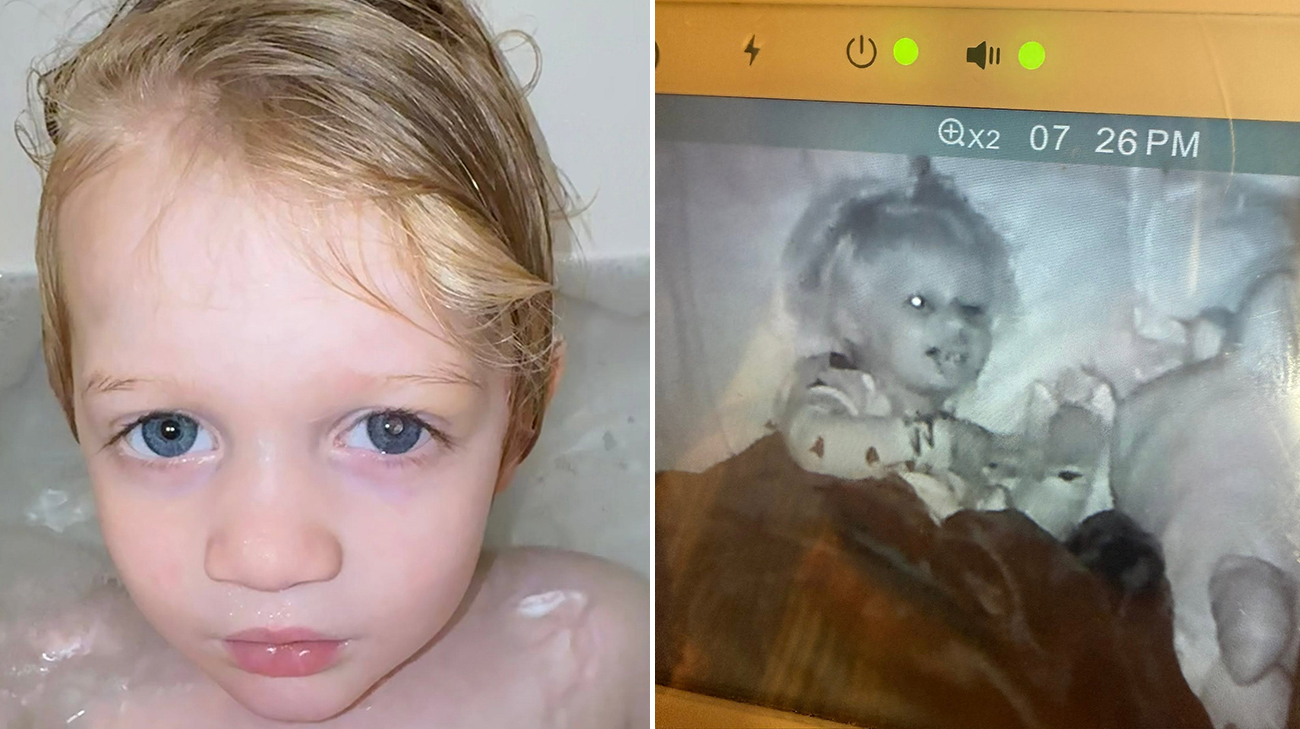
What began as a white glow in Miley's left eye became even more concerning when her mother, Kristen, noticed one eye appeared black on the baby monitor. (Courtesy: Kristen Draime)
Kristen didn't sleep that night. The next morning, she gently covered Miley's healthy right eye with her hand.
“Her left eye just went wild,” Kristen recalls. “It didn’t have anything to help focus it with the healthy eye being covered. I could tell she couldn’t see me. It was the most gut-wrenching feeling.”
Kristen and her husband, Andrew Draime, immediately took Miley to a local pediatric emergency department. After evaluating her, the team contacted the ophthalmologist on call.
“They called him in on a Sunday,” Kristen says. “I knew it wasn’t good because they’re not going to call a specialist in on a weekend if it’s not something serious.”
After an ultrasound and thorough examination, the ophthalmologist delivered devastating news. Miley’s left eye was almost completely consumed by a tumor and would need to be removed.
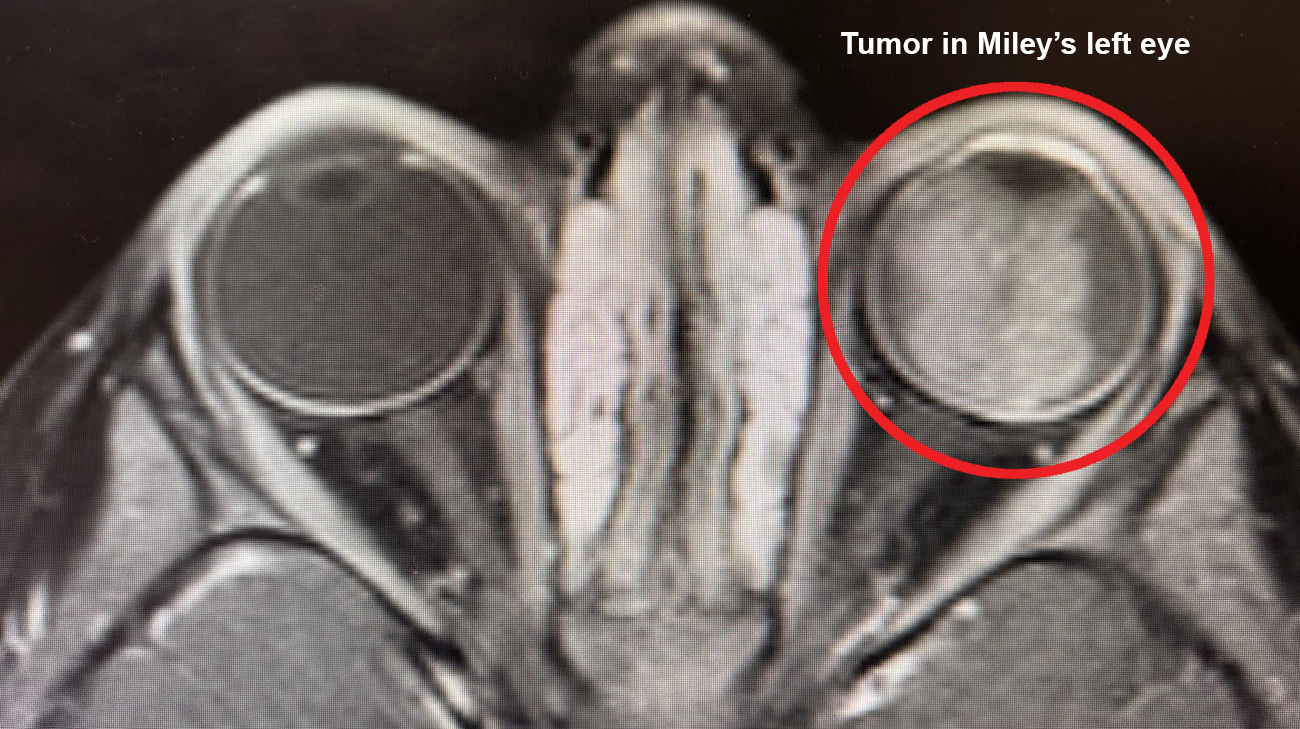
A scan that shows the tumor behind Miley's left eye. (Courtesy: Kristen Draime)
“I guess I knew on some level that cancer can be anywhere, but I’d never heard of it being in an eye, let alone a kid’s eye,” Kristen says.
The family learned Miley had likely been without vision in that eye for several months.
“There were no obvious signs,” Kristen says. “We’d go to dance class, and she’d walk across the balance beam just fine. She never complained, and because she was so young, she didn’t have the words to explain what she was experiencing. Looking back, it’s hard to think she was going through that without us knowing.”
The ophthalmologist referred the family to ocular oncologist Arun Singh, MD, at Cleveland Clinic’s Cole Eye Institute.
At their appointment, Dr. Singh thoroughly examined Miley's eye under anesthesia. Kristen and Andrew knew there was a possibility he would recommend removing the eye while Miley was still sedated.
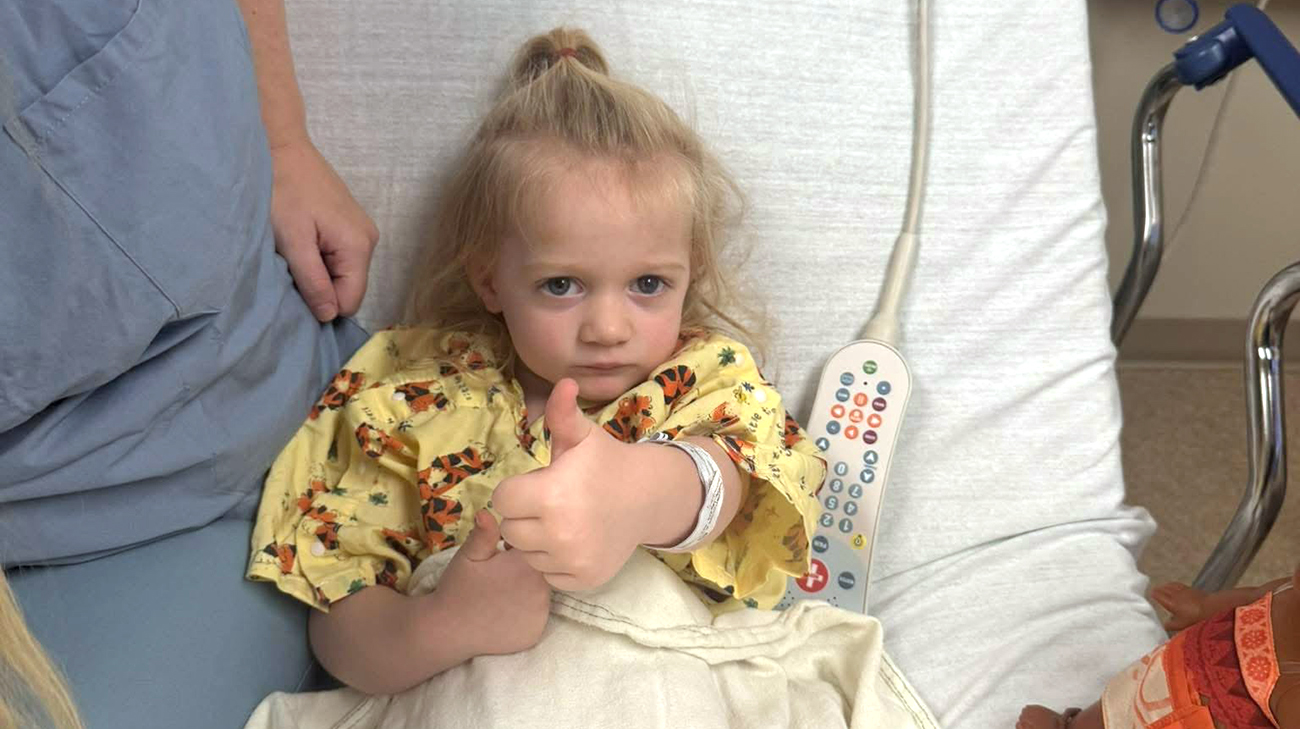
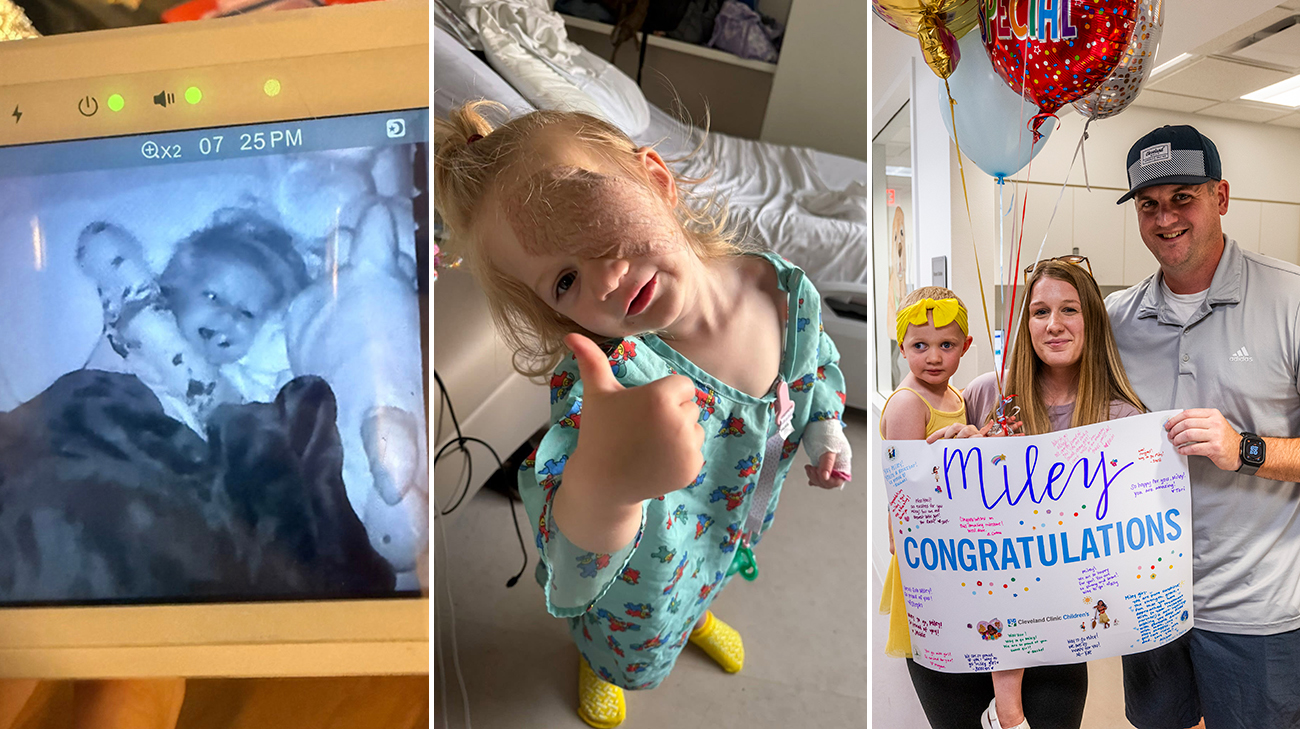
Miley before undergoing eye removal surgery to treat her rare eye cancer. (Courtesy: Kristen Draime)
The day before the appointment, Kristen recorded a video explaining the situation to Miley to help prepare her. A typical 2-year-old, Miley was most focused on one detail: she would get ice cream after she woke up.
As Kristen shared Miley's journey on social media, she connected with other families and individuals who had gone through similar experiences.
“It was amazing how many people reached out to us to share their story,” Kristen says. “Before Miley's surgery, we had gotten to know so many people with one eye, and I was reassured she was going to be okay. I'm a big community person, and it was so awesome to have that for her.”
In the video, Kristen asked Miley which eye would be affected, and Miley initially pointed to the wrong one. Kristen now believes that was because, to Miley, “eye” meant the one she could still see through.
After examining Miley's eye, Dr. Singh confirmed with her parents that removing it was the best option.
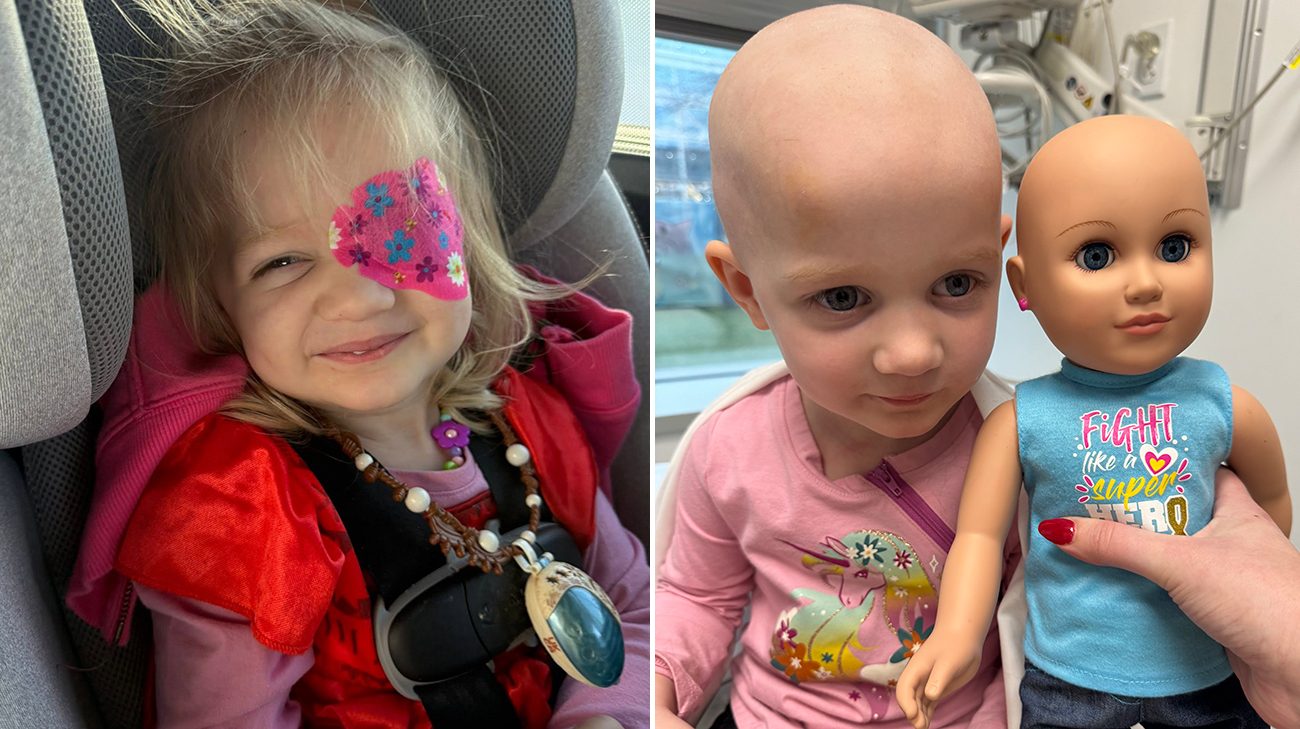
Following surgery, Miley's family learned chemotherapy would also be necessary because of the tumor's size and location. (Courtesy: Kristen Draime)
“Retinoblastoma has the highest cure rate of any childhood cancer,” Dr. Singh says. “Removing the eye is the most common treatment because leaving it intact risks letting the cancer spread to the brain or elsewhere in the body.”
When Kristen and Andrew saw a photograph Dr. Singh had taken in the operating room showing the tumor had overtaken nearly the entire eye, the decision became clear. Having prepared for that possibility and knowing Miley had already lost vision in the eye, they agreed to move forward with the operation.
Although the family had hoped surgery would be enough, a postoperative biopsy revealed chemotherapy would also be necessary because of the tumor's size and location.
Miley began treatment with Cleveland Clinic Children’s pediatric hematologist-oncologist Stacey Zahler, DO, just before Christmas 2025 and completed her sixth and final session in May 2026.
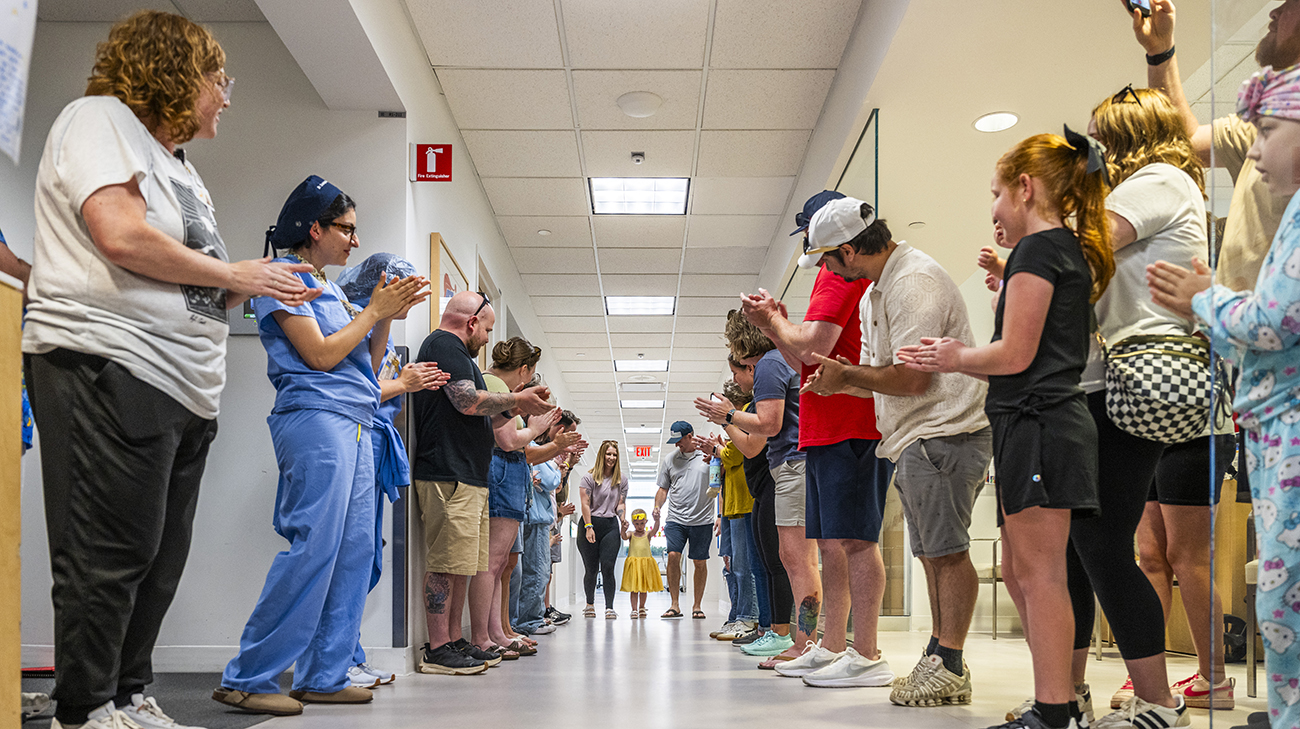
Family members, friends and caregivers celebrate at Cleveland Clinic Children’s as Miley rings the Bravery Bell, marking the end of her treatment. (Courtesy: Cleveland Clinic)
“Chemotherapy may be needed when an enucleated eye has what we call ‘high-risk features,’ meaning retinoblastoma cells have spread to areas within the eye that increase the risk of the cancer spreading to the brain or other parts of the body,” says Dr. Zahler. “This was the case for Miley. Chemotherapy helps eliminate any remaining cancer cells and reduce the risk of the cancer spreading.”
It was during one of those sessions the family received good news. Testing confirmed Miley's cancer was not genetic. Had it been, she would have faced a higher risk of developing retinoblastoma in her other eye or elsewhere in her body.
“Now she has about the same chance of getting it in her other eye as any other child. I bawled my eyes out when we got that news,” Kristen says.

Miley turned 3 years old on August 26, 2026. (Courtesy: Kristen Draime)
In June, Miley rang the end-of-treatment Bravery Bell at Cleveland Clinic Children’s, surrounded by cheering family members and caregivers. By the end of the day, she was twirling in her bright yellow dress and playing hide-and-seek among celebratory helium balloons.
Miley now has a permanent prosthetic eye, replacing the temporary one she had been given after surgery. The small plastic disc is cosmetic, but it also helps the eye socket maintain its shape. It can be removed for cleaning.
“You wouldn’t know she’d had her eye removed,” Kristen says. “She does great navigating through life, and I can only occasionally tell she has one eye. It’s mind-blowing how well she is doing.”
Kristen makes a point to talk openly with Miley about what she has been through so she will grow up seeing it as part of her story, not something to hide. “I just want her to be confident and know she’s beautiful,” she says.
Related Institutes: Cole Eye Institute, Cleveland Clinic Children'sPatient Stories
Cleveland Clinic Team Helps Florida Patient Breathe Easier After Complex Lung Surgery
Oct 21, 2026

Teen Athlete Returns to Sports After Two Head Injuries Trigger Yearlong Headache
Oct 19, 2026