When David Smith, 48, arrived at Cleveland Clinic London's Neurorehabilitation Unit, he wasn't looking for promises. The British Paralympian wasn't chasing another gold medal. After a spinal cord tumour left him paralysed from the neck down earlier this year, he came with one clear goal: to build the strongest possible foundation for whatever comes next.
"Let's get me to the best quality of life, no matter what the results will be over the next few years," he says.
Resilience has defined much of Smith's life. In 2010, doctors discovered a tumour inside his spinal cord. Emergency surgery left him temporarily paralysed. Over the next 16 years, he underwent multiple brain and spinal surgeries while continuing to compete at the highest level. Despite these setbacks, he represented Great Britain in rowing at the Paralympic Games, competed at World Championships, cycled across the Alps, completed Ironman-distance events and helped raise more than £2 million to build a school in Cambodia.
Then, in February this year, everything changed. Doctors discovered his tumour had grown rapidly, compressing his spinal cord. He was told he might not live for more than four months. Radiotherapy successfully shrank the tumour, but the paralysis remained. After months in hospital and multiple complications, Smith found himself facing an entirely different future.
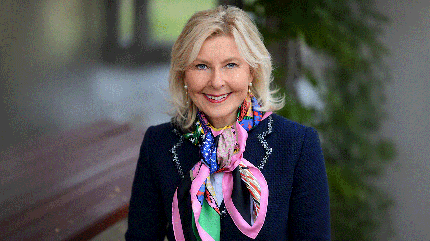
Knowing he needed specialised rehabilitation, he turned to Cleveland Clinic London. Dr Emer McGilloway, clinical lead consultant for rehabilitation, says cancer-related spinal cord injury can present challenges for patients seeking specialised rehabilitation.
"It's very difficult to find services that can meet those needs," she says. "We're fortunate to have a specialist rehabilitation team and access to a range of different specialist consultants as well as an intensive care unit.”
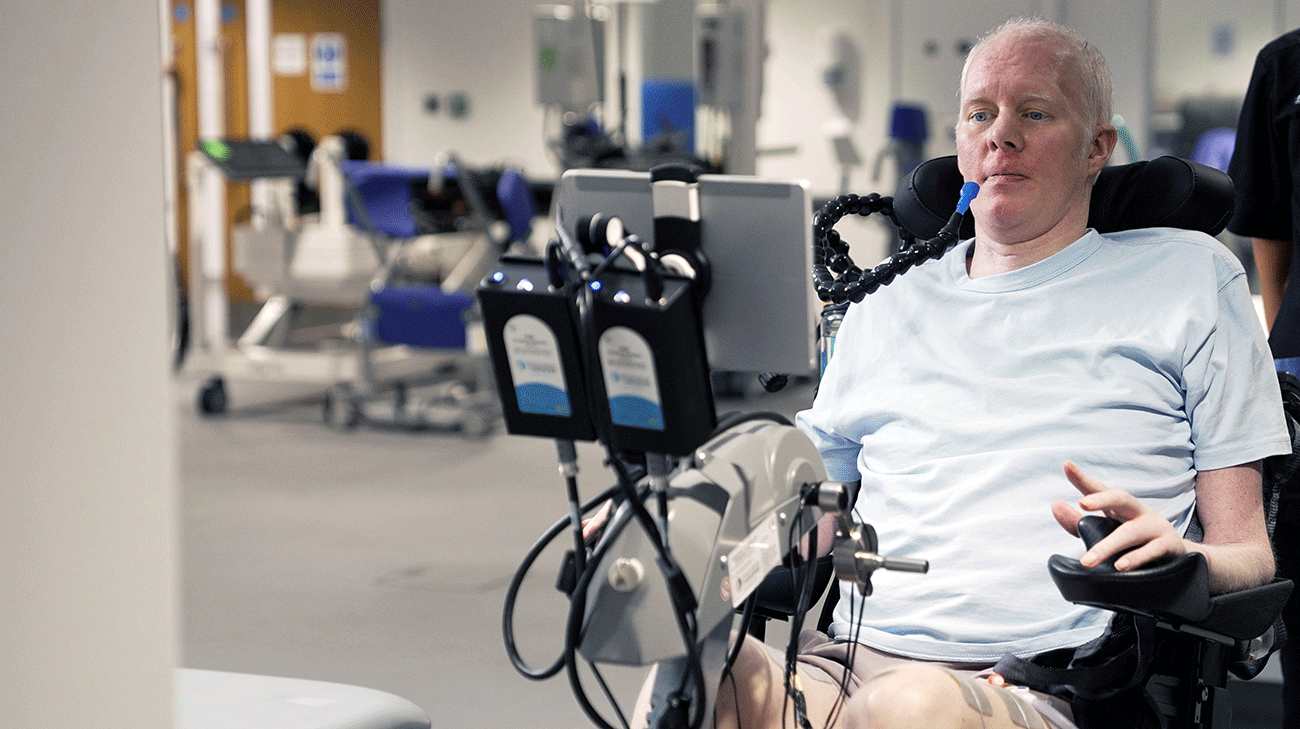
David’s care also required an understanding of the complex complications that can accompany a chronic spinal cord injury, including bladder and bowel problems and autonomic dysreflexia, a potentially dangerous reaction that can cause a sudden spike in blood pressure.
“Having all the specialised services meant our team could wrap the care around David in whatever way he needed while also delivering a really comprehensive rehabilitation programme,” adds Dr McGilloway.
Despite the multidisciplinary care and state-of-the-art facilities at Cleveland Clinic London, David’s first impression was shaped less by what he saw than by how people spoke to him.
"The first thing I felt was that I was treated like David. I wasn't treated as bed 14," he says. "My sense of identity was very much that I'm still David."
That feeling has continued throughout his rehabilitation. Smith says his consultants, therapists, psychologists, nurses and the wider rehabilitation team have focused not only on his physical recovery, but on helping him maintain his independence, identity and sense of purpose. An early conversation with Dr Sancho Wong, consultant physician in rehabilitation medicine, helped shape his approach to rehabilitation.
"He said, 'I can't tell you you're going to walk again, but I'm not going to tell you you're not going to walk again. We're going to work on everything, and we're going to see where we go,” Smith recalls. "I thought, right, it's up to me to do the work."
That mindset changed Smith’s outlook. Rather than something happening to him, it became something he actively participates in every day.
“David has a high-level spinal cord injury, which means the equipment he requires is quite sophisticated,” says Dr Wong. “We have devices such as tilt tables, which allow patients to gradually practise being in a more vertical position while supporting their blood pressure.”
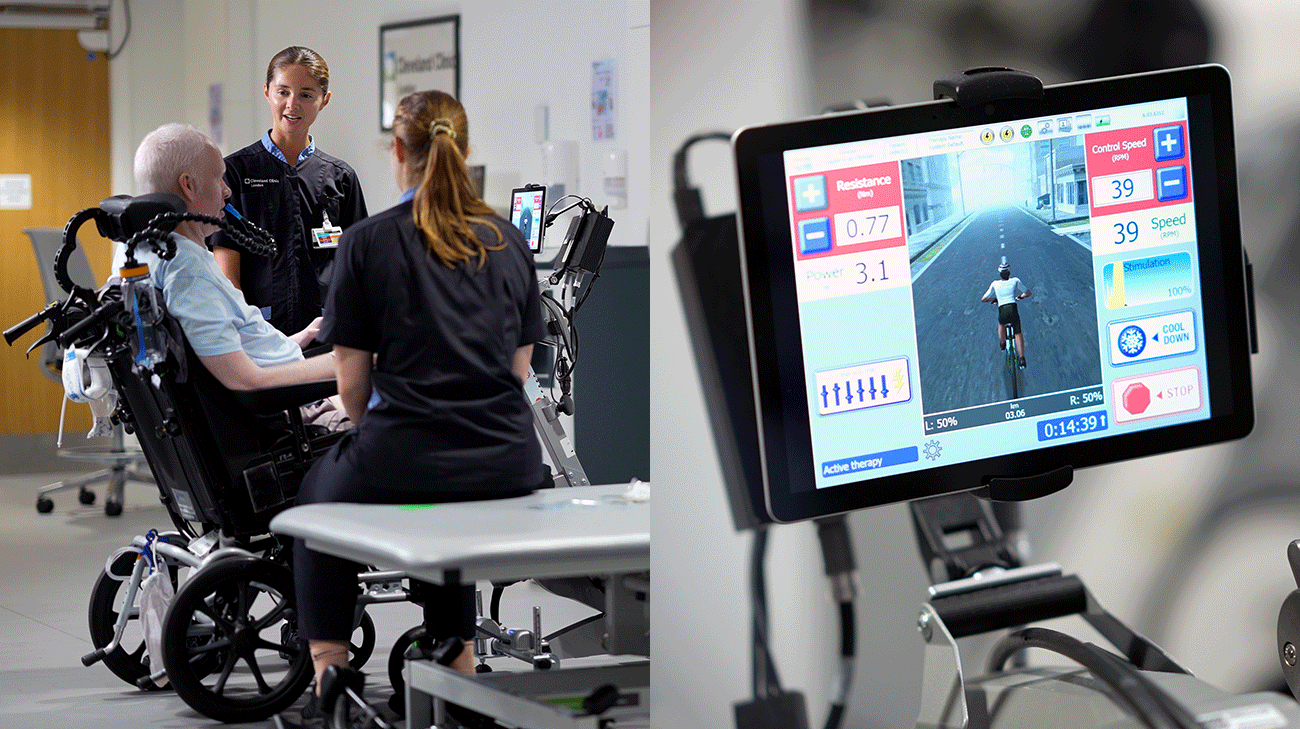
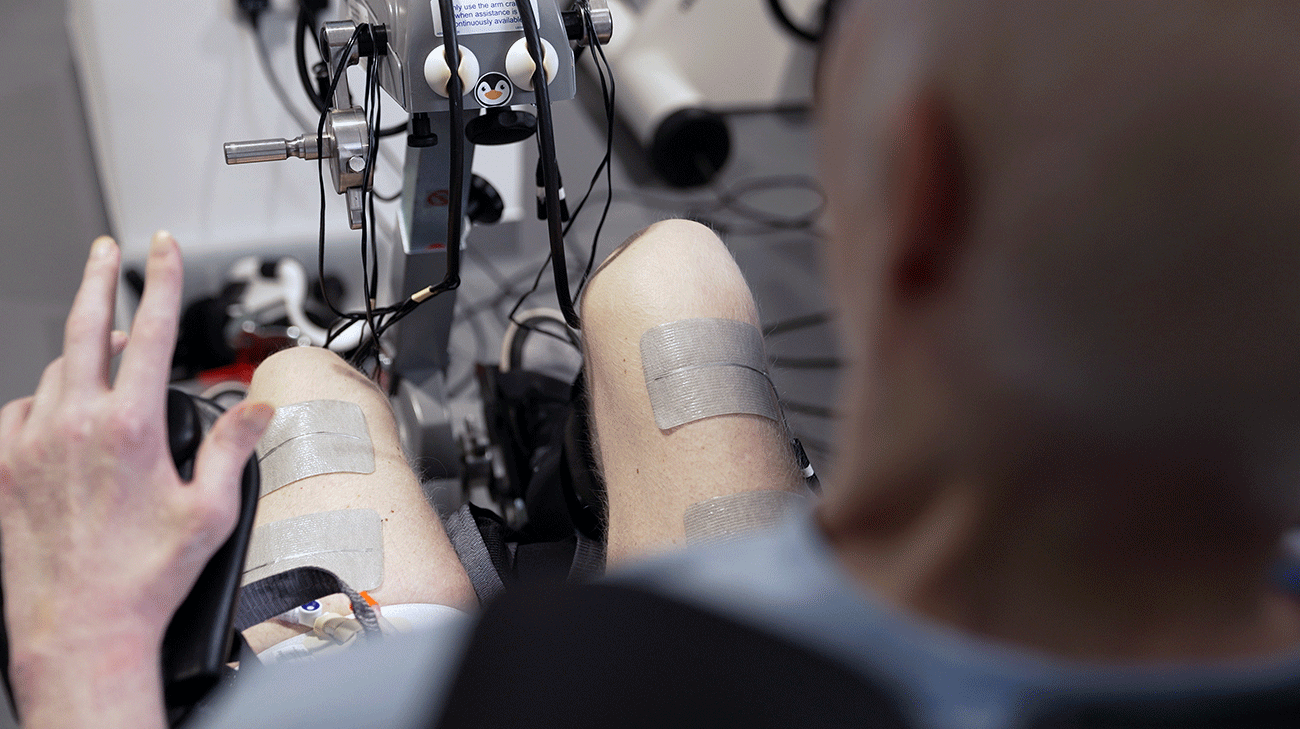
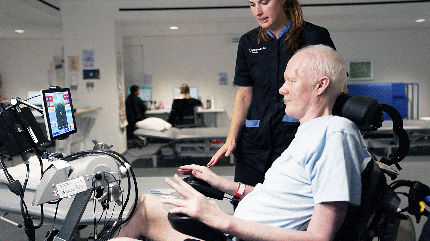
As a former cyclist, David particularly enjoys using the functional electrical stimulation (FES) bike.
“It’s a static bike with electrical pickups on different muscle groups in the legs that encourage the weak muscles to contract in a more normal way and help David strengthen those muscles,” says Dr McGilloway. “As an Olympic athlete, it’s meaningful to be doing something which aligns to his previous life experience.”
A typical day begins around 5 a.m. and often continues until 7 p.m., with occupational therapy, physiotherapy, psychology sessions and independent exercises woven throughout his day. Smith says his personalised care extends well beyond therapy sessions.
"We had a 90-minute family meeting with my wife and the multidisciplinary medical team," he says. "We could ask all the questions we wanted."
During his rehabilitation, the team also reviewed medication prescribed elsewhere and arranged updated investigations including an EEG. The results showed he no longer needed an anti-seizure medication that had been affecting his mental wellbeing.
"Now that I'm off that medicine, I feel back to my old self," Smith says.
It’s often the smaller moments that have made the greatest impression – like the chef preparing a Wagyu beef dinner for him and his wife, Angela, or the healthcare assistants who take time to chat while feeding him, allowing him to eat at his own pace.
Friday coffee mornings have become a favourite part of the week, offering patients the chance to connect beyond their therapy sessions. Smith has embraced the camaraderie so fully that he now persuades his nurses to sing Bob Marley songs with him during his personal care.
"It feels like a big family here," he says. "I just press a button and all of a sudden there's a bunch of people who arrive."
Angela, who has been alongside her husband throughout his illness, became so confident in his care at Cleveland Clinic London that she felt comfortable to travel to Jamaica for personal commitments.
"She knows I am in good hands," Smith says.
For much of his life, success meant crossing finish lines, winning races and pushing his body to its limits. Today, he measures progress differently. Smith hopes to continue sharing his story through writing and speaking, encouraging others living with cancer, spinal cord injuries and life's unexpected challenges.
"If you have the strength to show your vulnerability, maybe you can help just one person," Smith says.
“David has faced his diagnosis with courage and grace,” says Dr McGilloway. “He is a source of inspiration to all of us who have the pleasure of working with him.”
Whether or not he regains further movement remains unknown. What he does know is that rehabilitation has given him renewed purpose and the confidence to focus on what is possible, one day at a time.
“If I could teach people anything from lying here, it's to go and live your life," Smith says. "Do the things you've always wanted to do."
Looking back, Smith says the greatest lesson from his health journey isn't just about resilience. It's about humanity. Having spent more than 16 years receiving treatment in different hospitals, Smith says this experience has stood apart.
"This is the first time I've ever experienced that level of personalised, patient-centred care with real compassion and empathy," he says. "The people at Cleveland Clinic London aren't just doing a job. They genuinely care and that makes all the difference."
About Cleveland Clinic London's Rehabilitation Services
Cleveland Clinic London provides consultant-led rehabilitation for people recovering from complex neurological conditions and injuries, including spinal cord injuries, stroke and brain injury. Care is delivered by a multidisciplinary team through personalised programmes designed to maximise independence.
To find out more, visit Cleveland Clinic London.
Patient Stories
Personalised Neurorehabilitation Helps British Paralympian Redefine What Matters
Sep 10, 2026

Black Eye On Baby Monitor Helps Mother Uncover Daughter's Rare Eye Cancer
Sep 7, 2026