



Stimulants are a class of drugs that manage conditions like ADHD, narcolepsy and obesity. There are also nonmedical forms, like meth and crack cocaine. They have high addiction potential and could lead to substance use disorder. It’s important to talk with your provider about the risks and benefits before taking stimulants.
Advertisement
Cleveland Clinic is a non-profit academic medical center. Advertising on our site helps support our mission. We do not endorse non-Cleveland Clinic products or services. Policy
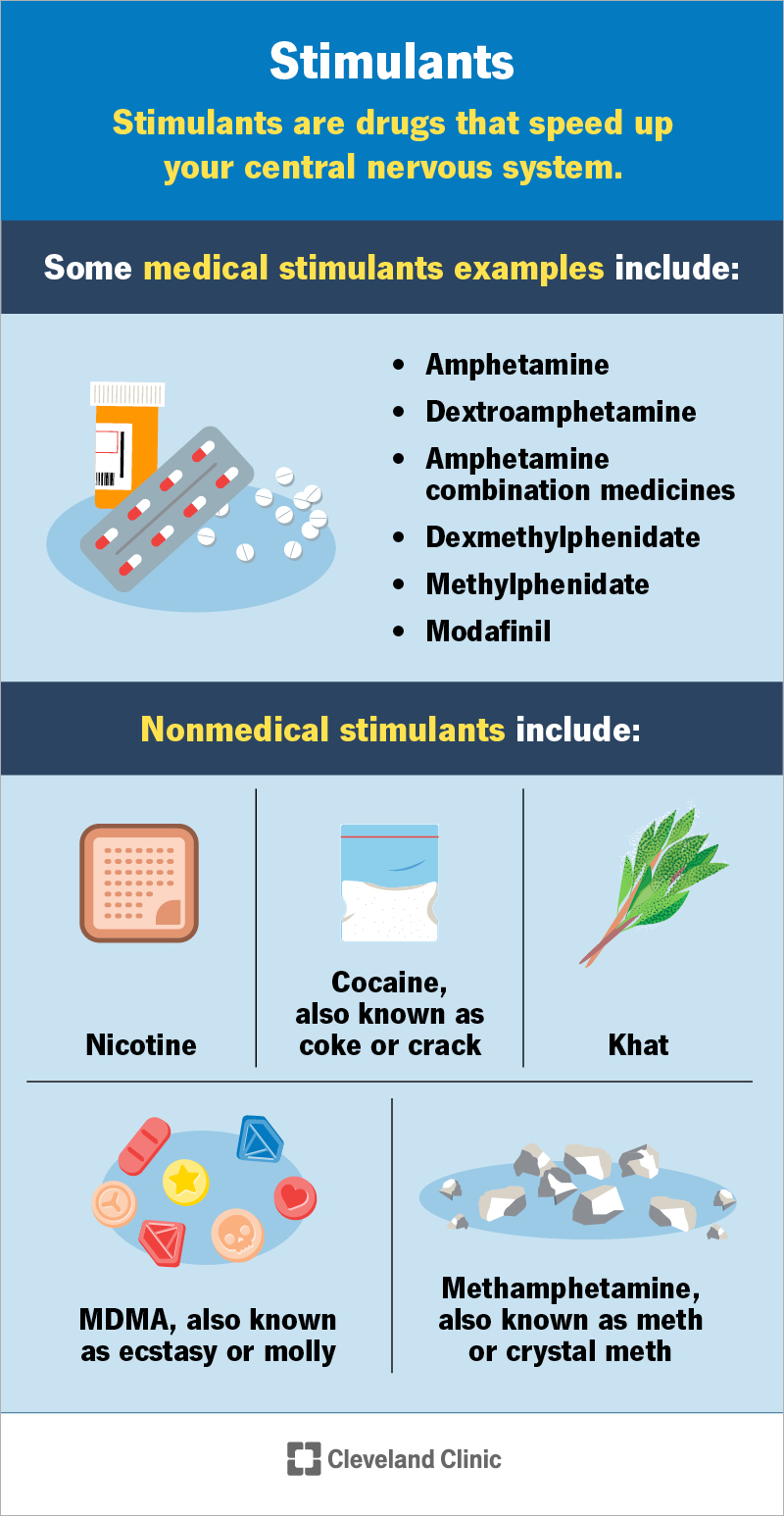
Image content: This image is available to view online.
View image online (https://my.clevelandclinic.org/-/scassets/images/org/health/articles/stimulants)
Stimulants are drugs that speed up your central nervous system. They lead to effects like increased alertness and focus. They may also cause physical changes, like increased heart rate and a loss of appetite.
Advertisement
Cleveland Clinic is a non-profit academic medical center. Advertising on our site helps support our mission. We do not endorse non-Cleveland Clinic products or services. Policy
There are many forms of stimulants. Some come from nature, while others are human-made. Caffeine is the most-used stimulant in the world.
In general, these drugs fall into two main groups based on their intended use: medical (therapeutic) and nonmedical (recreational drugs or “uppers”). Because of the way stimulants make you feel, many carry a risk of misuse and dependence or addiction. You’ll see your healthcare provider regularly if you take a prescription stimulant.
There are several types of therapeutic stimulants. Each kind treats specific conditions. In general, they have approval from the U.S. Food and Drug Administration (FDA) to treat:
Most stimulants fit into one of two categories: medical or nonmedical. But some overlap depending on the specific formulation and dose.
One example is caffeine. Most caffeine uses are recreational or nonmedical, like having a cup of coffee or tea. But it also has medical purposes in certain cases. For example, caffeine can help treat breathing issues (apnea) in preterm infants. It’s also combined with certain medicines, like headache medicines.
Advertisement
Medical (therapeutic) forms may be prescription or behind-the-counter medications. Some examples of prescription stimulants include:
In the U.S., the Drug Enforcement Administration (DEA) classifies most prescription stimulants as Schedule II drugs. This means they’re associated with serious risks, including misuse, addiction and overdose. Because of this, you should take them exactly as prescribed. When taken this way, the risk of addiction is lower. Misuse can lead to substance use disorder.
Behind-the-counter stimulants include ephedrine and pseudoephedrine. They’re nasal and sinus decongestants. They work by narrowing blood vessels and reducing swelling in your nose to improve airflow.
“Behind the counter” means you don’t need a prescription for them. But you must ask a pharmacy employee for assistance to buy them, as required by law. You may also have to be a certain age to buy them.
People mainly use the following stimulants for nonmedical reasons. But some of them have approved or experimental therapeutic uses. Nonmedical stimulants include:
These drugs have high potential for addiction.
Stimulants speed up the messaging between your brain and body. They do this by triggering your brain to release more chemicals (neurotransmitters), especially dopamine and norepinephrine.
Dopamine plays a role in many functions, like behavior, attention and wakefulness. It’s also a key part of your brain’s reward system. That’s why stimulants have potential for addiction. They may cause a “high” or euphoric feeling.
Stimulants can make you feel:
Dopamine and norepinephrine are also part of your “fight-or-flight” stress response. That’s why stimulants increase your heart rate, blood pressure and breathing.
Advertisement
Stimulants can cause a range of short-term and long-term side effects. Your likelihood of experiencing these effects depends on many factors. Some include the type of stimulant and its dose and your body weight and tolerance.
Common side effects of stimulants include:
Less common, but serious, side effects include heart problems and seizures.
Each person is different. Your healthcare provider or pharmacist can tell you more about possible side effects. They can also tell you which ones need care right away and which can wait for an appointment.
Most stimulants have dependence and/or addiction potential. Dependence happens when your body adapts to the stimulant. You then have withdrawal symptoms when you stop taking it. Addiction is more severe. It means you compulsively seek out and take a substance despite negative or harmful consequences.
Addiction involves substance misuse, which means using more than the prescribed dose of medical stimulants or using nonmedical stimulants. Misuse can lead to complications like:
Advertisement
If you think you have stimulant dependence, see a healthcare provider right away. The sooner you get help, the more likely you’ll be able to prevent serious health risks. You can also reach out to a free, confidential National Helpline (SAMHSA at 1.800.662.HELP) when you’re ready.
Stimulants can have powerful effects. As medicines, they can help you manage conditions like ADHD and narcolepsy. If you take them for a medical condition, you’ll see your healthcare provider regularly to make sure they’re safe and helpful for you.
Stimulant misuse can lead to serious complications. If you have questions about the use of stimulants or think you may have a substance use disorder, reach out to your provider. Their job is to help you, not judge you. You don’t have to go through it alone.
Advertisement



Sign up for our Health Essentials emails for expert guidance on nutrition, fitness, sleep, skin care and more.
Learn more about the Health Library and our editorial process.
Cleveland Clinic’s health articles are based on evidence-backed information and review by medical professionals to ensure accuracy, reliability and up-to-date clinical standards.
Cleveland Clinic’s health articles are based on evidence-backed information and review by medical professionals to ensure accuracy, reliability and up-to-date clinical standards.
Cleveland Clinic’s primary care providers offer lifelong medical care. From sinus infections and high blood pressure to preventive screening, we’re here for you.
