



Bunion surgery (bunionectomy) is surgery to remove a bunion from the joint where your big toe meets your foot. Your surgeon will use one of four surgery techniques to remove the bunion and realign your toe. Most people experience noticeably less pain and other symptom relief once they recover.
Advertisement
Cleveland Clinic is a non-profit academic medical center. Advertising on our site helps support our mission. We do not endorse non-Cleveland Clinic products or services. Policy
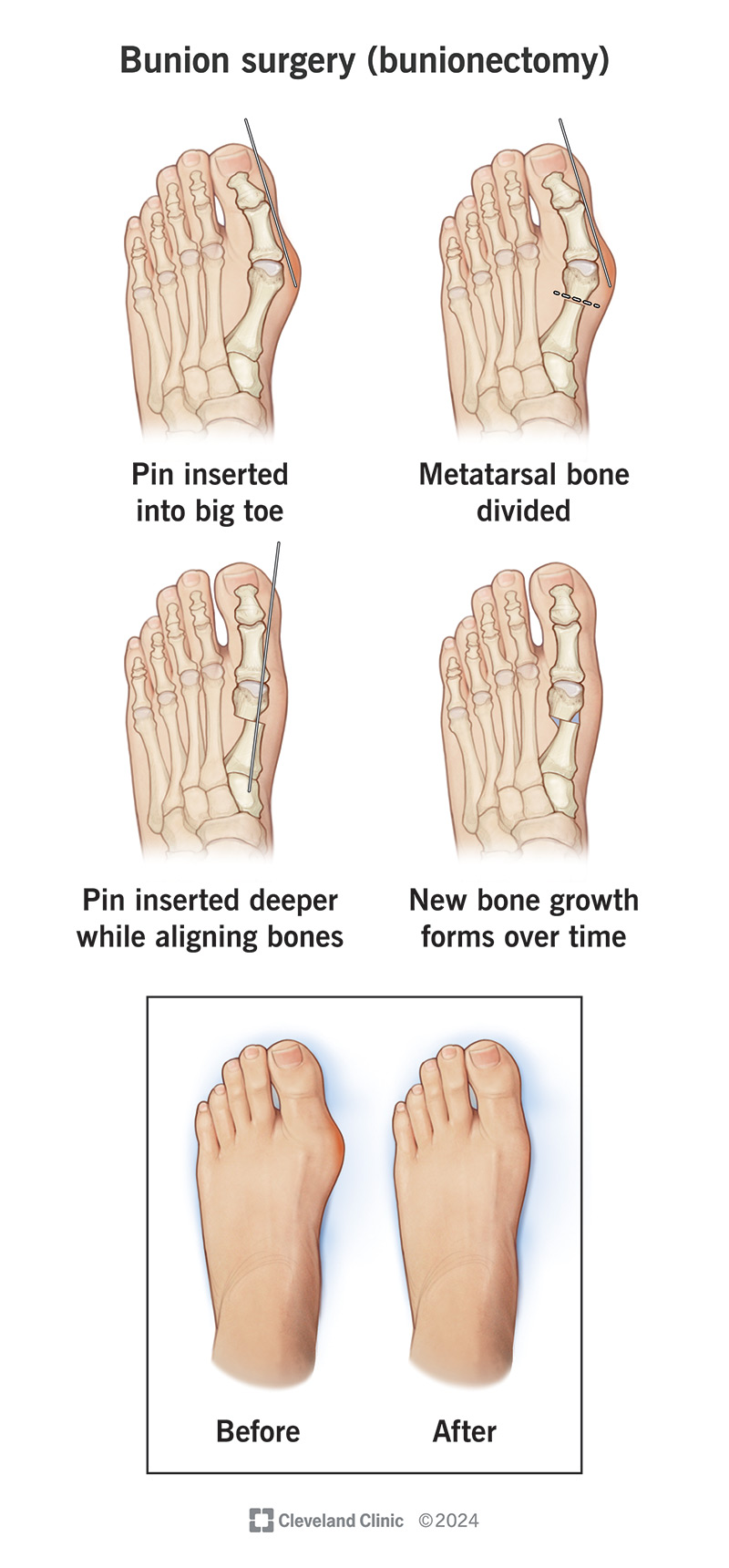
Image content: This image is available to view online.
View image online (https://my.clevelandclinic.org/-/scassets/images/org/health/articles/bunion-surgery-bunionectomy)
Bunion surgery is a surgical treatment to remove a bunion from your foot. Healthcare providers sometimes call it bunionectomy or bunion correction surgery.
Advertisement
Cleveland Clinic is a non-profit academic medical center. Advertising on our site helps support our mission. We do not endorse non-Cleveland Clinic products or services. Policy
Bunions are bony growths that develop on the inside edge of your big toe joint when something pushes your big toe out of alignment for a long time. They affect the metatarsophalangeal (MTP) joint where the base of your big toe meets your foot.
Bunionectomy can also correct or remove tailor’s bunions (bunionettes). These growths are similar to bunions. But they form on the MTP joint on your pinkie (little) toe.
Other treatments can manage bunion symptoms. But a bunionectomy is the only way to permanently remove the extra growth and realign your foot. Your foot and ankle surgeon might suggest bunion surgery if walking is extremely painful and other treatments haven’t helped.
Most people who have bunion surgery experience significant pain relief. The surgery also improves big toe alignment. This can help you walk better and will make wearing shoes more comfortable.
Bunion correction is safe and effective. Complications are rare, but can include:
You’ll need a foot X-ray, blood tests and a physical exam to make sure you’re healthy enough to have surgery. Your surgeon will tell you which medications and supplements you should stop taking before your surgery date. They’ll also tell you how long you should avoid eating and drinking before your appointment.
Advertisement
The day of your surgery, you’ll receive anesthesia to make sure you don’t feel any pain. You probably won’t need general anesthesia to put you to sleep. An anesthesiologist may use a few different types of anesthesia that numb you anywhere from the waist down, or just your foot and the area around it.
Bunion/bunionette surgery usually takes an hour or less. What happens during your surgery depends on which type you need. There are four main types of bunion surgery, including:
After surgery, your surgery team will move you to a recovery room. They’ll keep an eye on you for a few hours to make sure you recover from the anesthesia without complications. They’ll also monitor your vital signs and pain level.
Most bunion surgeries are outpatient procedures. That means you can go home the same day. Plan ahead for someone to pick you up or arrange another type of transportation to get home. You won’t be able to drive after surgery.
It takes a few months to recover from bunionectomy. If your stitches aren’t absorbable, you’ll get them out about two weeks after surgery. However, it takes about six to 12 weeks for your bones to heal. You’ll probably have to wear a protective shoe or boot while you recover.
You might need physical therapy to help restore your foot’s strength and range of motion. You can resume your usual physical activities after about three months. But swelling may last for six to nine months after surgery.
You’ll need to see your healthcare provider for follow-up visits as you recover. They’ll make sure your foot is healing correctly and stays in the right alignment.
It depends on which type of bunionectomy you need. Your surgeon will tell you if it’s OK to put weight on your foot right after surgery. You might need to use crutches or a knee roller/scooter for a few weeks.
Advertisement
Follow your provider’s instructions carefully. Putting too much weight on your foot before your bones heal can undo some types of bunionectomy.
Call your surgeon or podiatrist right away if you experience any of the following issues:
Bunions and bunionettes are small bumps of bone, but they can have a huge impact on your ability to move comfortably. If it feels like you’ve tried every treatment and nothing’s working, it might be a good time to consider bunion surgery. Your podiatrist will help you make the decision that’s best for you, your foot and your overall health.
Ask your surgeon any questions you have. Make sure you’re confident and comfortable with all of your post-op instructions before you go home. It’s important to keep your toe supported and stable while it heals. Your care team will be happy to explain.
Advertisement



Sign up for our Health Essentials emails for expert guidance on nutrition, fitness, sleep, skin care and more.
Learn more about the Health Library and our editorial process.
Cleveland Clinic’s health articles are based on evidence-backed information and review by medical professionals to ensure accuracy, reliability and up-to-date clinical standards.
Cleveland Clinic’s health articles are based on evidence-backed information and review by medical professionals to ensure accuracy, reliability and up-to-date clinical standards.
Bunions can affect the way you move through your life. At Cleveland Clinic, we can work with you to create a treatment plan that’ll help relieve bunion discomfort.
