



Papular urticaria is itchy hives or blisters that appear on your skin after a bug bite. They often come back multiple times over a few months. They’re most common in kids, who often outgrow them. Creams and antihistamines can help relieve itching.
Advertisement
Cleveland Clinic is a non-profit academic medical center. Advertising on our site helps support our mission. We do not endorse non-Cleveland Clinic products or services. Policy
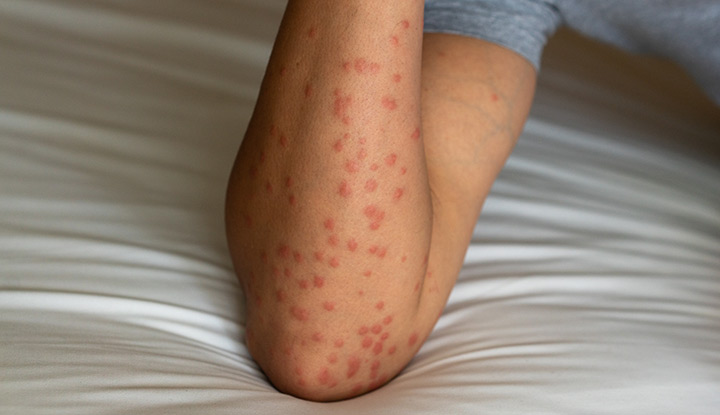
Image content: This image is available to view online.
View image online (https://my.clevelandclinic.org/-/scassets/images/org/health/articles/papular-urticaria)
Papular urticaria is swollen, itchy bumps on your skin. They happen when your immune system overreacts to bug bites. “Papules” are raised areas of your skin. “Urticaria”(pronounced “er-tuh-CARE-ee-uh”) is the medical term for hives.
Advertisement
Cleveland Clinic is a non-profit academic medical center. Advertising on our site helps support our mission. We do not endorse non-Cleveland Clinic products or services. Policy
Kids are more likely to get papular urticaria than adults. The bumps often come back again and again for several months or more. Kids can grow out of it as their immune systems develop.
Papular urticaria reactions tend to happen more in summer months. It’s also more common in tropical parts of the world where bugs live in hot, humid environments. It can affect adults who travel to these areas.
Papular urticaria looks like clusters of bumps (papules). They may be:
The bumps may last several days or a week at a time. New bumps or blisters may appear when old ones fade.
Papular urticaria reactions happen when your immune system overreacts to a bug bite. Your body thinks the bug bite is harmful. So, to protect you, it releases chemicals that cause swelling. Over time, as your body gets used to bug bites, the reaction usually stops happening.
Bugs whose bite can trigger papular urticaria include:
It can sometimes be hard to figure out what’s causing the bites. Not everyone will get hives with a bug bite. For example, even if your family pet has fleas, just one child in your family might have a reaction to flea bites.
Advertisement
Papular urticaria usually goes away on its own without treatment. Certain medications might reduce swelling and itching. These can include:
A healthcare provider may prescribe oral corticosteroids if other treatments aren’t helping. Talk to a pediatrician before giving medications to kids.
Take care of your skin and try not to scratch. If a hive breaks open, bacteria can get into your skin and cause an infection. You may need antibiotics if you get a bacterial infection.
Papular urticaria can keep happening for months or years. Each reaction can last a few days or weeks. They might clear up faster with creams or lotions.
Avoiding bug bites is the only way to prevent a reaction. Talk to a healthcare provider if you need help figuring out what bites are causing the reaction. Avoid bug bites by:
See a healthcare provider if you have a rash that doesn’t go away after a week, or one that spreads to a large area of your body. See a provider right away if you have signs of infection. These include:
Papular urticaria can be itchy and annoying. It can also be frustrating when you can’t determine the cause of the bites. But it’s usually not harmful. Just be careful about scratching — damaged skin can get infected and cause scarring. Talk to your provider if over-the-counter creams and antihistamines aren’t helping, or if it’s affecting your quality of life.
Advertisement



Sign up for our Health Essentials emails for expert guidance on nutrition, fitness, sleep, skin care and more.
Learn more about the Health Library and our editorial process.
Cleveland Clinic’s health articles are based on evidence-backed information and review by medical professionals to ensure accuracy, reliability and up-to-date clinical standards.
Cleveland Clinic’s health articles are based on evidence-backed information and review by medical professionals to ensure accuracy, reliability and up-to-date clinical standards.