



Age regression is when you act younger as a way to cope with stress. It can be voluntary or involuntary. It affects both kids and adults. Sometimes, it doesn’t last long and isn’t anything to worry about. But other times, it signals a deeper mental health issue. Support, therapy and medication may help you manage it.
Advertisement
Cleveland Clinic is a non-profit academic medical center. Advertising on our site helps support our mission. We do not endorse non-Cleveland Clinic products or services. Policy
Age regression is when you act, think and feel younger than you really are. Instead of handling tough situations, you go back to behaving as you did when you were a kid. It might happen because you’re feeling scared, stressed or unsure of yourself.
Advertisement
Cleveland Clinic is a non-profit academic medical center. Advertising on our site helps support our mission. We do not endorse non-Cleveland Clinic products or services. Policy
In some cases, it’s a choice. And other times, you don’t have any control over it.
It can affect both kids and adults. For children, it can be temporary and a normal part of development. But for adults, it may be a sign of an underlying mental disorder.
While it can feel like a safety blanket, it may prevent you from facing important tasks or taking care of yourself. Treatment is available to help you feel better.
There are two types:
Signs and symptoms of age regression may include:
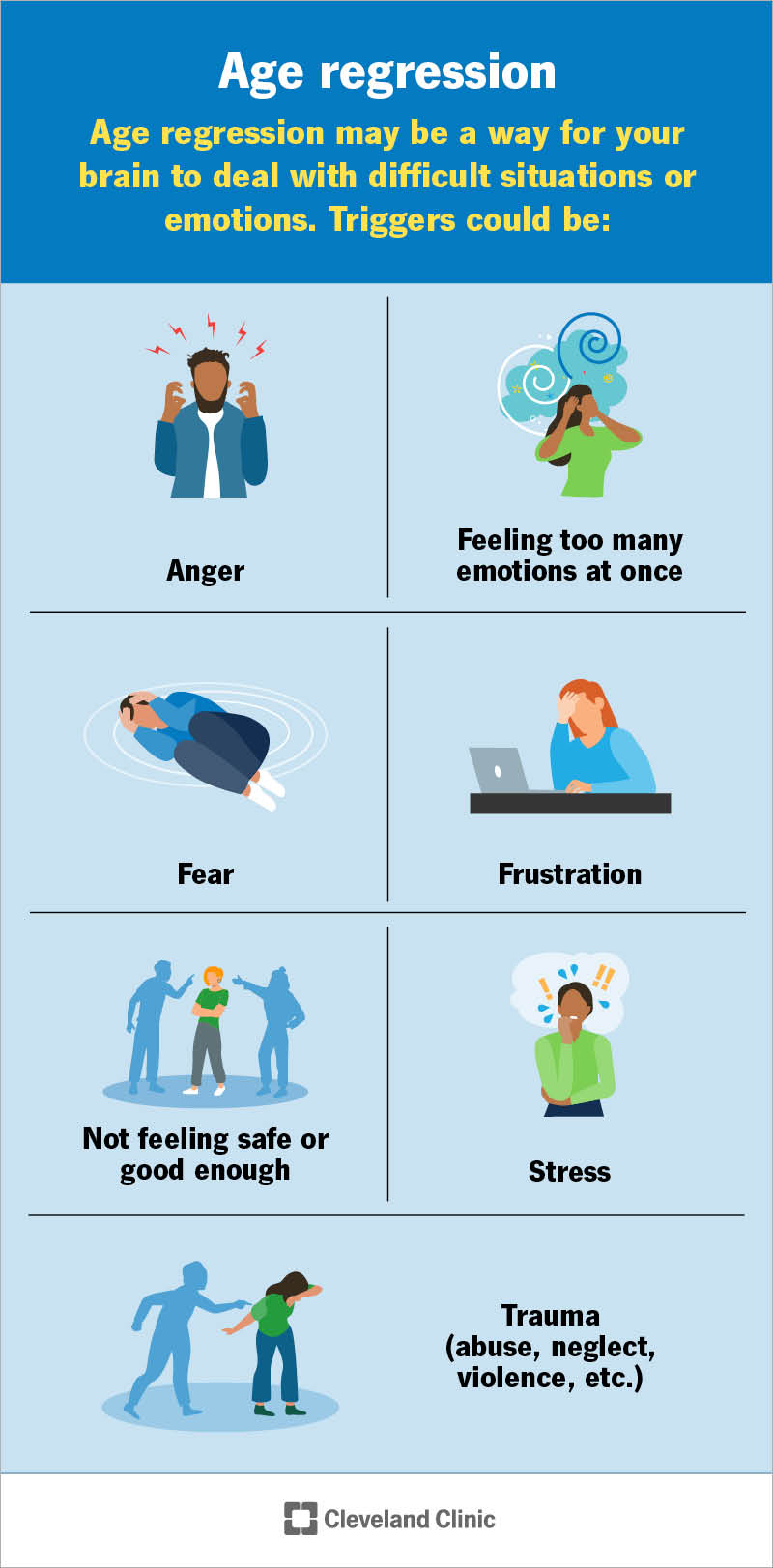
Image content: This image is available to view online.
View image online (https://my.clevelandclinic.org/-/scassets/images/org/health/articles/age-regression)
Age regression may be a coping mechanism. This is a way for your brain to deal with difficult situations or emotions. Triggers could be:
Advertisement
As a result, these behaviors can help you feel safe and calm. It may be a way to seek comfort, support or connection from others if you have trouble expressing your feelings. It could also be a sign of an underlying mental health condition.
Age regression is a typical part of childhood. It usually starts when kids are frustrated or stressed. A traumatic life event can also trigger it. Regression is their way to tell their caregivers that they need something. When that need is met, the regressive behavior usually goes away.
Adults may go back to younger ways of thinking, feeling or acting at any age after 18. Insecurities, fear or anger may trigger it. Regression is a way to help adults feel safe and secure. It may also help you forget about the stresses of everyday life.
It may be short-term and harmless. But other cases may be a sign of an underlying mental health condition. These could include:
Treatment depends on what’s causing it. It might include:
If adult age regression isn’t treated, symptoms may get worse. This is especially true if it’s part of an underlying mental health condition. In some cases, you might have trouble with everyday tasks or be at risk of self-harm.
If you’re in a situation where you’re having thoughts of suicide, it’s OK to reach out for help. Call or text 988 (U.S.). This is the Suicide & Crisis Lifeline. Someone is available to talk 24/7.
Let a healthcare provider know if age regression lasts more than a few weeks. Sometimes, it’s just a way to cope with stress. But if it goes on too long, makes daily tasks hard or affects your relationships, it could be a sign of a bigger problem. A provider can help you figure out what’s going on and what to do next.
Advertisement
When life feels overwhelming, it’s easy to slip into familiar childhood behaviors. They can feel safe and remind you that things will be okay, even when everything else is out of control.
This can be a normal part of growing up. But sometimes, it’s your brain’s way of showing that it needs attention. A healthcare provider can guide you in understanding what’s going on and recommend a treatment that’s right for you.
No matter what you’re facing, support is available. And it can make a big difference in helping you feel like yourself again.
Advertisement



Sign up for our Health Essentials emails for expert guidance on nutrition, fitness, sleep, skin care and more.
Learn more about the Health Library and our editorial process.
Cleveland Clinic’s health articles are based on evidence-backed information and review by medical professionals to ensure accuracy, reliability and up-to-date clinical standards.
Cleveland Clinic’s health articles are based on evidence-backed information and review by medical professionals to ensure accuracy, reliability and up-to-date clinical standards.
Your mental well-being is just as important as your physical well-being. Cleveland Clinic’s mental health experts can help you live life to the fullest.
