



Night sweats are common during menopause. Night sweats may be a side effect of certain medications, too. And when they happen with other symptoms, it may be a sign of an underlying health condition or an infection or a virus. Once a healthcare provider diagnoses what’s causing your symptoms, they can recommend treatments to manage night sweats.
Advertisement
Cleveland Clinic is a non-profit academic medical center. Advertising on our site helps support our mission. We do not endorse non-Cleveland Clinic products or services. Policy
Night sweats are heavy sweating episodes that happen while you sleep. They’re much more intense than normal sweating. They can soak through your clothes and bedding and wake you up at night.
Advertisement
Cleveland Clinic is a non-profit academic medical center. Advertising on our site helps support our mission. We do not endorse non-Cleveland Clinic products or services. Policy
During a night sweat, you may feel a sudden wave of heat, especially in your neck, chest and upper body. You might notice sweat dripping from your skin and feel your heart beating faster. When the sweating stops, you may feel cold.
Night sweats often happen with menopause. When night sweats happen with other symptoms, they could be a sign of an underlying health issue. There are several possible treatment options to help you with night sweats.
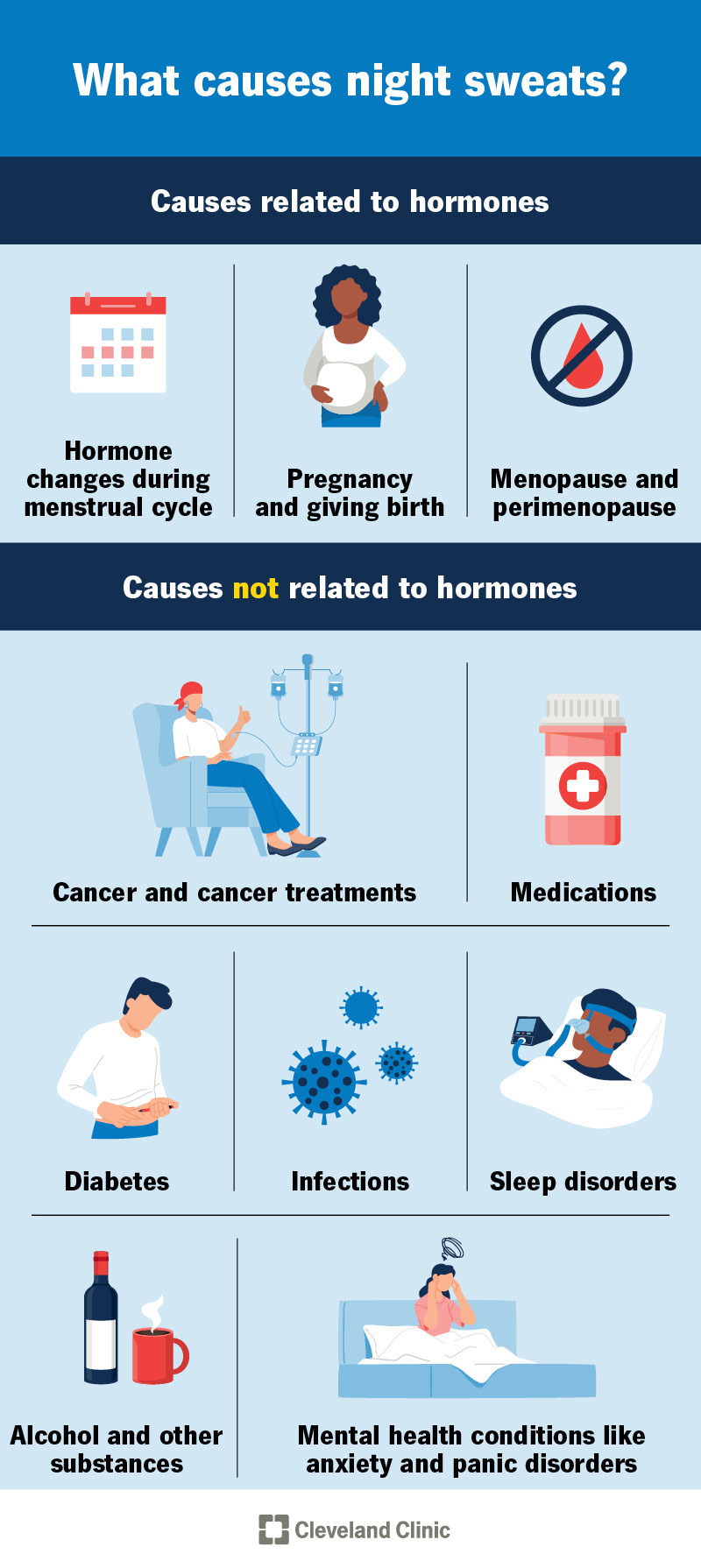
Image content: This image is available to view online.
View image online (https://my.clevelandclinic.org/-/scassets/images/org/health/articles/16562-night-sweats)
Night sweats happen more often in women because of changes in hormones like estrogen and progesterone. These hormones help your body control its temperature. When hormone levels rise or fall, your body may have trouble staying at a comfortable temperature. It responds by sweating to cool down. Here are some examples:
Advertisement
Some examples of other health conditions that can cause sweats are:
Night sweats can also happen with hyperhidrosis, a condition that involves excessive sweating for unknown reasons.
There is some evidence that Vitamin B12 deficiency can lead to night sweats. A nutritional deficiency alone rarely causes night sweats. But low levels of estrogen are a well-known cause of night sweats.
Treatment depends on what’s causing your night sweats and how severe they are.
Mild cases may get better on their own or improve by making simple changes to your sleep environment. This may include turning on the air conditioning or sleeping in less clothing.
If menopause causes your night sweats, hormone replacement therapy (HRT) may be an option. This treatment replaces hormones you lose during menopause. All hormone therapies carry some risks. Your healthcare provider can help you weigh the benefits and risks.
If hormone therapy isn’t safe for you, there are medications that don’t contain estrogen that may help. These medications work by affecting how your body controls its temperature. Options include:
Your healthcare provider can help you choose the treatment option that’s safest and most effective for you.
You can take these steps to help with night sweats:
Advertisement
Schedule a visit with a healthcare provider if you have night sweats that disrupt your sleep. If you’re close to 50 and waking up drenched in sweat, menopause is likely the cause. Still, only a provider can make a diagnosis. Once they determine the cause, they can prescribe treatments to help.
Night sweats, like hot flashes, are often related to hormone changes that make it harder for your brain to control your body temperature. But they can also be a sign of a health condition. See a healthcare provider if night sweats affect your sleep. They can get to the bottom of why you’re experiencing them. They can also recommend lifestyle changes and treatments that can help you get more rest at night.
Advertisement



Sign up for our Health Essentials emails for expert guidance on nutrition, fitness, sleep, skin care and more.
Learn more about the Health Library and our editorial process.
Cleveland Clinic’s health articles are based on evidence-backed information and review by medical professionals to ensure accuracy, reliability and up-to-date clinical standards.
Cleveland Clinic’s health articles are based on evidence-backed information and review by medical professionals to ensure accuracy, reliability and up-to-date clinical standards.
Menopause is natural, but it also can disrupt your life. Cleveland Clinic is here to help you get relief.
