



SADI is a weight loss surgery for people with severe obesity. It combines a sleeve gastrectomy with an intestinal bypass. It makes your stomach smaller, so you eat less. It also limits how many calories you absorb.
Advertisement
Cleveland Clinic is a non-profit academic medical center. Advertising on our site helps support our mission. We do not endorse non-Cleveland Clinic products or services. Policy
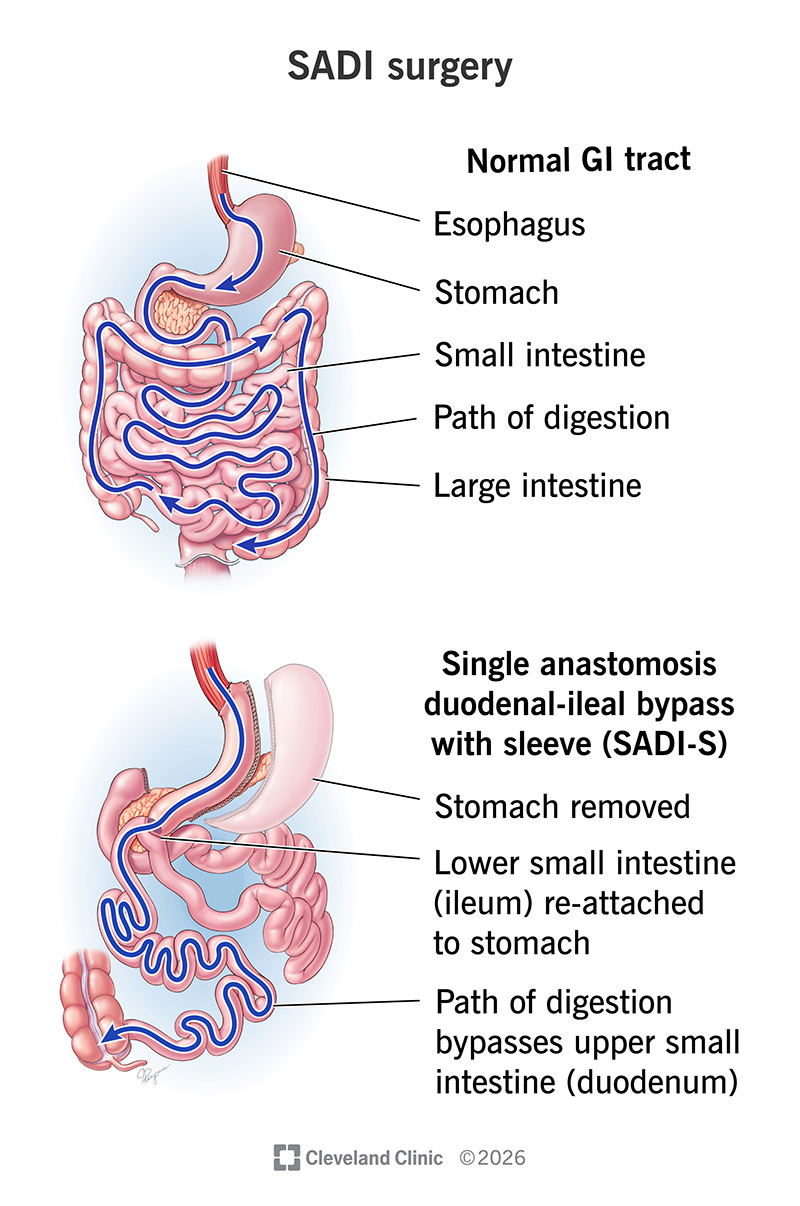
Image content: This image is available to view online.
View image online (https://my.clevelandclinic.org/-/scassets/images/org/health/articles/sadi-surgery.jpg)
SADI is a weight loss surgery for severe obesity (class III obesity). It’s a modified version of the duodenal switch. It begins with a sleeve gastrectomy. This creates a smaller, tube-shaped stomach. Then, the first part of your small intestine (duodenum) is connected to a lower part of your intestine. This change leads to absorbing fewer calories.
Advertisement
Cleveland Clinic is a non-profit academic medical center. Advertising on our site helps support our mission. We do not endorse non-Cleveland Clinic products or services. Policy
SADI stands for single anastomosis duodenal-ileostomy. It also goes by these names:
This procedure can lead to significant weight loss. It can also improve health conditions like Type 2 diabetes. After surgery, you’ll need to take vitamins for the rest of your life and have regular checkups with your provider. This ensures you get the nutrition you need to stay healthy.
SADI helps with weight loss in two main ways:
Together, these changes lead to weight loss. That’s because you eat less and absorb fewer calories as food moves through your intestines faster.
There are many types of bariatric weight loss surgeries. All of them work differently. Your healthcare team can walk you through each type and help you decide which may work best for you.
Advertisement
Your provider will order tests to check your overall health. You may meet with a dietitian to learn about how your diet will change and what nutritional supplements you’ll need. They may recommend you follow a low-calorie or liquid diet before surgery.
Your provider will give you specific instructions to follow in the weeks or days leading up to surgery. They may ask you to stop smoking, avoid alcohol and change or reduce certain medications.
The steps in the procedure generally go like this:
You can expect it to take around two hours. Your surgeon can let you know exactly what to expect.
The main benefit is that it leads to weight loss. It creates a smaller stomach, which means you eat less. It leads to less calorie absorption because food bypasses a larger section of your intestine. Other benefits are:
Some of the risks of SADI are:
SADI is a newer bariatric procedure, so long-term data is limited.
You’ll have to spend one day in the hospital for monitoring after SADI surgery. In the first few weeks, you may notice changes in your bowel habits. You may also feel less hungry and have a lower appetite. Most people slowly return to normal activities within one month.
Once you go home, you’ll need to follow a special diet. This usually includes a full liquid diet for a few weeks before moving on to soft foods. You’ll gradually return to eating regular foods in small portions. This process can take up to three months. A dietitian will help you create a long-term eating plan that works for your health goals after surgery.
Advertisement
One of the most important parts of your long-term care is getting the nutrients you need. Surgery changes how your body absorbs vitamins and minerals. So, taking supplements is a key part of staying healthy. Your provider will schedule regular follow-up appointments to check for nutrient deficiencies. You can expect to do this for the rest of your life.
Call your healthcare provider if you have any of the following after surgery:
SADI is a weight loss surgery used to treat severe obesity, and deciding to have it is a big step. It changes how your digestive system works, which can lead to significant weight loss. Because your body absorbs fewer nutrients after surgery, taking vitamins will be an important part of the rest of your life.
With the right support and treatment, SADI can reduce your risk of obesity-related conditions and help improve your quality of life.
Advertisement



Sign up for our Health Essentials emails for expert guidance on nutrition, fitness, sleep, skin care and more.
Learn more about the Health Library and our editorial process.
Cleveland Clinic’s health articles are based on evidence-backed information and review by medical professionals to ensure accuracy, reliability and up-to-date clinical standards.
Cleveland Clinic’s health articles are based on evidence-backed information and review by medical professionals to ensure accuracy, reliability and up-to-date clinical standards.
If you have obesity and losing weight is an uphill battle, Cleveland Clinic experts can help you decide if bariatric surgery is an option.
