A full liquid diet includes foods and drinks that are liquid or melt into liquid at room temperature. It allows more options than a clear liquid diet but still avoids solid foods. Providers often recommend it for short-term use after surgeries, injuries or swallowing problems. It supports your healing while transitioning you back to solid foods.
Advertisement
Cleveland Clinic is a non-profit academic medical center. Advertising on our site helps support our mission. We do not endorse non-Cleveland Clinic products or services. Policy
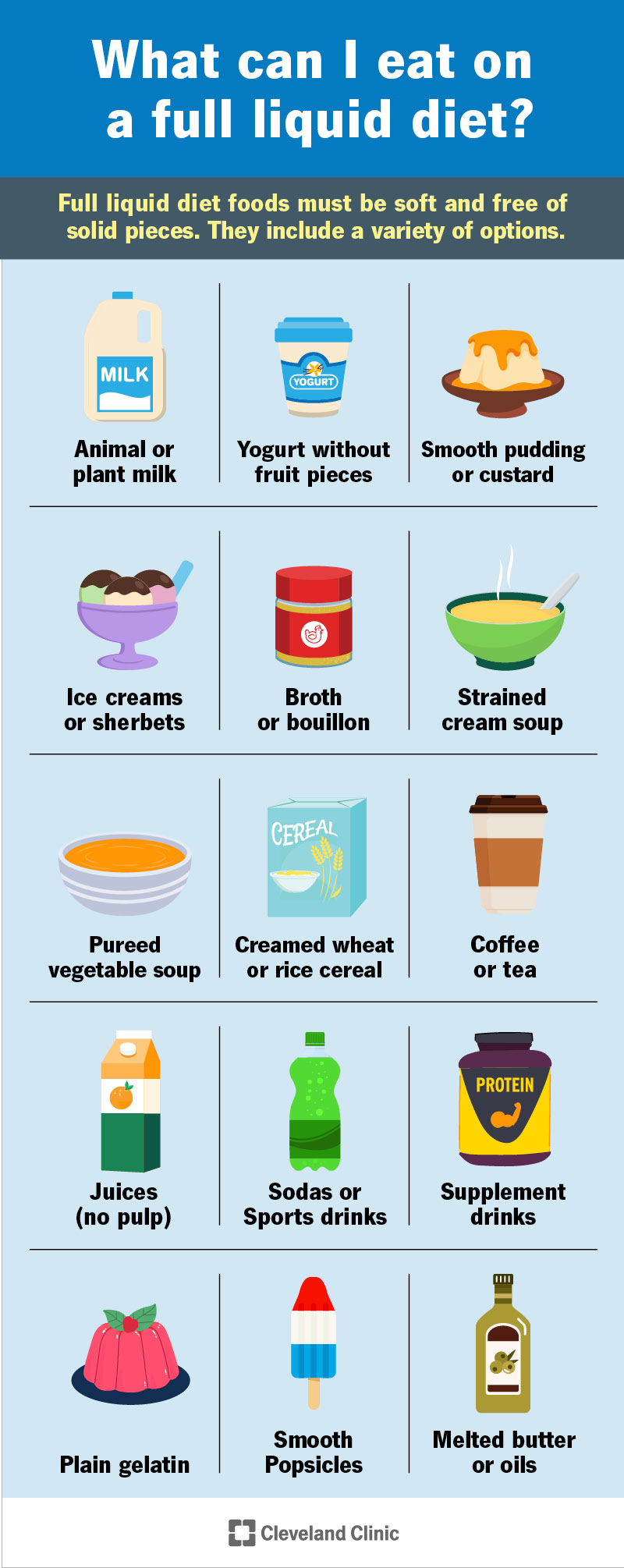
Image content: This image is available to view online.
View image online (https://my.clevelandclinic.org/-/scassets/images/org/health/articles/full-liquid-diet.jpg)
A full liquid diet includes only foods that are liquid or turn into liquid at room temperature. You can’t eat solid foods on this diet. But you’re allowed more than just clear liquids.
Advertisement
Cleveland Clinic is a non-profit academic medical center. Advertising on our site helps support our mission. We do not endorse non-Cleveland Clinic products or services. Policy
Full liquid diet foods can be thin, like milk or juice. Or they may be thicker, like pudding or strained cream soup. You don’t have to be able to see through them. But they must be smooth and free of solid bits. The key is these foods can’t contain any chunks, seeds or hard pieces.
Compared with a clear liquid diet, a full liquid diet provides more calories and protein. But it’s still not nutritionally complete. Most people only follow it for a short time.
Your healthcare provider may recommend a full liquid diet if you:
Full liquid diet foods must be soft and free of solid pieces. They include a variety of options.
Advertisement
Always follow your healthcare provider’s instructions. You may need to limit certain colors or ingredients if you’re preparing for a procedure.
Avoid anything that contains solid pieces, including small bits, seeds or pulp. This includes:
If you’re unsure about a food, ask your provider before eating it.
A full liquid diet is usually short-term. Most people follow it for a few days to a week, depending on the reason.
Even though it provides more nutrition than a clear liquid diet, it may still be low in fiber, iron and certain vitamins and minerals. Staying on it too long can lead to:
Your provider will tell you when it’s safe to move to regular foods. If you need to stay on it longer, they may recommend taking supplements or working with a dietitian.
The benefits include:
When you use it short-term and as directed, this diet is generally safe. But risks can include:
Your provider can help change your plan to reduce these risks.
A full liquid diet can feel repetitive after a while. Planning ahead can make it feel more manageable. These tips may help:
Contact your provider if you experience:
If you have diabetes or another condition that affects your nutrition, talk with your provider about how to balance sugar and protein intake. If you’ll be on this diet for more than a few days, working with a dietitian can help ensure you’re meeting your nutritional needs.
Advertisement
A full liquid diet may feel limiting, especially if you’re hungry for solid food. But it plays an important role in healing and recovery. It gives your body time to adjust while still providing more nutrition than clear liquids alone. Follow your healthcare provider’s instructions closely and speak up if something doesn’t feel right. As your body heals, you’ll gradually return to the foods you enjoy.
Advertisement



Sign up for our Health Essentials emails for expert guidance on nutrition, fitness, sleep, skin care and more.
Learn more about the Health Library and our editorial process.
Cleveland Clinic’s health articles are based on evidence-backed information and review by medical professionals to ensure accuracy, reliability and up-to-date clinical standards.
Cleveland Clinic’s health articles are based on evidence-backed information and review by medical professionals to ensure accuracy, reliability and up-to-date clinical standards.
If you have issues with your digestive system, you need a team of experts you can trust. Our gastroenterology specialists at Cleveland Clinic can help.