



Staphyloma is a rare eye condition where your cornea and sclera thin and stretch so there’s bulging (outpouching) in your eyes. It can be congenital (present at birth) or result from injuries, infections or diseases, like pathologic myopia or glaucoma. Symptoms include eye bulging, discoloration and pain. There’s no set treatment for it.
Advertisement
Cleveland Clinic is a non-profit academic medical center. Advertising on our site helps support our mission. We do not endorse non-Cleveland Clinic products or services. Policy
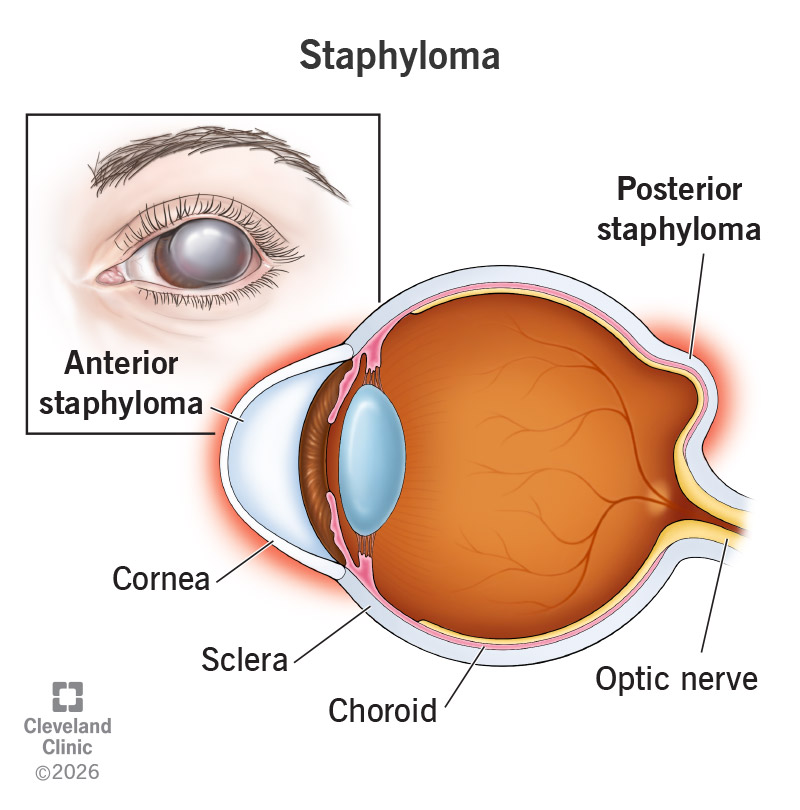
Image content: This image is available to view online.
View image online (https://my.clevelandclinic.org/-/scassets/images/org/health/articles/staphyloma)
Staphyloma is a rare eye disorder. It develops when your cornea and sclera stretch and thin, so your eye bulges (outpouches). Your cornea is the clear front of your eye. Your sclera is the white of your eye, which wraps around your eye. Some people are born with the condition (congenital staphyloma). But eye injuries or eye diseases, like severe nearsightedness (pathologic myopia) or glaucoma, can also cause staphyloma.
Advertisement
Cleveland Clinic is a non-profit academic medical center. Advertising on our site helps support our mission. We do not endorse non-Cleveland Clinic products or services. Policy
The two types of staphylomas (pronounced “sta-fuh-LOW-muh”) are:
Staphyloma symptoms include:
Babies born with staphyloma have noticeable symptoms at birth. Acquired staphyloma — when the condition happens after you’re born — may not cause symptoms right away. In some cases, you may learn you have this condition when eye tests show changes in the back of your eyes.
The two condition types have different causes:
Advertisement
Anterior staphyloma can cause eye bulges that change your appearance. The change may make you feel self-conscious and lead to social isolation.
Posterior staphyloma can cause blindness if the condition changes the structure of your eyes. Changes in your eye structure can cause choroidal neovascularization or damage your optic nerve. Choroidal neovascularization is when new blood vessels in your choroid cause inflammation and scarring.
The following issues may increase your risk:
An eye doctor will ask about your symptoms, including any vision issues. They may ask about your health history, including current eye issues and any past infections. They’ll diagnose staphyloma based on imaging tests, including:
There isn’t a specific treatment for staphyloma. Your treatment will depend on factors like the cause and the part of your eye the condition affects. Your eye doctor will recommend potential treatment based on your situation. For example, they may:
Contact an eye care specialist if your eye bulges, has a blue or black spot or your vision seems to be getting worse.
That depends on why you have staphyloma. If you were born with it, you may have surgery to remove the affected eye. Sometimes, this condition develops but doesn’t get worse. In that case, you may have frequent check-ups so your eye doctor can watch for changes that could affect your vision.
Staphyloma isn’t life-threatening, but it can affect your quality of life. This rare condition can cause a noticeable bulge in your eyes that affects your appearance, which may make you feel self-conscious. It may also increase your risk of worsening vision or vision loss.
While some people are born with the condition, the most common cause is severe nearsightedness that makes your cornea or sclera thin and stretch. That’s why it’s important to talk to an eye doctor if you have nearsightedness that gets worse. They’ll do tests to see if staphyloma is the cause and recommend treatments that are right for your situation.
Advertisement



Sign up for our Health Essentials emails for expert guidance on nutrition, fitness, sleep, skin care and more.
Learn more about the Health Library and our editorial process.
Cleveland Clinic’s health articles are based on evidence-backed information and review by medical professionals to ensure accuracy, reliability and up-to-date clinical standards.
Cleveland Clinic’s health articles are based on evidence-backed information and review by medical professionals to ensure accuracy, reliability and up-to-date clinical standards.