



Piezogenic papules are small, soft bumps that appear on your heels or wrists when pressure pushes tiny pockets of fat through connective tissue under your skin. They usually show up when you stand or apply pressure and disappear when you rest. These bumps are common and typically harmless, though they can sometimes cause discomfort.
Advertisement
Cleveland Clinic is a non-profit academic medical center. Advertising on our site helps support our mission. We do not endorse non-Cleveland Clinic products or services. Policy
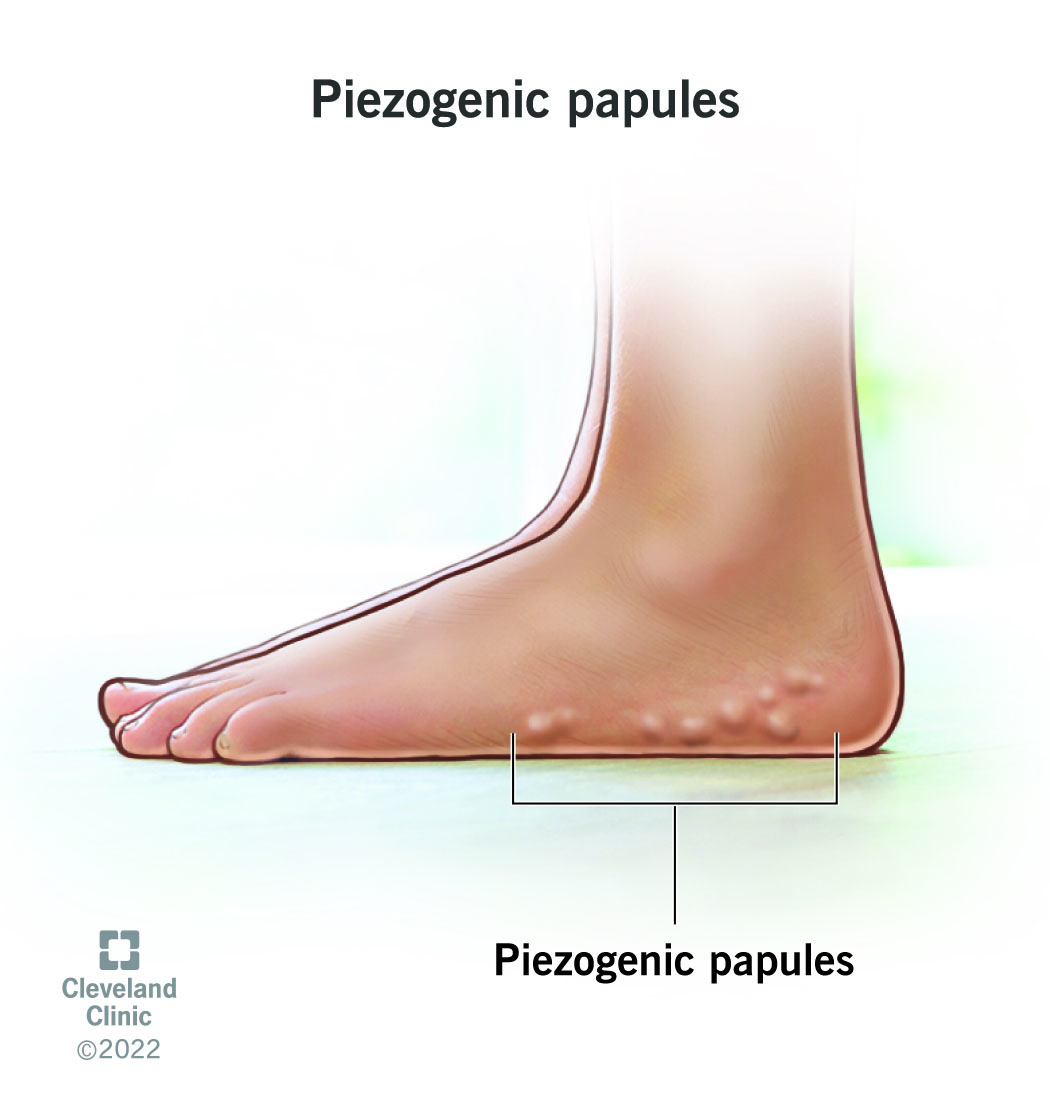
Image content: This image is available to view online.
View image online (https://my.clevelandclinic.org/-/scassets/images/org/health/articles/piezogenic-papules)
Piezogenic papules are common, usually painless bumps on your heels or wrists. They’re the same tone as your skin or slightly yellow. They often appear when you place pressure on the area, like when standing or walking. The bumps usually disappear when you rest.
Advertisement
Cleveland Clinic is a non-profit academic medical center. Advertising on our site helps support our mission. We do not endorse non-Cleveland Clinic products or services. Policy
These aren’t dangerous, but they might be uncomfortable. They happen when small pockets of fat push through the deeper layer of your skin.
Treatment focuses on reducing symptoms, not removing the papules. A healthcare provider can help you find the right option if you need it.
There are a few types based on where and when they appear:
They're small, soft bumps under your skin that often:
Infantile papules usually appear as larger, soft bumps on the inner heel of a baby’s foot.
Most don’t cause symptoms. You might only notice them by chance, or you may have concerns about how they look. When symptoms do occur, you might feel:
Advertisement
Experts don’t fully understand the cause. But research suggests that pressure on your skin causes these bumps to form. When you stand or put weight on certain areas, pressure pushes small pockets of fat from under your skin through tiny gaps in your connective tissue. This creates the small bumps that you can see. When the pressure goes away, the bumps usually flatten or disappear.
Certain factors can make piezogenic papules more likely. These include:
If you have a connective tissue condition, like Ehlers-Danlos syndrome, you may also have a higher risk. This condition can weaken the tissues that support your skin.
A healthcare provider usually diagnoses piezogenic papules with a physical exam. They’ll look for small bumps that appear when you stand or put pressure on the area and disappear when you remove the pressure.
In most cases, you don’t need any testing. If the diagnosis isn’t clear, your provider may use ultrasound to look at the tissue under your skin. Rarely, they may take a small skin sample (biopsy) to rule out other conditions.
Most piezogenic papules don’t need treatment because they’re harmless and usually don’t cause symptoms.
If they cause pain, your healthcare provider might recommend:
If pain continues, your provider may give you a local anesthetic or corticosteroid injection at the site. In rare cases, surgery may remove the papules if other treatments don’t help.
You should see a healthcare provider if:
Most people don’t have symptoms. You may notice small bumps when you stand or put pressure on the area. But the bumps usually flatten or disappear when the pressure goes away.
In some cases, the bumps may cause mild pain during long periods of standing or physical activity. If that happens, simple treatments like supportive footwear or reducing pressure on the area might help. Overall, these bumps are harmless and shouldn’t be a cause for concern.
Advertisement
Piezogenic papules usually don’t permanently go away. But they may flatten or disappear when you remove pressure from the area, like when you sit or lie down. The bumps may come back when you stand or put weight on the area again.
Infant pedal papules disappear in early infancy.
You can’t completely prevent piezogenic papules because experts don’t fully understand why they develop.
But you may lower your risk or reduce symptoms by:
You might not think much about the bottoms of your feet until something unusual shows up. Feeling small bumps on your heels can be surprising at first — especially if they appear when you stand and seem to disappear when you sit down. The good news is that piezogenic papules are very common and usually harmless.
If the bumps start to feel painful or interfere with walking or physical activity, it’s worth telling a healthcare provider. They can confirm what you’re seeing and help you find simple ways to ease pressure on the area.
Advertisement



Sign up for our Health Essentials emails for expert guidance on nutrition, fitness, sleep, skin care and more.
Learn more about the Health Library and our editorial process.
Cleveland Clinic’s health articles are based on evidence-backed information and review by medical professionals to ensure accuracy, reliability and up-to-date clinical standards.
Cleveland Clinic’s health articles are based on evidence-backed information and review by medical professionals to ensure accuracy, reliability and up-to-date clinical standards.
Cleveland Clinic’s primary care providers offer lifelong medical care. From sinus infections and high blood pressure to preventive screening, we’re here for you.
