



Presumed ocular histoplasmosis syndrome (POHS) is a rare eye condition. It’s a complication that happens when you’re exposed to the fungus that causes histoplasmosis. This leads to changes and scarring in your retinas. POHS can cause permanent vision loss if it’s not treated right away. See an eye doctor as soon as you notice any symptoms.
Advertisement
Cleveland Clinic is a non-profit academic medical center. Advertising on our site helps support our mission. We do not endorse non-Cleveland Clinic products or services. Policy
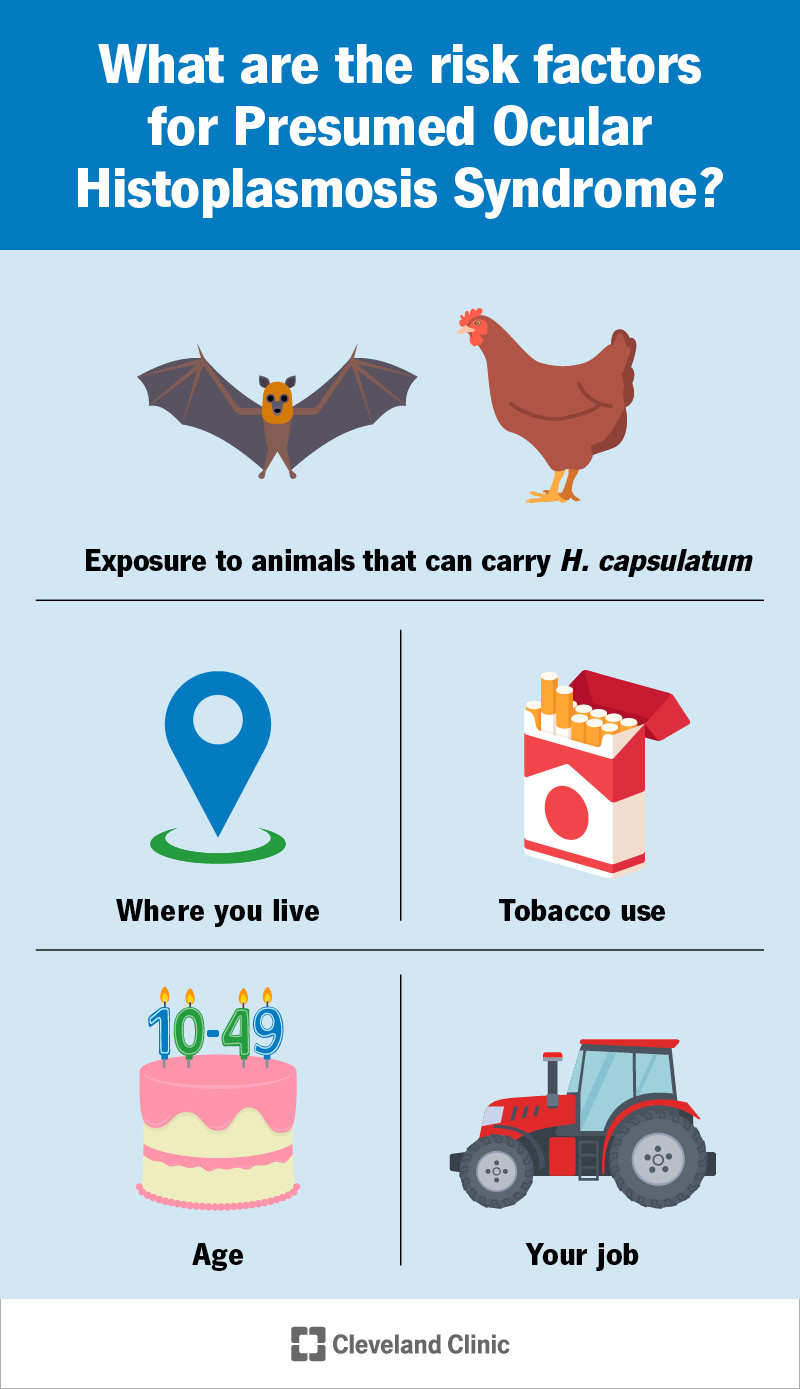
Image content: This image is available to view online.
View image online (https://my.clevelandclinic.org/-/scassets/images/org/health/articles/presumed-ocular-histoplasmosis-syndrome-infographic)
Presumed ocular histoplasmosis syndrome (POHS) is a rare eye condition that’s a complication of having histoplasmosis.
Advertisement
Cleveland Clinic is a non-profit academic medical center. Advertising on our site helps support our mission. We do not endorse non-Cleveland Clinic products or services. Policy
Histoplasmosis is a fungal infection that usually affects your lungs. POHS happens when you’re exposed to the fungus that causes histoplasmosis, which causes changes and scarring in your retinas.
Damage from the fungus can make abnormal blood vessels form in your retinas (choroidal neovascularization). This can lead to scarring that causes permanent damage and vision loss if it’s not treated.
POHS doesn’t cause symptoms in the early stages. You won’t notice any changes in your eyes or vision until choroidal neovascularization happens.
You may notice:
The Histoplasma capsulatum fungus causes POHS when it spreads to your retinas. Histoplasmosis happens when you breathe in the fungus. It usually lives in soil. Plowing a field or digging a hole can stir it into the air. Spending time around birds (especially chickens) or bats can expose you to the fungus. These animals can have it in their bodies and spread it through their poop.
Advertisement
Breathing in Histoplasma capsulatum can cause a lung infection. Researchers aren’t sure why some people who’ve had histoplasmosis later develop POHS. But it’s not from an active fungal infection in your eye. Most people exposed to Histoplasma never develop POHS. But it can show up decades after you had a lung infection.
POHS isn’t contagious. You can’t spread it to other people.
Histoplasma capsulatum is found in soil with high levels of bird or bat poop. It’s more common in the central U.S., in the states that make up the Ohio and Mississippi River valleys.
You have a higher risk of histoplasmosis and POHS if you:
POHS can cause permanent vision loss if it isn’t treated right away. Visit an eye doctor or healthcare provider as soon as you notice any changes in your vision, even if they seem minor. That’s especially true if you know you’ve had histoplasmosis or any POHS risk factors.
An eye care specialist will diagnose POHS using a combination of an eye exam and asking about your life and medical history. They’ll use eye dilation and a slit lamp exam to look for changes and damage in your retinas.
Other tests that can help diagnose POHS include:
Your eye doctor may also recommend lab tests to rule out other conditions that can cause retinal scars and similar symptoms.
You’ll only need treatment for POHS if you’re experiencing symptoms that affect your vision. If you need treatment, your eye doctor will suggest ways to stop choroidal neovascularization, including:
Advertisement
You won’t need antifungal medications to treat POHS. Your healthcare provider may prescribe an antifungal to treat a histoplasmosis infection in your lungs if you have an infection. But these medications can’t treat or reverse the abnormal blood vessels in your retinas that happen with POHS.
Visit a healthcare provider or eye doctor as soon as you notice any changes in your eyes or vision. Tell them if you know you have histoplasmosis and when it was diagnosed.
Trust your intuition. You know when something isn’t right or normal for you, especially when it comes to your vision. The sooner you get POHS diagnosed, the better your chances of preventing neovascularization and vision loss.
You might regain your full vision if you get POHS diagnosed and treated right away. But you might have some permanent vision loss.
Some people experience neovascularization again in the future, even after treatment. It can even happen years later. Talk to your eye doctor about your risk of it coming back.
If you have permanent vision loss, you may benefit from low vision rehab. A therapist will help you find the right kinds of vision aids and modify activities to help you stay safe during your daily routine.
Advertisement
Anything that can permanently damage your eyes can be scary. Presumed ocular histoplasmosis syndrome (POHS) is no exception. If you live, work with or spend a lot of time around birds (and their poop), talk to a healthcare provider about ways to avoid infections. Most people exposed to histoplasmosis never develop eye problems.
Visit an eye doctor as soon as you notice anything that affects your vision. Even if it’s not POHS, the faster you get it and other serious issues ruled out, the better.
Advertisement



Sign up for our Health Essentials emails for expert guidance on nutrition, fitness, sleep, skin care and more.
Learn more about the Health Library and our editorial process.
Cleveland Clinic’s health articles are based on evidence-backed information and review by medical professionals to ensure accuracy, reliability and up-to-date clinical standards.
Cleveland Clinic’s health articles are based on evidence-backed information and review by medical professionals to ensure accuracy, reliability and up-to-date clinical standards.
Have a virus, fungus or bacteria? Some of these “bugs” won’t go away on their own. Cleveland Clinic’s infectious disease experts are here to help.
