



Hypertrichosis is a rare condition that causes extra hair growth on your body or face. It can be present from birth or develop later in life. While it isn’t dangerous, it can be frustrating or affect confidence. Treatments like hair removal or medication can help manage symptoms and improve comfort.
Advertisement
Cleveland Clinic is a non-profit academic medical center. Advertising on our site helps support our mission. We do not endorse non-Cleveland Clinic products or services. Policy
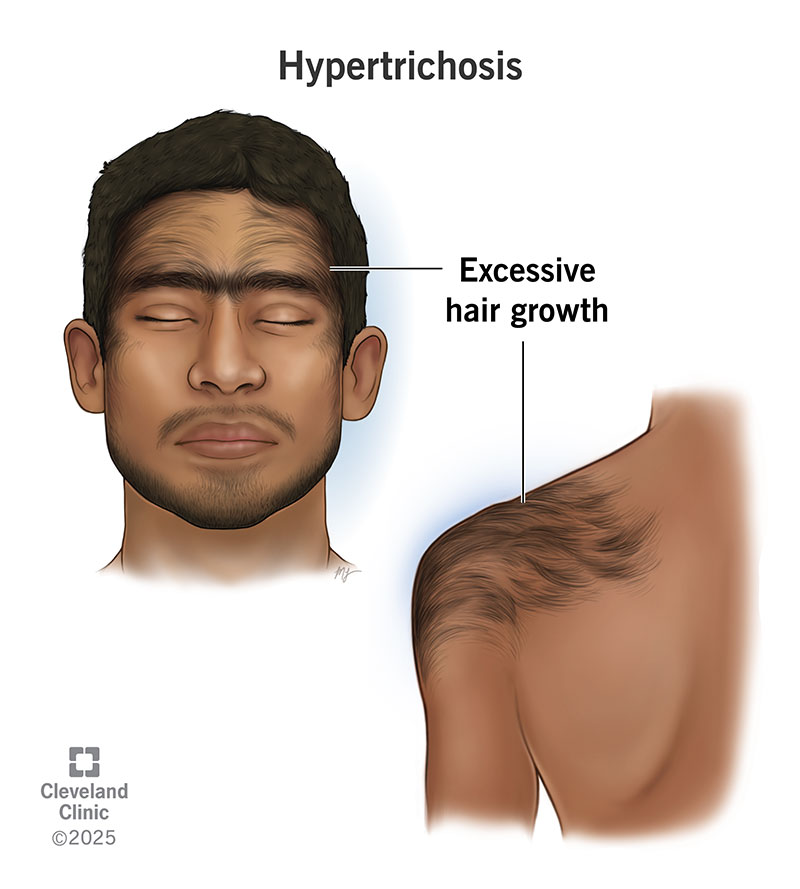
Image content: This image is available to view online.
View image online (https://my.clevelandclinic.org/-/scassets/images/org/health/articles/hypertrichosis)
Hypertrichosis is excessive hair growth. The hair can appear all over your body or in small patches. It can affect anyone — males or females.
Advertisement
Cleveland Clinic is a non-profit academic medical center. Advertising on our site helps support our mission. We do not endorse non-Cleveland Clinic products or services. Policy
Another name for this rare condition is werewolf syndrome.
Hypertrichosis doesn’t just change your appearance — it can also affect how you see yourself. The daily effort to manage hair can be exhausting and time-consuming. Constant shaving or removal can irritate your skin and make it hard to feel confident or relaxed throughout the day.
Treatment options are available to help you manage symptoms. A healthcare provider can work with you to find what feels right for your comfort and routine.
Healthcare providers group hypertrichosis in many different ways.
First, by where the hair grows:
Next, by when it starts:
Last, by hair type:
The main symptom is more hair growth than usual. The amount and location of the extra hair depend on the type.
You might notice:
Advertisement
Some congenital types may also appear alongside:
There are a lot of different causes of hypertrichosis. These include:
Risk factors are things that increase your chance of developing this condition. You may be more likely to get hypertrichosis if you:
Because the extra hair is often easy for others to see, it’s common to feel self-conscious, anxious or stressed. Talking with a healthcare provider, counselor or someone you trust can help. Support and understanding can make a big difference in how you cope.
A healthcare provider will start by asking questions about your symptoms. They’ll want to know when the extra hair growth began. They’ll also ask about your family history, any health conditions you have and medicines you take.
Next, your provider will do a physical exam. They’ll look at where the hair grows, how thick it is and what type of hair it is. They’ll also check for other physical signs, like skin changes or facial differences, that could point to an inherited condition.
Your provider may order tests to look for what could explain the extra hair growth. These could include:
Advertisement
Treatment depends on what’s causing the extra hair growth. If a medication is the reason, your healthcare provider may recommend stopping it or switching to another option. Don’t stop taking any medicine unless your provider says it’s safe.
Hair removal is another way to manage this condition. Common options include:
You’ll need to repeat most treatments over time. Laser hair removal and electrolysis can give longer-lasting results, but they may take several sessions to work. Your provider can help you choose the safest and most effective option for your skin and hair type.
Hair removal can sometimes irritate your skin. Depending on the method you choose, you might notice:
These side effects are usually temporary. If they don’t go away or your skin becomes painful or swollen, contact your healthcare provider.
See a healthcare provider, like a dermatologist or your primary care provider, if you notice new or unusual hair growth that doesn’t seem normal for you.
Advertisement
You should get checked if the hair growth is:
Your provider can help find out what’s causing the change and help you choose the right treatment option.
There’s no cure for genetic cases of hypertrichosis. It’s usually harmless, though it may be difficult to manage.
If you were born with it (congenital hypertrichosis), the hair will likely keep growing even after removal. Managing it is a long-term process. But treatments can make it less noticeable.
If the condition developed later in life (acquired hypertrichosis), it may improve or go away after a diagnosis and treatment. For example, if a medicine or health problem triggered the hair growth, your provider can help adjust your care.
Living with excessive hair can be emotionally hard. You might feel frustrated or self-conscious, especially if others notice the changes. Your healthcare provider can help you find treatments and emotional support.
With the right care, most people manage hypertrichosis.
Both hypertrichosis and hirsutism cause extra hair growth, but they’re different conditions.
Hirsutism only affects females. It causes thick, dark hair to grow in areas where males usually grow hair — like your upper lip, chin, chest or back.
Advertisement
Hypertrichosis can affect anyone. The extra hair may appear in small patches or cover larger areas of your body.
While hypertrichosis doesn’t physically hurt, it can take an emotional toll. It can be lonely to have a condition that attracts unwanted attention or misunderstanding. And managing the condition often means constant care. Daily routines, like shaving, waxing or covering up hair, can be tiring.
There are treatment options that can help, like laser hair removal or prescription creams. Many people find a routine that works for them. Emotional support matters, too. Talking with a healthcare provider, counselor or someone you trust can make things easier. With time, care and understanding, you can feel more at ease in your own skin.



Sign up for our Health Essentials emails for expert guidance on nutrition, fitness, sleep, skin care and more.
Learn more about the Health Library and our editorial process.
Cleveland Clinic’s health articles are based on evidence-backed information and review by medical professionals to ensure accuracy, reliability and up-to-date clinical standards.
Cleveland Clinic’s health articles are based on evidence-backed information and review by medical professionals to ensure accuracy, reliability and up-to-date clinical standards.
Cleveland Clinic’s primary care providers offer lifelong medical care. From sinus infections and high blood pressure to preventive screening, we’re here for you.
