



Arterial thrombosis is the medical term for a blood clot in your artery. It can keep blood from reaching your heart, brain or limb. Quick treatment is important to prevent damage from a lack of oxygen. This condition can lead to a heart attack, stroke or limb loss.
Advertisement
Cleveland Clinic is a non-profit academic medical center. Advertising on our site helps support our mission. We do not endorse non-Cleveland Clinic products or services. Policy
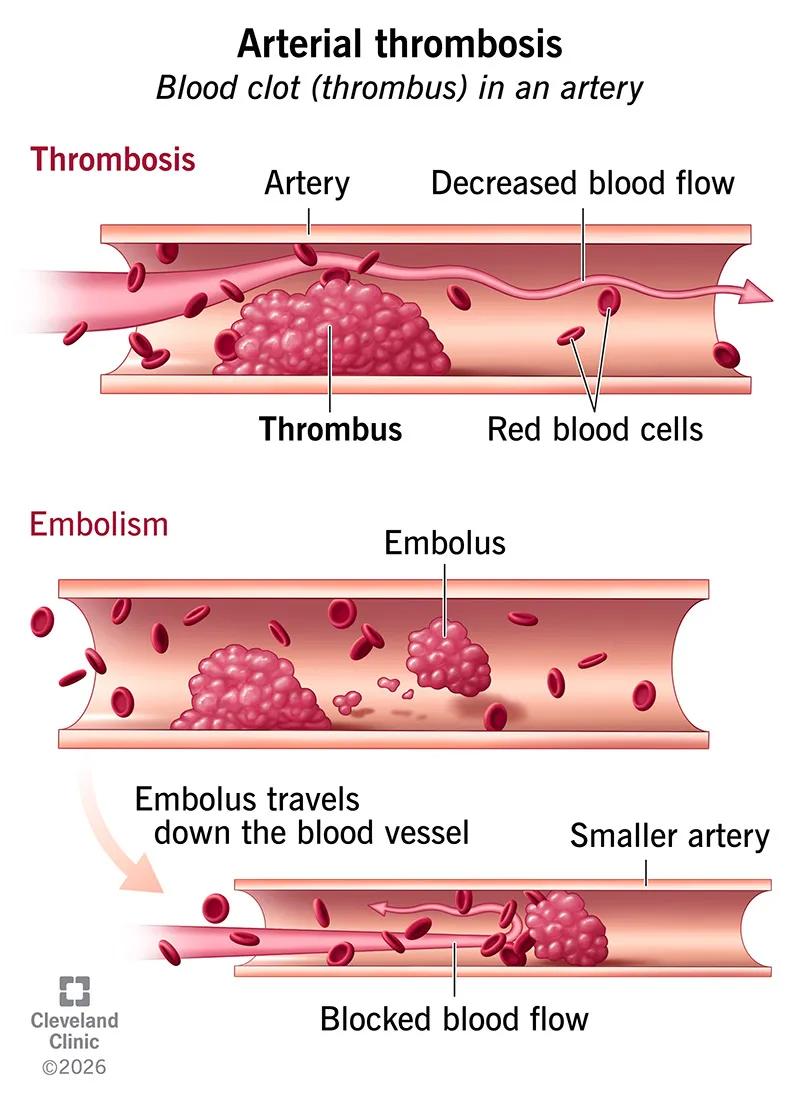
Image content: This image is available to view online.
View image online (https://assets.clevelandclinic.org/transform/0b2227ec-cbb2-49a7-b1c5-91e93f4d5f9b/aterial-thrombosis-illustration-26-HVI)
Arterial thrombosis is a blood clot in an artery. This is an emergency because it keeps blood from flowing to your tissues and organs. Without blood flow, tissues die and organs fail because they’re not getting enough oxygen. Depending on which artery is involved with an arterial thrombosis, this condition can be fatal.
Advertisement
Cleveland Clinic is a non-profit academic medical center. Advertising on our site helps support our mission. We do not endorse non-Cleveland Clinic products or services. Policy
When a blood clot stops your heart from getting blood, it causes a heart attack. When a clot stops your brain from getting needed blood, it causes a stroke. A clot can also stop blood flow in your arm or leg if you have peripheral artery disease. This blockage is called acute limb ischemia.
Healthcare providers can treat an arterial thrombosis with medicine or a procedure. You may need both, depending on the severity and location of the thrombosis.
Arterial thrombosis symptoms differ based on which artery has the blood clot. It can happen in your:
A rupture in a fatty buildup of plaque (atheroma) is the most common cause of arterial thrombosis. A blood clot can form after the rupture happens. But you can also get blood clots from:
Advertisement
Many — but not all — risk factors are the same as those for plaque buildup (atherosclerosis). Risk factors include:
A healthcare provider can start a diagnosis by looking at you and checking your vital signs. Depending on where the arterial thrombosis is, your provider may use these tests:
The goal of arterial thrombosis treatment is to get blood moving again so your cells can get oxygen. Treatment includes medicines and procedures, like:
In addition to these treatments, you may need other procedures to keep your artery open or reroute blood flow around a plaque buildup. For example, you may need angioplasty to widen an artery that brings blood to your heart. Or you may need bypass surgery to get around a blocked artery. An endarterectomy removes plaque from a blocked artery.
You may be able to go home several days after a clot removal in your leg or arm. After that, you may continue to take blood thinners for a certain length of time. You may spend a few days to a couple weeks in the hospital after a heart attack, with recovery taking two weeks to three months. Recovery from a stroke can take three months or more.
Contact your provider about new or changing symptoms or side effects from medicines. Call 911 or your local emergency number if you have symptoms of arterial thrombosis.
After treatment, you should get medical care right away for:
Heart attacks and strokes can be fatal if you don’t get help in time. Early diagnosis and prompt treatment are important when you have arterial thrombosis. Getting treatment in time means the difference between keeping and losing brain, heart, limb or kidney function. The faster you get blood to these body parts, the better.
Advertisement
Delays in treatment for a blood clot in your belly can be fatal. Your chance of survival is much better if you get prompt treatment.
Once the emergency is over, the work of recovery begins. The amount of damage you have depends on how long a body part was without blood flow. You’ll work with a team to strengthen your heart. Healthcare providers encourage you to take advantage of a cardiac rehab program. It includes supervised physical activity.
Recovery after a stroke could mean you need a provider to help you learn to speak, swallow, dress yourself and move again. It can take a lot of time and patience to do everyday tasks. You may have long-term disabilities.
If you had a blood clot in a limb, you may need to regain function. If you lost that limb, you’ll need to learn how to cope with that and perform daily tasks. Ask your provider if a prosthetic limb is an option.
Blood clots can happen again. Your healthcare provider will work with you to lower your risk. This might involve changing daily habits and taking medicines to prevent plaque buildup and blood clots. Follow-up visits are an important part of staying healthy.
The effects of an arterial thrombosis can be life-changing. This scary experience might make you wonder if your life will ever be normal again. But your healthcare team is there to help you return to your life little by little. Lean on your support systems for help as you recover and work your way back to daily routines.
Advertisement



Sign up for our Health Essentials emails for expert guidance on nutrition, fitness, sleep, skin care and more.
Learn more about the Health Library and our editorial process.
Cleveland Clinic’s health articles are based on evidence-backed information and review by medical professionals to ensure accuracy, reliability and up-to-date clinical standards.
Cleveland Clinic’s health articles are based on evidence-backed information and review by medical professionals to ensure accuracy, reliability and up-to-date clinical standards.
Whether you need stitches, a broken bone set or think your appendix might be causing your abdominal pain, Cleveland Clinic’s emergency medicine team is here to help.
