



Babies are often born with bow legs from cramped quarters while they developed in the uterus. Being bow legged means their knees curve outward, leaving a wide space. Children usually grow out of bow legs by age 2. If they last beyond that, treatments include splints, casts, braces and surgery.
Advertisement
Cleveland Clinic is a non-profit academic medical center. Advertising on our site helps support our mission. We do not endorse non-Cleveland Clinic products or services. Policy
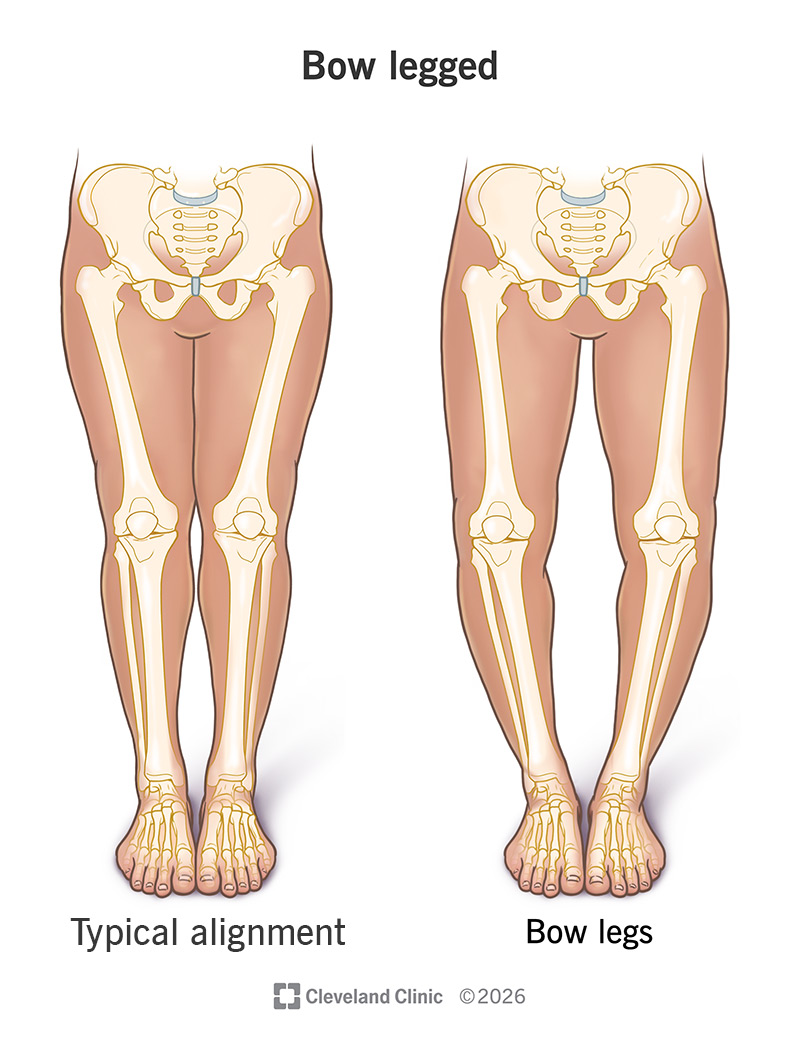
Image content: This image is available to view online.
View image online (https://my.clevelandclinic.org/-/scassets/Images/org/health/articles/bow-legged)
Being bow legged is when one or both of your child’s legs curve out, away from the center of their body at the knees. “Genu varum” is the medical term for bow legs.
Advertisement
Cleveland Clinic is a non-profit academic medical center. Advertising on our site helps support our mission. We do not endorse non-Cleveland Clinic products or services. Policy
Being bow legged creates extra space between your child’s knees and lower legs. Their knees will be noticeably farther apart than usual when they stand straight with their ankles together. It’s the opposite of being knock kneed. That’s a similar issue that creates a gap between your child’s knees instead of their ankles.
Bow legs are common in infants and toddlers. It’s rarely serious. Babies born with genu varum usually grow out of it naturally within two years. Untreated bow legs that don’t go away on their own can last into adulthood.
A healthcare provider will tell you if your child will need any treatments and what to look out for.
The physical shape of your child’s legs is the main symptom of being bow legged. You’ll be able to see that their knees don’t touch when they stand with their feet and ankles together.
The bowing is usually more noticeable when they’re walking. Some children with bow legs might walk with their toes pointed in. This is known as having pigeon toes (intoeing).
Being bow legged usually isn’t painful. And it won’t affect your child’s ability to crawl, walk or run.
Lots of issues can cause bow legs. The most common cause is a condition called physiologic genu varum. This happens if a fetus develops in a cramped position in the uterus. The pressure from the unusual position makes bones develop more rotated than usual. Then, after your baby is born, that extra rotation leads to bow legs.
Advertisement
Physiologic genu varum will likely correct itself as your child’s bones grow and develop. If their legs haven’t straightened by the time they turn 2, there may be another reason. These include:
Being born bow legged rarely causes complications. Most children grow out of it naturally. But untreated bowed legs that don’t get better on their own may increase your child’s risk of bone and joint issues. The unusual shape to their legs can put extra pressure on their hips, knees and ankles.
If a health condition causes persistent bow legs, your child may be at risk for other complications. These are usually more from the condition that causes bow legs than the change to their bones themselves. Your healthcare provider will help you understand what you should expect.
Your child’s healthcare provider will do a physical exam and ask about your child’s medical history. If your child is under 2 years old, they might not need any other tests. Your provider will check your child’s legs regularly to make sure they’re growing out of bow legs.
If your child is older than 2, your provider may measure their legs and watch them walk. Your child may need X-rays to take pictures of their leg bones. Your provider might order blood tests to check for conditions like rickets.
Your child might need to visit an orthopaedist. This is a healthcare provider who specializes in caring for bones, joints and muscles.
If your child is under 2, they probably won’t need any special treatment. Children usually grow out of being bow legged on their own. Your healthcare provider will monitor changes in your child’s legs as they develop. They’ll make sure it’s getting better on its own as your child grows.
If your child is older than 2, or if their bow legs are severe, your provider can recommend treatments. They’ll suggest ways to support and straighten your child’s leg bones. Common treatments include:
Advertisement
Untreated bow legs that don’t naturally straighten on their own can last into adulthood. Most of the time, this won’t cause pain or other issues. But if it does, surgery is the only treatment for adults with bow legs.
That’s because your bones won’t respond to treatments like braces or splints once you’re an adult. Children’s bones are much softer and more flexible than adult bone tissue. Once you finish developing, your bones harden and won’t change shape without surgery.
Talk to a healthcare provider if you have bow legs that cause any pain or discomfort. They’ll let you know if surgery is a good option for you.
Visit a healthcare provider if your child has bow legs and they don’t improve by age 2. Your provider will keep an eye on your child’s legs. They’ll let you know if or when your baby will need treatment.
Ask your provider how often your child will need follow-up exams. Most of the time, you can follow the typical schedule for check-ups and well-child visits.
Your child’s legs should straighten out as they start walking. Every baby is different, but this is usually between 11 and 18 months. In most cases, being bow legged won’t cause any long-term issues. Even if your child needs surgery, they should have no lasting effects once they heal.
Advertisement
It’s natural to feel worried when you find out something is affecting your baby’s bones. But being bow legged shouldn’t have an effect on your child’s growth or development. In fact, that process of getting bigger and older is usually all kids need to grow out of bow legs. But your healthcare provider can suggest treatments to help your child’s body correct bow legs if needed.
Even if bow legs aren’t usually a serious issue, ask your provider any questions you may have. They’ll help you understand everything you need to know about your baby’s body and health. There’s no such thing as a silly question when it comes to your child’s health.
Advertisement



Sign up for our Health Essentials emails for expert guidance on nutrition, fitness, sleep, skin care and more.
Learn more about the Health Library and our editorial process.
Cleveland Clinic’s health articles are based on evidence-backed information and review by medical professionals to ensure accuracy, reliability and up-to-date clinical standards.
Cleveland Clinic’s health articles are based on evidence-backed information and review by medical professionals to ensure accuracy, reliability and up-to-date clinical standards.
As your child grows, you need healthcare providers by your side to guide you through each step. Cleveland Clinic Children’s is there with care you can trust.
