



Hantavirus is a group of viruses that cause life-threatening illness. These viruses most often spread through the poop, pee or saliva of infected mice or rats. Early symptoms are similar to the flu. But the illness can quickly get worse, causing a rapid heartbeat, trouble breathing and severe bleeding. People who are diagnosed and treated early have the best chance of survival.
Advertisement
Cleveland Clinic is a non-profit academic medical center. Advertising on our site helps support our mission. We do not endorse non-Cleveland Clinic products or services. Policy
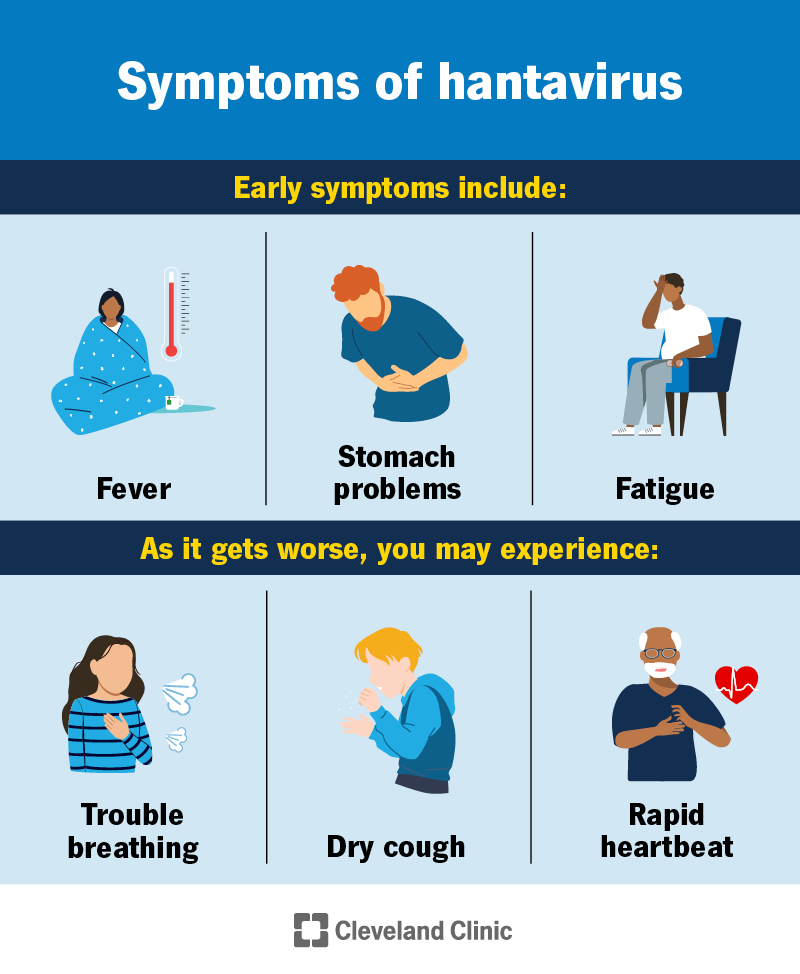
Image content: This image is available to view online.
View image online (https://my.clevelandclinic.org/-/scassets/images/org/health/articles/hantavirus)
Hantavirus refers to several related viruses that can cause life-threatening illness, including hantavirus pulmonary syndrome (HPS) and hemorrhagic fever with renal syndrome (HFRS). The viruses are zoonotic, meaning that most of the time, you get them from animals. The most common way to get a hantavirus infection is by being around the pee, poop or saliva of infected mice or rats.
Advertisement
Cleveland Clinic is a non-profit academic medical center. Advertising on our site helps support our mission. We do not endorse non-Cleveland Clinic products or services. Policy
Hantavirus (pronounced “HON-tuh-vie-ruhs”) can look like other common illnesses at first. Symptoms can take one to seven weeks to appear and include fever, tiredness and muscle aches. But it can quickly get worse as it infects other parts of your body. Without quick treatment, it can cause serious illness and death. If you have flu-like symptoms after being around rodent nests or poop, it’s important to get help right away.
Hantavirus infections are rare. Between 1993 and 2023, there were 890 reported cases in the U.S.
There are over 20 types of hantavirus. The most common types include:
Advertisement
Andes and Sin Nombre hantavirus can attack your lungs, causing severe breathing problems (hantavirus pulmonary syndrome or hantavirus cardiopulmonary syndrome). Old World hantaviruses can cause severe bleeding and kidney damage (hemorrhagic fever with renal syndrome).
Symptoms usually start within one to three weeks after exposure to hantavirus. They may include:
Four to 10 days later, if you develop hantavirus pulmonary syndrome, symptoms may include:
Symptoms of hemorrhagic fever with renal syndrome start a week or two after exposure. They could include:
You can get hantavirus infections by breathing in particles of poop, pee and saliva from infected rodents. Rodents that can carry hantavirus include:
Hantaviruses can also spread through:
Rarely, Andes virus can spread through close contact with someone who’s infected.
Most of the time, you have to breathe in contaminated dust or droplets of rodent pee, poop or saliva to get hantavirus. This means that sweeping, vacuuming or cleaning areas where mice or rats could have been (even if you can’t see them) increases your chance of getting it.
It’s difficult to say how easily hantavirus transmits from person to person since it’s so uncommon.
In the U.S., hantavirus infections are more common in states west of the Mississippi River. The highest numbers of reported cases have happened in Arizona, Colorado, California, New Mexico and Washington.
You’re more likely to get a hantavirus infection if you spend time in places where wild rodents live, especially if you disturb the dust and dirt. Mice and rats prefer rural environments — grassy or wooded areas with few buildings or people. But they may also make nests or forage in places like:
Hantavirus can attack your lungs, heart or kidneys. It can also weaken your blood vessels and make them leak. This can cause life-threatening illness, including:
Advertisement
Your healthcare provider will ask about your symptoms and examine you. Make sure you tell them if you:
Your provider will diagnose hantavirus with a blood test. They’ll send the blood sample to a lab for analysis and look for hantavirus antibodies or do PCR testing. They may also look for other signs, like:
Because a hantavirus infection can get worse very quickly, healthcare providers will most likely monitor and care for you in the hospital — even if your symptoms start out mild. If you have Andes virus, the hospital may need to take special precautions to prevent spreading the virus. Treatments for hantavirus may include:
Advertisement
Treatment is supportive. Providers sometimes use the antiviral medication ribavirin for hemorrhagic fever with renal syndrome.
Hantavirus can get worse quickly. If you develop hantavirus symptoms after contact with rodents, it’s important to get treatment as soon as possible. Call 911 or go to the nearest emergency room if you have:
Hantavirus pulmonary syndrome is fatal in about 4 out of every 10 people who get it. Without treatment, most deaths happen between 24 and 48 hours after it affects your heart or lungs.
Quick treatment in a hospital gives you the best chance for a complete recovery.
The best way to prevent hantavirus infections is to protect yourself if you’re in a space where mice or rats could have been. To clean areas with rodent droppings or where rodents could've been:
Advertisement
Hantavirus pulmonary syndrome shares a lot of symptoms with more common illnesses, like the flu. But if you develop flu-like symptoms after being around rodent droppings or nests, get help immediately. Tell your healthcare providers anything you can remember about how you could’ve been exposed to hantavirus. The faster you get a diagnosis and treatment, the better your chance of making a full recovery.



Sign up for our Health Essentials emails for expert guidance on nutrition, fitness, sleep, skin care and more.
Learn more about the Health Library and our editorial process.
Cleveland Clinic’s health articles are based on evidence-backed information and review by medical professionals to ensure accuracy, reliability and up-to-date clinical standards.
Cleveland Clinic’s health articles are based on evidence-backed information and review by medical professionals to ensure accuracy, reliability and up-to-date clinical standards.
Whether you need stitches, a broken bone set or think your appendix might be causing your abdominal pain, Cleveland Clinic’s emergency medicine team is here to help.
