



Uterine prolapse is a common condition that can happen as you age. Over time, the muscles and ligaments around your uterus weaken. When this support structure has issues, your uterus can sag out of position. Treatment for uterine prolapse involves surgical and nonsurgical options based on the severity of the prolapse.
Advertisement
Cleveland Clinic is a non-profit academic medical center. Advertising on our site helps support our mission. We do not endorse non-Cleveland Clinic products or services. Policy
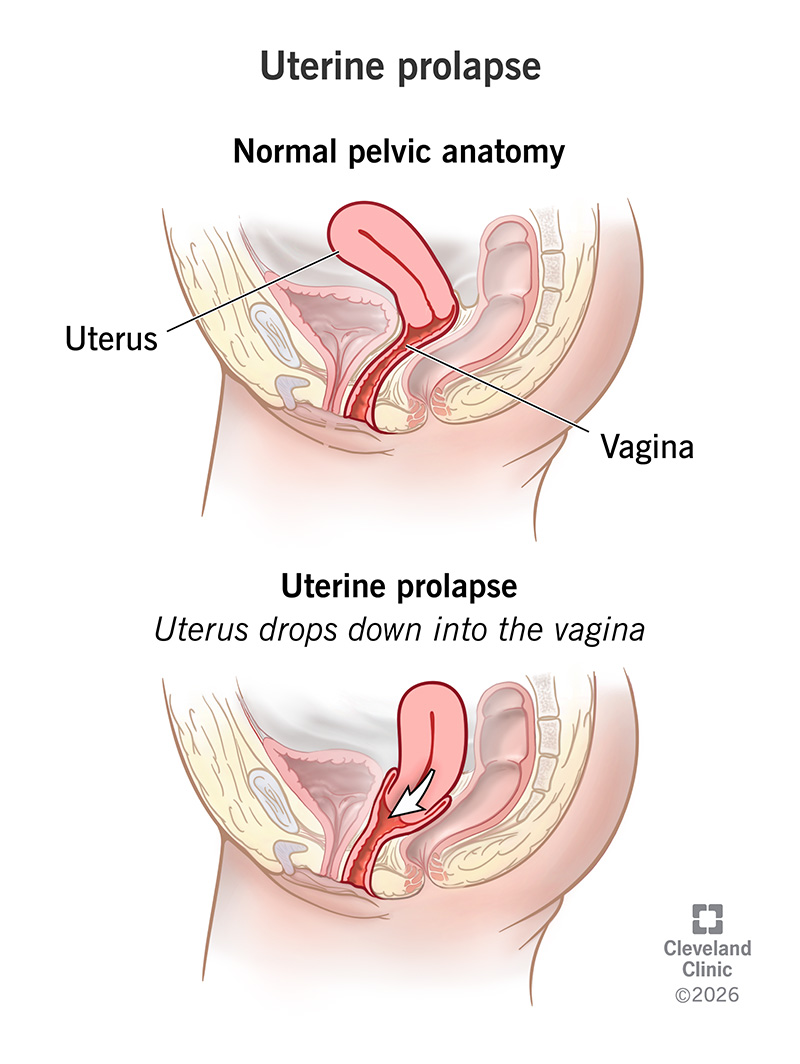
Image content: This image is available to view online.
View image online (https://my.clevelandclinic.org/-/scassets/images/org/health/articles/16030-uterine-prolapse)
Uterine prolapse is when your uterus sags or drops down into your vagina. It occurs when the muscles and tissues around your uterus become weak. Uterine prolapse is a type of pelvic organ prolapse (POP). You can have more than one type of POP at the same time.
Advertisement
Cleveland Clinic is a non-profit academic medical center. Advertising on our site helps support our mission. We do not endorse non-Cleveland Clinic products or services. Policy
This condition can be mild or severe depending on how weak the supporting muscles are. In an incomplete prolapse, your uterus may be partway in your vagina. This creates a lump or bulge. In a more severe case, your uterus can slip far enough that it comes out of your vagina. This is called a complete prolapse.
A prolapsed uterus isn’t life-threatening. But it can greatly affect your quality of life. The good news is that it’s treatable. You don’t have to live with discomfort.
If you have a mild case of uterine prolapse, you may not notice symptoms. As your uterus slips farther out of position, it can put pressure on other pelvic organs, like your bladder or bowel. You may have symptoms like:
Symptoms can worsen when you stand or walk for long periods. In these positions, gravity puts extra pressure on your pelvic muscles. Coughing and sneezing can make symptoms worse, too.
Advertisement
Uterine prolapse happens when the muscles, ligaments and tissues that support your uterus in your pelvis weaken. These are your pelvic floor muscles. If they’re damaged or weakened to the point where they can’t provide support, your uterus can drop into or out of your vagina.
Several factors can weaken your pelvic muscles, including:
The main physical complications of a prolapsed uterus include difficulty peeing and pooping.
In complete uterine prolapse, your exposed cervix or vaginal wall may get damaged. Severe cases can cause urinary retention or ureteral kinking that can affect your kidneys.
The condition can also take a toll on your mental health and sex life. This is why it’s important to get medical care.
Your healthcare provider will ask about your symptoms. They’ll also do a pelvic exam to check the location of your uterus.
During the exam, your provider will insert a speculum and check your vagina and uterus. Your provider will feel for any bulges. They may ask you to cough, strain or act like you’re holding in your pee. This can help them assess the strength of your pelvic floor muscles.
Your provider may then assign a stage to the prolapse:
You may not need treatment for mild uterine prolapse that doesn’t bother you. But if the condition causes discomfort or disrupts your life, treatment can help.
Treatment for a prolapsed uterus may involve nonsurgical therapies or surgery. Together, you and your healthcare provider will discuss your options. Certain factors affect which option is right for you, like:
The two main nonsurgical therapies for uterine prolapse include:
Advertisement
Lifestyle changes can help manage certain symptoms. For example, if you have constipation, adding more fiber to your eating plan may help.
Surgical options for a prolapsed uterus include:
Your outlook depends on several factors, like the prolapse severity and the treatment option you choose.
In general, uterine prolapse treatments aren’t quick fixes. You’ll need ongoing care to ensure long-term success. This is especially true if you get surgery. Effective care after surgery and muscle strengthening exercises are key to maintaining a healthy pelvic floor.
Advertisement
Be sure to attend your follow-up appointments with your healthcare provider. Let them know if you have any questions or concerns.
You can’t always prevent uterine prolapse. But some lifestyle tips that can reduce your risk of it include:
Just because uterine prolapse isn’t life-threatening doesn’t mean you have to accept it as a part of your life. You deserve to be comfortable and do things you enjoy. It can be awkward to talk about issues “down there.” But your healthcare provider is there to help you, not judge you. They can suggest treatment options that can repair the prolapse and improve your quality of life.
Advertisement



Sign up for our Health Essentials emails for expert guidance on nutrition, fitness, sleep, skin care and more.
Learn more about the Health Library and our editorial process.
Cleveland Clinic’s health articles are based on evidence-backed information and review by medical professionals to ensure accuracy, reliability and up-to-date clinical standards.
Cleveland Clinic’s health articles are based on evidence-backed information and review by medical professionals to ensure accuracy, reliability and up-to-date clinical standards.
From routine pelvic exams to high-risk pregnancies, Cleveland Clinic’s Ob/Gyns are here for you at any point in life.
