



A thyroid panel is a blood test that measures certain hormones your thyroid makes and thyroid-related antibodies. It measures levels of TSH, free/total T4, free/total T3 and thyroid antibodies, like TPO (thyroid peroxidase antibodies). The results help diagnose conditions like overactive thyroid and underactive thyroid.
Advertisement
Cleveland Clinic is a non-profit academic medical center. Advertising on our site helps support our mission. We do not endorse non-Cleveland Clinic products or services. Policy
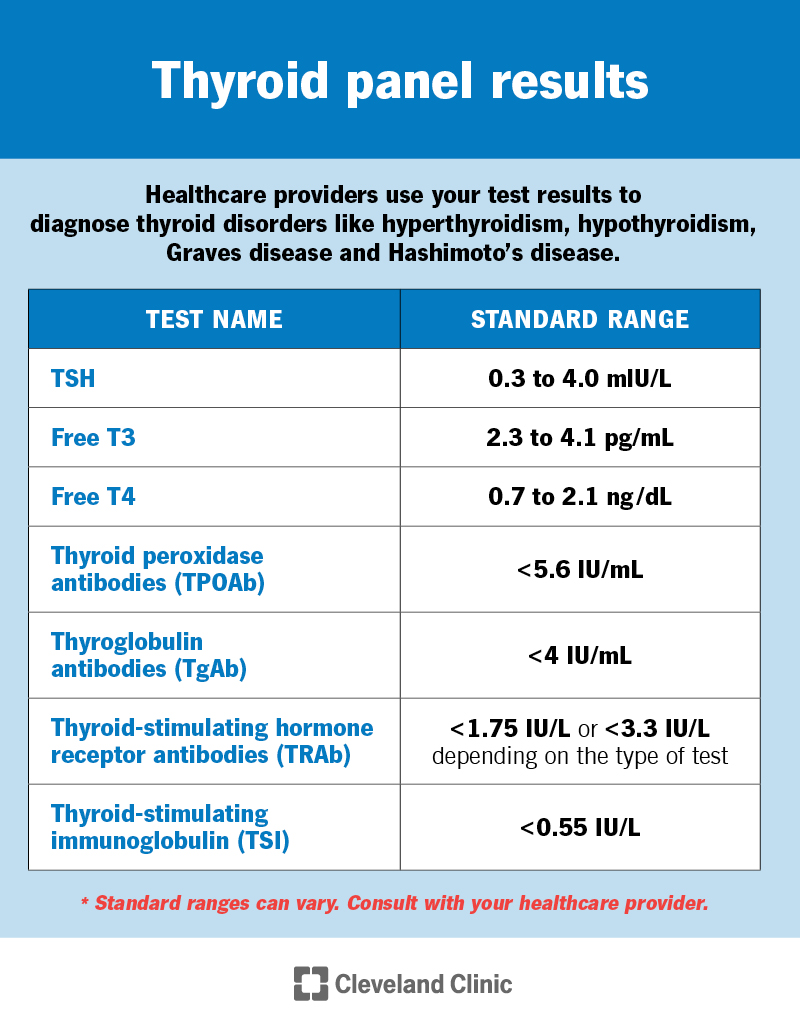
Image content: This image is available to view online.
View image online (https://my.clevelandclinic.org/-/scassets/images/org/health/articles/thyroid-panel)
A thyroid panel measures the hormones made by your thyroid gland and antibodies that might affect thyroid function. It’s a blood test that can help your provider diagnose thyroid disorders and see how well your thyroid is working.
Advertisement
Cleveland Clinic is a non-profit academic medical center. Advertising on our site helps support our mission. We do not endorse non-Cleveland Clinic products or services. Policy
There are different types of thyroid panels. Your healthcare provider can tell you which thyroid panel or combinations of tests you need based on your symptoms and health history. A full thyroid panel measures the levels of these hormones and antibodies:
A standard thyroid panel only measures these hormones:
A thyroid antibody panel measures thyroid antibodies like:
You may need this test if you have symptoms of a thyroid disorder. These include unexpected weight loss/weight gain, fatigue, mood changes, being too hot or too cold often, and dry skin or hair loss.
Healthcare providers also use thyroid panels to:
A thyroid panel is a blood test. It involves a healthcare provider taking a sample of your blood from a vein in your arm. It takes just a few minutes. Your blood is then sent to a lab where it is analyzed. Your provider gets a report that shows thyroid hormone and/or antibody levels in your blood. They use this information to figure out if you have a thyroid disorder.
Advertisement
The only risks and side effects of a thyroid panel are those that come with a blood draw. Blood draws have minimal risks, and the side effects are usually minor. Possible side effects could include bruising, swelling or mild pain where the needle was inserted.
It can take up to a week to get your results back. Your healthcare provider will explain what the results mean for your thyroid health. Depending on your results, they may recommend additional tests or they may want to schedule a follow-up thyroid panel for a later date.
Each hormone or antibody in a thyroid panel is measured separately. Your provider looks at the result of each level and compares it to the normal range. Then, they look at how all the results fit together.
In general, providers prefer these results (normal ranges may vary depending on where the test is performed due to different testing methods):
Contact your healthcare provider if you have any questions about your thyroid panel test results and what they mean. Don’t try to interpret your results without talking to your provider.
Think of a thyroid panel as a broad brushstroke that paints your provider a picture of how your thyroid is working. Your healthcare provider uses the test to get levels of several important thyroid hormones and antibodies. That picture can help them zero in on what may be causing your symptoms. It can also tell them if medication for thyroid disorders is working.
Let your provider know if you have any questions about the panel or about your results. They can help you understand.
Advertisement



Sign up for our Health Essentials emails for expert guidance on nutrition, fitness, sleep, skin care and more.
Learn more about the Health Library and our editorial process.
Cleveland Clinic’s health articles are based on evidence-backed information and review by medical professionals to ensure accuracy, reliability and up-to-date clinical standards.
Cleveland Clinic’s health articles are based on evidence-backed information and review by medical professionals to ensure accuracy, reliability and up-to-date clinical standards.
Living with a noncancerous blood disorder can be exhausting. But there’s hope. Cleveland Clinic’s classical hematology experts provide personalized care and support.
