



An incentive spirometer is a medical device that helps your lungs. The more you use it, the stronger your lungs get. Your healthcare provider will help you establish goals. They’ll also teach you how to use the device safely.
Advertisement
Cleveland Clinic is a non-profit academic medical center. Advertising on our site helps support our mission. We do not endorse non-Cleveland Clinic products or services. Policy
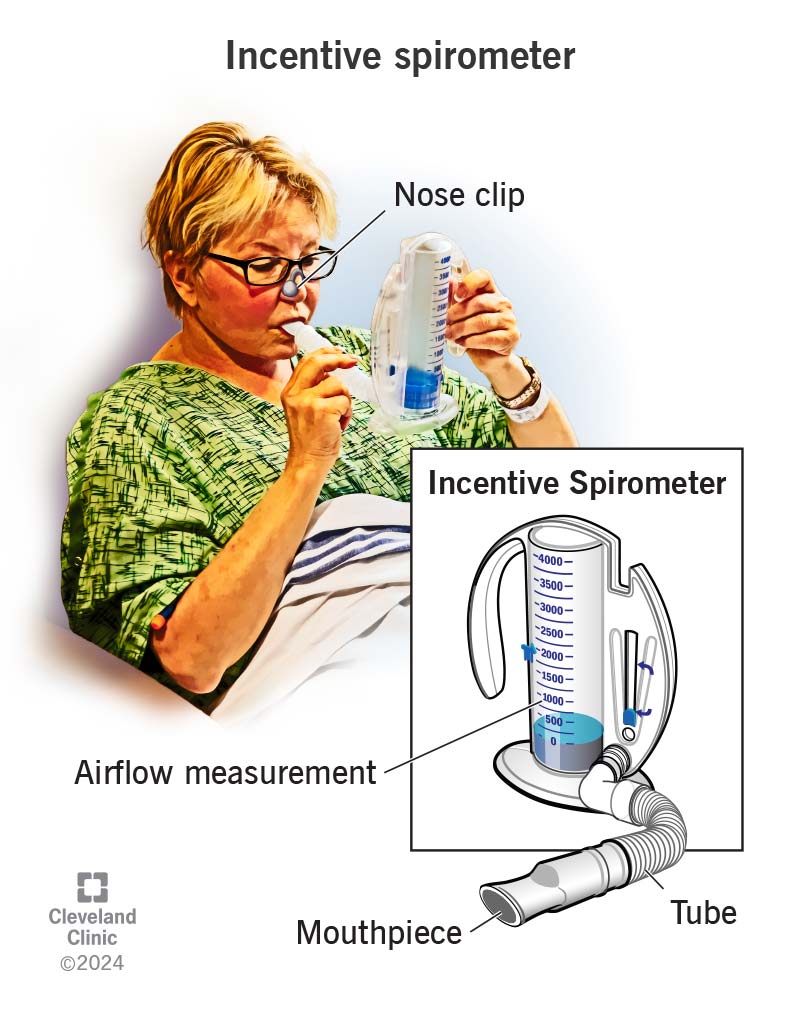
Image content: This image is available to view online.
View image online (https://my.clevelandclinic.org/-/scassets/images/org/health/articles/4302-incentive-spirometer)
An incentive spirometer is a simple, plastic medical device that exercises your lungs. Healthcare providers may recommend that you use an incentive spirometer (pronounced “in-SEN-tiv” “spy-ROM-uh-ter”) after an illness, surgery, or injury to your chest or abdomen.
Advertisement
Cleveland Clinic is a non-profit academic medical center. Advertising on our site helps support our mission. We do not endorse non-Cleveland Clinic products or services. Policy
The device is small. It’s about the size of a soda pop bottle. You can hold it in one hand.
An incentive spirometer is like an exercise machine for your lungs. It helps them get stronger after an injury or illness. It can also help maintain lung strength.
With regular use, an incentive spirometer helps your lungs expand. This allows you to take deep, full breaths instead of short, shallow breaths.
There’s no “normal” or typical incentive spirometer range. The values are different according to your:
Your healthcare provider will consider these factors when they help you set goals. Reaching your goals is important. It’s a good sign your lungs are improving if your breaths are consistently higher than your goal.
An incentive spirometer is like an exercise machine for your lungs. It helps maintain your lung strength. It can also help your lungs get stronger after an injury or illness.
After surgery, an incentive spirometer can:
Advertisement
There are two types:
Your healthcare provider may give you an incentive spirometer in the following situations:
To properly use an incentive spirometer, you should:
Advertisement
If you feel dizzy or lightheaded at any point while using an incentive spirometer, immediately stop using it. Call your provider right away.
When you’re awake, you should use your incentive spirometer at least 10 times every hour.
Yes, there are some risks.
If you don’t properly clean and disinfect your incentive spirometer, it’s possible for you to spread bacteria. Clean your device’s tubing, breathing valve and mouthpiece before someone else uses it.
Using an incentive spirometer also requires you to breathe out deeply. This may spread airborne microbes like influenza and COVID-19. It’s a good idea to avoid using your device around other people, especially if you’re not feeling well.
If you have cystic fibrosis, you’re also at a greater risk of upper respiratory tract infections when you use the device.
If you have an incentive spirometer that you use at home, it’s a good idea to clean it every day.
Detach the mouthpiece from the base of the device. Clean it with water and antibacterial soap for about 20 seconds. Then, wash the rest of the incentive spirometer with water and soap.
You can also put on protective gloves and soak the separate pieces in a 5% bleach and water solution for about five to 10 minutes. Swish the pieces in the solution periodically to help clean all of the crevices. Thoroughly rinse the pieces in clean running water.
Advertisement
Make sure the device is dry before you use it again.
It can be challenging to use an incentive spirometer. But don’t get discouraged. Like other types of exercise, the more you do it, the stronger you’ll get. Remember to use the indicator on the side of the device to help track your progress. It’s also a good idea to mark your best breaths on a piece of paper or notebook. Seeing your progress can be inspirational. If you have any questions on how to use an incentive spirometer, reach out to your provider.
Advertisement



Sign up for our Health Essentials emails for expert guidance on nutrition, fitness, sleep, skin care and more.
Learn more about the Health Library and our editorial process.
Cleveland Clinic’s health articles are based on evidence-backed information and review by medical professionals to ensure accuracy, reliability and up-to-date clinical standards.
Cleveland Clinic’s health articles are based on evidence-backed information and review by medical professionals to ensure accuracy, reliability and up-to-date clinical standards.
Breathing issues can affect your life in many ways. Cleveland Clinic’s respiratory therapy program treats your symptoms so you can feel better day to day.
