Walking pneumonia (atypical pneumonia) is a lung infection that causes mild symptoms. You may feel like you have a bad cold. Bacteria are the most common cause, but viruses and fungi can also cause it. Symptoms include sore throat, cough, headache, mild chills and low fever. A provider may prescribe antibiotics for bacterial pneumonia.
Advertisement
Cleveland Clinic is a non-profit academic medical center. Advertising on our site helps support our mission. We do not endorse non-Cleveland Clinic products or services. Policy
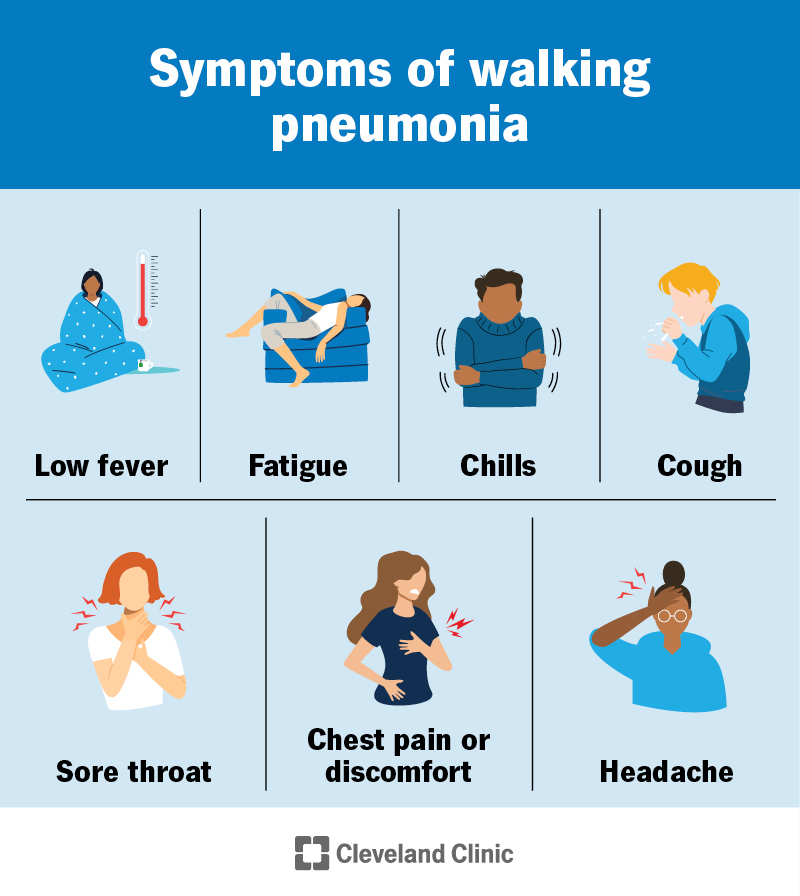
Image content: This image is available to view online.
View image online (https://my.clevelandclinic.org/-/scassets/images/org/health/articles/atypical-walking-pneumonia)
“Walking pneumonia” is a way people often describe a mild form of pneumonia. As in, you might feel well enough to walk around without realizing you have a lung infection. Pneumonia is inflammation and fluid in the air sacs of your lungs, usually caused by an infection.
Advertisement
Cleveland Clinic is a non-profit academic medical center. Advertising on our site helps support our mission. We do not endorse non-Cleveland Clinic products or services. Policy
Walking pneumonia (pronounced “noo-MOHN-yuh”) might cause symptoms that feel more like a bad cold, like a cough or fatigue.
“Walking pneumonia” isn’t a medical term. Healthcare providers are more likely to call it atypical pneumonia.
Walking pneumonia symptoms may be more like common respiratory infections rather than pneumonia. They include:
The most common causes of walking pneumonia are atypical bacterial infections. These include:
Viruses and fungi can also cause it.
The germs that cause walking pneumonia are contagious. They usually spread through coughing and sneezing or sharing cups or utensils.
But they don’t always cause pneumonia. For example, the bacteria that can cause walking pneumonia are more likely to cause minor illnesses, like ear infections. Still, you should avoid others if you have walking pneumonia to prevent spreading the illness.
You’re more likely to get walking pneumonia if you:
Advertisement
Even if you don’t feel bad enough to be in the hospital, walking pneumonia can still lead to serious complications. These could include:
These aren’t common. But see a healthcare provider right away if your symptoms get worse.
To make a diagnosis, a provider will examine you and listen to your lungs. They’ll use pulse oximetry — a small device that slips over your finger — to get an idea of how much oxygen is getting to your blood. They’ll get a chest X-ray to look for pneumonia on images of your lungs.
They might also get additional tests to determine the cause. These could include nose swabs or bacterial cultures. They might get samples for a bacterial culture from your blood, sputum or fluid from around your lungs.
In some cases, your provider might do an arterial blood gas test or use a thin, lighted tube called a bronchoscope to look at the inside of your lungs.
Treatment for walking pneumonia depends on the cause. If bacteria are causing the infection, your provider may prescribe antibiotics. These could include:
If you have a virus, you probably won’t be able to treat it with medication. But if you have the flu or COVID-19, your provider might prescribe antiviral medications. Be sure to take any medications as prescribed, even if you feel better. If you stop taking antibiotics too soon, the infection could come back and be harder to treat.
A provider may recommend over-the-counter medications to help relieve nasal congestion, cough and mucus buildup in your chest. You can also help loosen mucus by:
See a healthcare provider if you think you have pneumonia, or if you’re taking antibiotics and your symptoms don’t improve after a few days.
Go to the ER or call 911 if you:
Many people start to feel better after a few days of antibiotics and rest. But you might cough, feel tired or have other lingering symptoms for a few weeks afterward.
Advertisement
The following tips can help you prevent getting and spreading the germs that cause walking pneumonia:
Walking pneumonia usually causes milder symptoms than you might expect with pneumonia. You might not even know you have it. Still, it’s always important to keep an eye on your symptoms when you’re not feeling well. If you think you could have walking pneumonia, see a healthcare provider. They can make a diagnosis and recommend treatment. If you have chest pain, are having trouble breathing or can’t think clearly, get help right away.
Advertisement



Sign up for our Health Essentials emails for expert guidance on nutrition, fitness, sleep, skin care and more.
Learn more about the Health Library and our editorial process.
Cleveland Clinic’s health articles are based on evidence-backed information and review by medical professionals to ensure accuracy, reliability and up-to-date clinical standards.
Cleveland Clinic’s health articles are based on evidence-backed information and review by medical professionals to ensure accuracy, reliability and up-to-date clinical standards.
Need care fast? Cleveland Clinic’s Express Care and Urgent Care locations treat everything from sprains to sinus infections — no appointment needed.