



Dyslexia is a learning disability that disrupts how your brain processes written language. It’s lifelong but manageable with the right support. Early diagnosis, specialized teaching and assistive tools can help children and adults improve skills and build confidence.
Advertisement
Cleveland Clinic is a non-profit academic medical center. Advertising on our site helps support our mission. We do not endorse non-Cleveland Clinic products or services. Policy
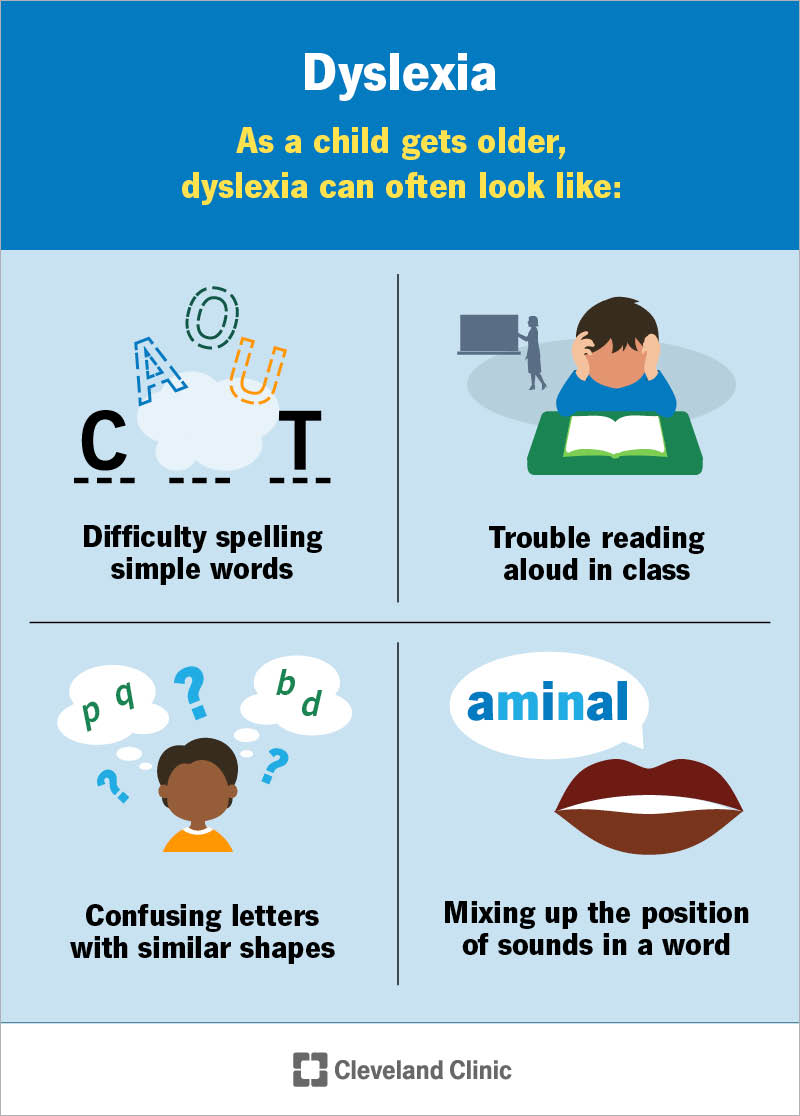
Image content: This image is available to view online.
View image online (https://my.clevelandclinic.org/-/scassets/images/org/health/articles/6005-dyslexia)
Dyslexia is a learning disability that affects your ability to read, write and spell accurately. It happens when your brain has trouble understanding written words.
Advertisement
Cleveland Clinic is a non-profit academic medical center. Advertising on our site helps support our mission. We do not endorse non-Cleveland Clinic products or services. Policy
If you have dyslexia, you might:
Most people get a diagnosis as children, but adults can have dyslexia, too. It’s a lifelong condition.
Dyslexia is fairly common. It affects roughly 1 in 14 people around the world.
This neurodevelopmental condition (a difference in how your brain grows and works) doesn’t affect how smart you are. It simply means your brain processes language in a different way.
Healthcare providers classify dyslexia based on its cause. There are two main types:
Developmental dyslexia is more common than the acquired type.
Providers may also group this condition by how it affects reading skills, like:
Advertisement
Signs of dyslexia can look different at each age. That’s because your brain grows and learns in new ways as you get older.
In preschoolers (ages 3 to 5), you might notice your child:
In kindergarteners and first graders (ages 5 to 7), your child might:
In children ages 7 to 13, you might notice your child:
In teens and adults, common signs include:
Having one or more of these signs doesn’t always mean you have dyslexia. But if reading or learning is especially hard, a dyslexia screening test can show whether you need extra support.
Dyslexia happens when the parts of your brain that handle language grow or work a little differently. These areas help you recognize sounds, match them to letters and understand words.
Causes could include:
Yes, dyslexia often runs in families. Researchers found several genes that affect brain development and language skills. These genes can make it harder for your brain to recognize sounds and connect them to written words.
But dyslexia isn’t caused by just one gene, and not everyone with a family history will have it. Sometimes, this condition happens even when no one else in your family has it.
You may be more at risk of this condition if you:
It’s common for people with dyslexia to also have other learning differences, like ADHD, dysgraphia (trouble writing) or dyscalculia (trouble with numbers and math). Identifying these together helps providers create more effective support.
Advertisement
Dyslexia can affect more than just reading. Without the right care, it may lead to other challenges, like:
Video content: This video is available to watch online.
View video online (https://cdnapisec.kaltura.com/p/2207941/sp/220794100/playManifest/entryId/1_2jecnb23/flavorId/1_5f3sgelj/format/url/protocol/https/a.mp4)
Allison Poore, CCC-SLP, explains what dyslexia is and how it’s diagnosed.
Dyslexia happens because of differences in your brain, but there aren’t any blood tests or lab screenings that can detect it. Instead, healthcare providers look for common signs through careful evaluation and testing.
Your provider may also check for other possible causes of learning problems. This could include hearing and vision tests or, in some cases, imaging tests to look at your brain.
A psychologist or neurologist usually does the testing. They’ll review your medical history and ask questions to learn more about how you think and process information.
Testing for dyslexia often includes:
Advertisement
You can have your child tested as soon as you notice signs of the condition. Some signs may appear earlier than others, and you know your child best.
Early testing is important because it helps your child get support and learning tools sooner. Still, many people aren’t diagnosed until later in life. It’s never too late to talk with a healthcare provider if you have concerns about reading or learning difficulties for yourself.
Your healthcare provider may describe your diagnosis using a severity level. This helps show how much support you may need:
There isn’t a cure for dyslexia, but there are many ways to support learning and make reading easier. Because everyone learns differently, your care team and educators will create a plan that fits your specific needs. This may include:
Advertisement
Strategies may change as you grow and learn. What works best can evolve over time, so regular check-ins with your care team or teachers can help keep your plan up to date.
Treatment for dyslexia in adults is similar to treatment for children. A teacher or tutor trained in dyslexia-focused methods can give personalized lessons and help track your progress. Treatment might include:
Having a supportive environment and learning how to ask for what you need can make a big difference in your long-term success.
If you think you or your child may have dyslexia, reach out for help as soon as possible.
For children, early signs often appear in kindergarten or first grade. You might notice trouble recognizing letters, sounding out simple words or keeping up with classmates despite extra effort. If these challenges last for several months, talk with your child’s teacher and healthcare provider.
Adults who struggle with reading or language skills should also speak with a provider. Dyslexia can go undiagnosed in childhood or develop later in life. Getting evaluated helps you access the right resources.
Dyslexia is a lifelong condition. Children don’t outgrow it as they get older, but with the right care, both children and adults can improve their reading and language skills. Progress takes time and patience, but steady practice makes a difference.
Having dyslexia doesn’t stop you from succeeding or reaching your goals. Many people with dyslexia develop strong problem-solving, creativity and communication skills. You may just take a different path to get there.
It’s also normal to feel frustrated or discouraged at times. If this happens, talking with a mental health professional can help you manage stress and build confidence.
Dyslexia is a lifelong condition, but with the right care, reading and language skills can grow stronger over time.
The challenges can be frustrating, especially early on. But many people with dyslexia also develop valuable strengths, like creative thinking, problem-solving and resilience. These skills often become just as important as reading itself.
With early help, a supportive learning environment and access to the right tools, barriers can be reduced and confidence can grow. Dyslexia may change how you learn, but it doesn’t define what you can achieve.
Learn more about the Health Library and our editorial process.
Cleveland Clinic's health articles are based on evidence-backed information and review by medical professionals to ensure accuracy, reliability, and up-to-date clinical standards.
Cleveland Clinic's health articles are based on evidence-backed information and review by medical professionals to ensure accuracy, reliability, and up-to-date clinical standards.
If you have a neurological condition, you want expert advice. At Cleveland Clinic, we’ll work to create a treatment plan that’s right for you.
