



Sclerotherapy is a minimally invasive treatment for varicose veins and spider veins. Your healthcare provider injects a chemical solution into your vein to close it off. This in-office treatment works well for many people, especially on smaller varicose veins. Recovery is quick, but it can take weeks or months to see results.
Advertisement
Cleveland Clinic is a non-profit academic medical center. Advertising on our site helps support our mission. We do not endorse non-Cleveland Clinic products or services. Policy
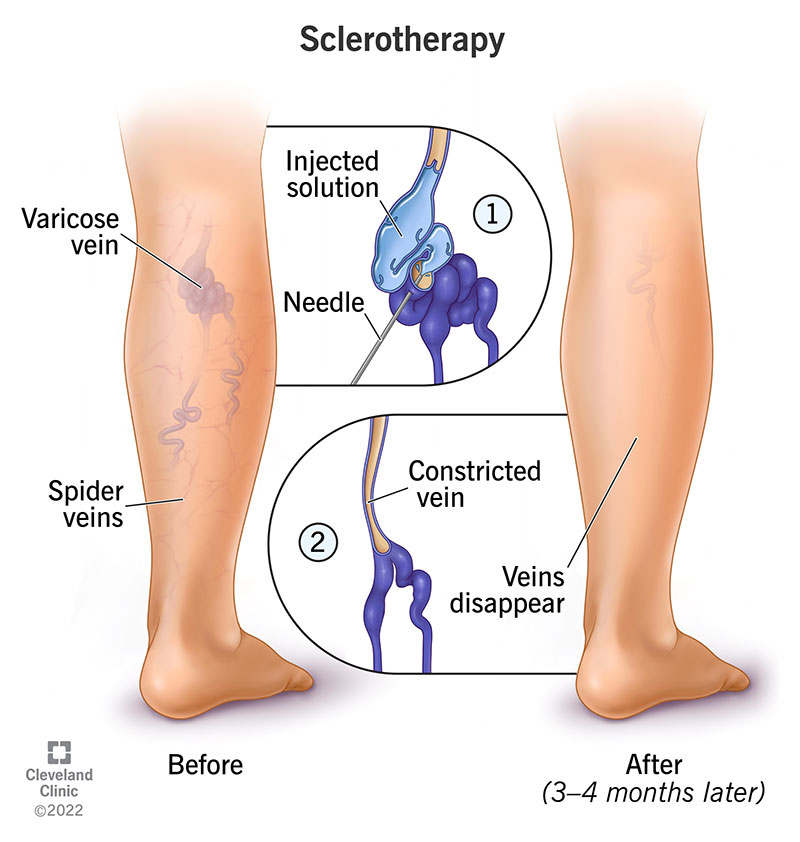
Image content: This image is available to view online.
View image online (https://my.clevelandclinic.org/-/scassets/images/org/health/articles/6763-sclerotherapy)
Sclerotherapy is a medical procedure that treats varicose veins and spider veins, usually on your legs. Your healthcare provider uses a needle to inject a special solution into your vein. The chemical solution irritates your blood vessel lining. This makes it expand, stick together and form a scar. It closes off your vein, making it look and feel better.
Advertisement
Cleveland Clinic is a non-profit academic medical center. Advertising on our site helps support our mission. We do not endorse non-Cleveland Clinic products or services. Policy
Your healthcare provider will perform sclerotherapy in their office. It takes about 30 to 45 minutes.
Before starting, your provider may try a test injection to make sure you don’t have a reaction to it.
They’ll follow these steps:
You’ll feel the needle pinch your skin, and possibly a mild burning feeling. You may feel mild discomfort when the injection goes into your veins. In larger veins, you may feel cramping for a minute or two during the injection.
After your sclerotherapy treatment, your provider may ask you to keep lying down for 15 minutes or so. They want to make sure you don’t have a bad reaction to the injected substance.
Advertisement
The number of veins your provider treats in one session depends on the size and location of your veins. They’ll also consider your overall medical condition.
This treatment isn’t for everyone. Before the procedure, you’ll meet with a vascular specialist who’ll help you decide if it’s right for you.
It’s not an option for you if you:
If you’ve had a blood clot in the past, you may be able to have sclerotherapy. It depends on what caused the clot and how serious it was.
In most cases, your provider won’t do this treatment on a vein you might need for future procedures. This includes the saphenous vein for heart bypass surgery.
Sclerotherapy works well on smaller varicose veins. A session may get rid of an estimated 50% to 80% of injected veins. In some cases, the treatment doesn’t work. If this happens, your healthcare provider can try different solutions or another method, like laser therapy.
It’s a good idea to talk with your provider about how well they think sclerotherapy treatment will work for you. Some people who expect the treatment will work wonders aren’t happy with their results. Knowing what to expect can help you avoid feeling let down. You should also know that results aren’t instant. You won’t walk out of your provider’s office looking like a leg model.
Benefits of vein sclerotherapy include:
Sclerotherapy takes longer than surgery for varicose veins or spider veins. And it has risks of infection, blood clots and inflammation. It can also have side effects.
Side effects of sclerotherapy may include the following:
Advertisement
It doesn’t take long to recover from vein sclerotherapy. After treatment, you can drive home and get back to your normal activities. Walking is good for your recovery. Your healthcare provider may suggest it.
You should wear support stockings or compression wraps for three to seven days to compress the treated vessels. Regular support stockings from a retail store may not work.
For 48 hours after treatment, follow these sclerotherapy aftercare guidelines:
Before your sclerotherapy treatment, you should avoid certain drugs. Ask your healthcare provider for guidance on taking or stopping these medicines:
Advertisement
Other guidelines before your procedure include:
If you have compression stockings from past treatments, bring them with you. Your provider can make sure they give you enough support.
If you have any of these rare side effects, contact your healthcare provider right away:
Call your provider if you have any concerns or questions after your procedure. You’ll most likely see them for a follow-up visit a month or two after sclerotherapy treatment. You may have a physical exam, blood tests or imaging. If you’re having multiple treatments, you may have your next session two or three months after your first one.
Laser treatment, or endovenous thermal ablation, is generally safe. But it can have some side effects, just like you do with sclerotherapy. It’s difficult to do ablation on a varicose vein that has a lot of twists and turns. Your healthcare provider will need to consider what your veins look like when deciding on the best treatment for you.
Advertisement
Varicose veins can be hard to live with, but sclerotherapy works for many people. Talking with your healthcare provider will help you understand your treatment options so you can decide whether this procedure is right for you. It’s good to know what to expect from it. For the best results, be sure to follow all of your provider’s instructions before and after sclerotherapy.



Sign up for our Health Essentials emails for expert guidance on nutrition, fitness, sleep, skin care and more.
Learn more about the Health Library and our editorial process.
Cleveland Clinic’s health articles are based on evidence-backed information and review by medical professionals to ensure accuracy, reliability and up-to-date clinical standards.
Cleveland Clinic’s health articles are based on evidence-backed information and review by medical professionals to ensure accuracy, reliability and up-to-date clinical standards.
Vascular disease may affect your life in big and small ways. Cleveland Clinic’s specialists treat the many types of vascular disease so you can focus on living.
