



VV-ECMO (veno-venous extracorporeal membrane oxygenation) is a type of life support that helps people with respiratory failure. A machine takes over your lung function by adding oxygen to your blood and removing carbon dioxide. This lets your lungs rest while healthcare providers treat the underlying cause of respiratory failure.
Advertisement
Cleveland Clinic is a non-profit academic medical center. Advertising on our site helps support our mission. We do not endorse non-Cleveland Clinic products or services. Policy
VV-ECMO (veno-venous ECMO) is a type of temporary life support that takes over the work of your lungs when you have respiratory failure. A machine adds oxygen to your blood and removes carbon dioxide. This is called “gas exchange,” and it’s what your lungs normally do. The machine acts as an artificial lung, allowing your lungs to rest and heal.
Advertisement
Cleveland Clinic is a non-profit academic medical center. Advertising on our site helps support our mission. We do not endorse non-Cleveland Clinic products or services. Policy
Healthcare providers use VV-ECMO only when there’s a chance your lungs can recover their function or when you’re a candidate for a lung transplant. Typically, VV-ECMO is used only as a last resort, once it’s clear that medications or other treatments aren’t helping your lungs recover quickly enough.
VV-ECMO doesn’t treat the underlying cause of respiratory failure. But it can keep you alive while healthcare providers give you medications or do procedures to treat the issue.
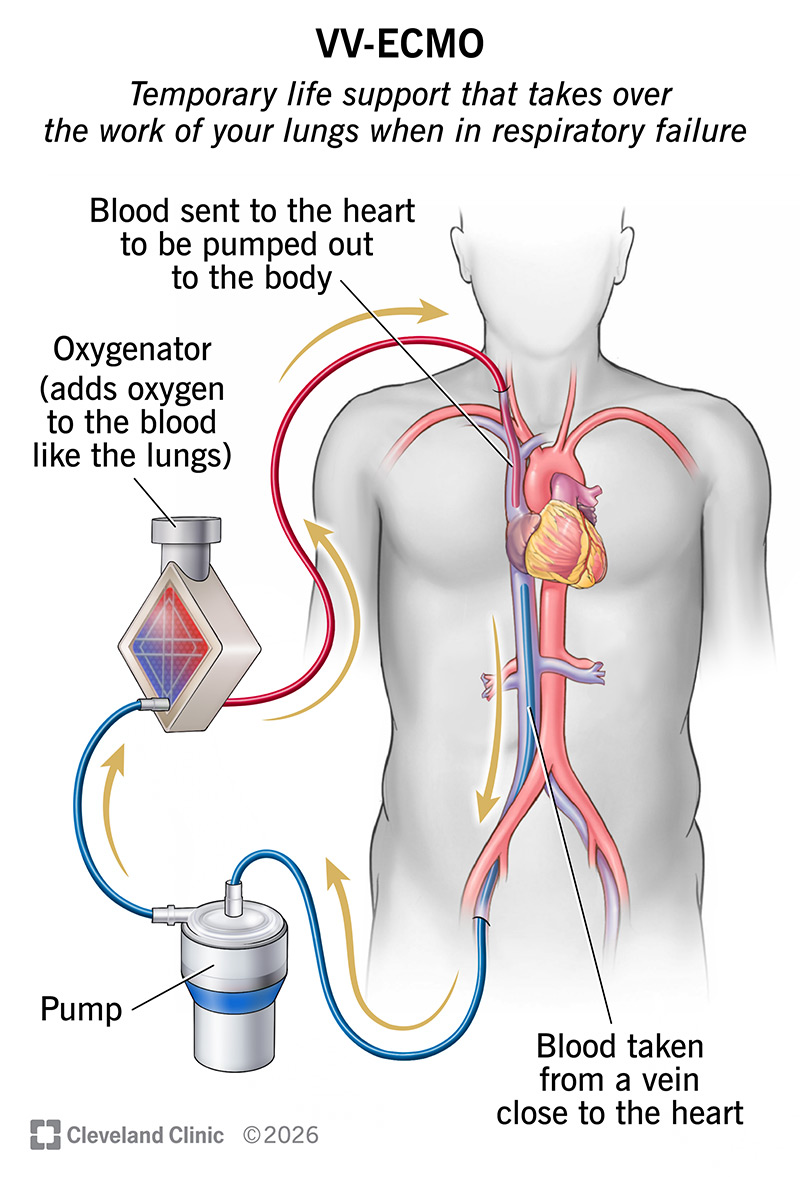
Image content: This image is available to view online.
View image online (https://my.clevelandclinic.org/-/scassets/images/org/health/articles/vv-ecmo-illustration)
VV-ECMO keeps you alive when you’re in respiratory failure. A machine removes blood from a vein, adds oxygen to it, and sends it back into another vein for your heart to pump out to your body.
VV-ECMO can be lifesaving, but it comes with risks. The most common include bleeding, infections and blood clots, which may travel through your bloodstream and block blood flow.
Only certain hospitals are qualified to provide ECMO. These hospitals have highly trained teams of physicians, surgeons and other specialists who decide if ECMO is right for you. They review your health history and weigh the benefits and risks. They also decide if you need VV-ECMO or another type called VA-ECMO, which takes over for your lungs and heart.
A VV-ECMO machine removes blood from your veins and runs it through a special device, called a membrane oxygenator. The membrane adds oxygen and removes carbon dioxide. Another device, called a heat exchanger, keeps the blood warm enough to match your body temperature. Then, the machine pumps the blood back into your veins. From there, your heart receives the blood and pumps it out to your body.
Advertisement
The term “VV-ECMO” describes this process:
VV-ECMO is different from VA-ECMO, which removes blood from a vein but sends it back into an artery. Another key difference is that with VV-ECMO, your heart is still able to meet your body’s needs. It’s only your lungs that need help. VA-ECMO, on the other hand, is used for people who have failing lungs and a failing heart.
To connect you to VV-ECMO, your team of healthcare providers will:
It depends on your condition and how your body responds to treatment. Most people are on VV-ECMO for nine to 14 days. But some stay on it for four weeks or longer.
When your care team thinks your lungs are ready to take over again, they’ll wean you from ECMO. This means they gradually adjust the settings so your lungs take on more of the work and the machine does less. Weaning can take anywhere from several hours to days.
It’s possible that, despite treatments while on ECMO, you won’t show signs of recovery. When this happens, it may be necessary to remove you from ECMO. Hospital care teams discuss next steps with loved ones or others who can make health decisions on your behalf.
Your outlook depends on the reason you need ECMO and how your body responds to treatment. Your care team can give you and your loved ones the most accurate sense of what to expect.
Learning about VV-ECMO can help you know what may happen if you or someone close to you needs life support. But nothing can truly prepare you for the emotions you might feel if your loved one is receiving this form of care. Lean on their healthcare team for guidance. Ask any questions that come to mind. And try to set aside some moments so you can take care of yourself, too.
Advertisement



Sign up for our Health Essentials emails for expert guidance on nutrition, fitness, sleep, skin care and more.
Learn more about the Health Library and our editorial process.
Cleveland Clinic’s health articles are based on evidence-backed information and review by medical professionals to ensure accuracy, reliability and up-to-date clinical standards.
Cleveland Clinic’s health articles are based on evidence-backed information and review by medical professionals to ensure accuracy, reliability and up-to-date clinical standards.
Whether you need stitches, a broken bone set or think your appendix might be causing your abdominal pain, Cleveland Clinic’s emergency medicine team is here to help.
