Ketamine therapy uses a low dose of an anesthetic to treat depression, anxiety and some chronic pain. It works by blocking certain brain signals and helping nerve cells form new connections. It may quickly improve mood. Treatment is given by IV or nasal spray under medical supervision. You may need multiple sessions.
Advertisement
Cleveland Clinic is a non-profit academic medical center. Advertising on our site helps support our mission. We do not endorse non-Cleveland Clinic products or services. Policy
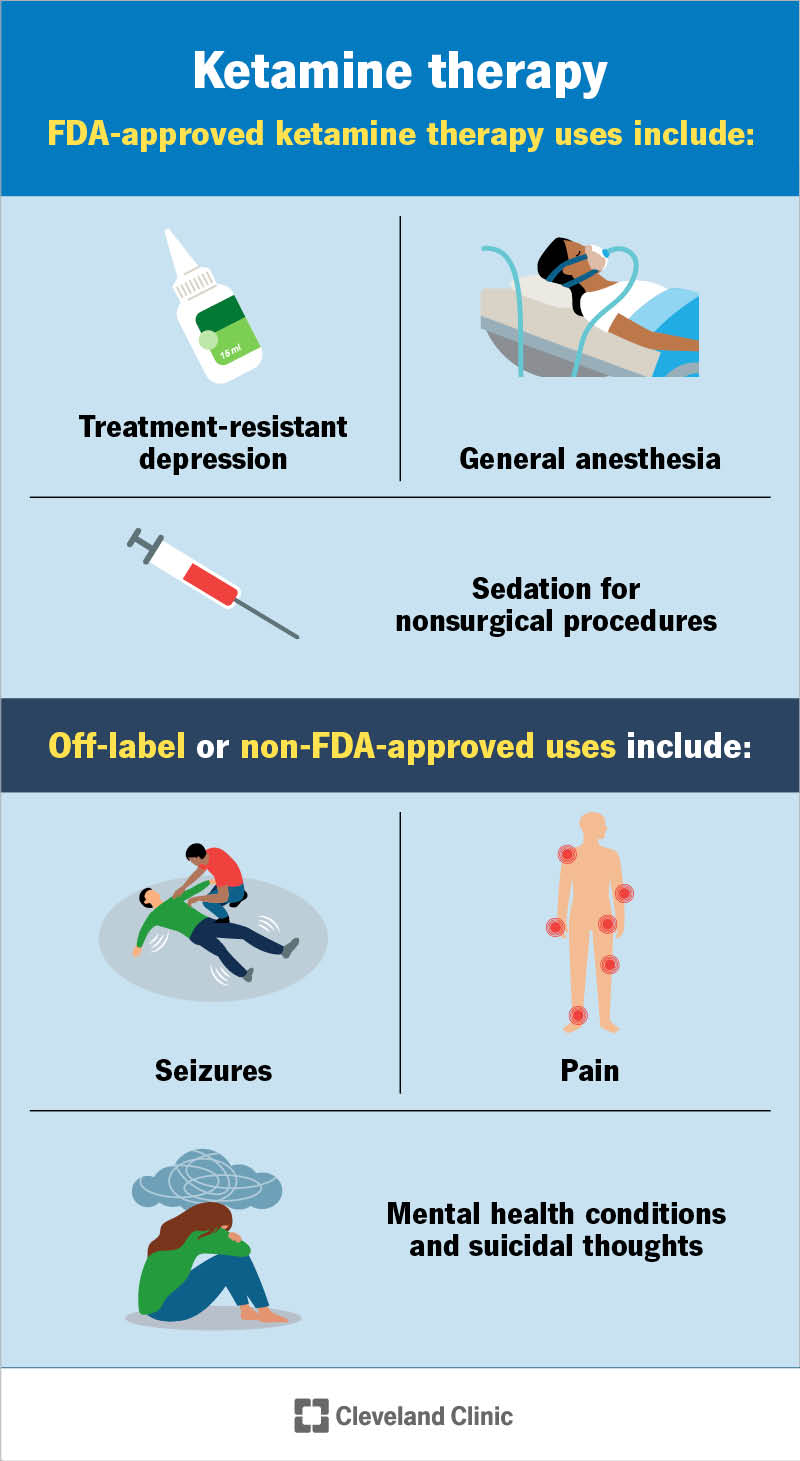
Image content: This image is available to view online.
View image online (https://my.clevelandclinic.org/-/scassets/images/org/health/articles/ketamine-therapy)
Ketamine therapy uses a medicine called ketamine hydrochloride to manage certain mental health conditions and chronic pain. Ketamine is a fast-acting anesthetic. It can make you feel relaxed or slightly detached from your surroundings for a short time.
Advertisement
Cleveland Clinic is a non-profit academic medical center. Advertising on our site helps support our mission. We do not endorse non-Cleveland Clinic products or services. Policy
In your brain, there’s a chemical called glutamate that helps nerve cells talk to each other. This chemical helps your brain control your mood, memory and decision-making skills. But when there’s too much glutamate, it can hurt brain cells and slow down areas that affect mood, stress and anxiety.
Ketamine works by blocking certain glutamate signals in your brain. This helps protect brain cells and allows them to form new, healthy connections. It’s a process called synaptogenesis. These new connections may improve your mood and reduce symptoms.
Your provider may recommend this therapy when other treatments haven’t worked. You may receive it through an IV (infusion) or as a nasal spray. During treatment sessions, your healthcare provider will watch you closely to make sure you’re safe and comfortable.
Ketamine is a controlled substance. The FDA approved ketamine treatment for several medical uses, including:
Advertisement
Your provider may also prescribe ketamine for other reasons that aren’t FDA-approved. This is called off-label use. In these cases, ketamine may help when other treatments haven’t worked. These include:
Ketamine therapy is usually for people who haven’t found relief with other treatments. For example, if you have major depressive disorder, you may have tried several medicines or types of therapy without much improvement. This is sometimes called treatment-resistant depression — when symptoms don’t get better even after trying different options.
If you’re interested in ketamine therapy, talk with your healthcare provider. They’ll review your medical history and help you decide if this treatment is safe and could work well for you.
Ketamine treatment isn’t safe or recommended for everyone. Your healthcare provider may suggest other options if you have or had:
Talk to your provider if you’re pregnant or breastfeeding. Small amounts of ketamine can pass to the fetus during pregnancy or through breast milk.
Your provider may also suggest other options if you take certain medications, like:
Even if you see something on this list that applies to you, don’t rule it out on your own. Talk with your provider first. They’ll let you know if this is right for you.
Before starting ketamine therapy, you’ll meet with a healthcare provider. They’ll review your medical history to make sure the treatment is safe. Depending on your health, you may also need clearance from other specialists, like a heart, brain, eye or kidney doctor.
Your provider may order lab tests, like liver and kidney function tests, to see how your body handles medications. They’ll explain how the treatment works, what to expect during your first sessions and check for any reasons why ketamine might not be safe. You may also get medicine ahead of time to prevent side effects.
Advertisement
Sometimes, your provider will start with a trial session to see how your body reacts to ketamine. If the trial goes well, you can begin regular treatments.
To get ketamine therapy, you may have to:
The steps may vary slightly depending on where you receive care. Here’s what a typical visit looks like:
Advertisement
Your surroundings can affect how ketamine makes you feel. It helps to keep your space calm and quiet during treatment. Try to avoid phone calls or long conversations while you’re getting therapy. If you need to talk with staff, keep it short so you can stay relaxed and focused.
You can use your phone during treatment, but turn off the sound. If you’d like, bring headphones to listen to calm music or soothing sounds. Many people find that this makes the experience more peaceful and comfortable.
Your visit will usually last two to three hours, depending on the type.
Everyone experiences ketamine therapy a little differently. Many people describe it as an out-of-body or dream-like feeling. You’ll be in a quiet room and fully aware that you’re there, but it might feel like you’re floating or watching yourself from outside your body.
You may notice that lights, colors or sounds feel stronger or more vivid. When you close your eyes, you might see shifting patterns or shapes. Time can feel slower. It may be hard to tell where you are.
Some people feel their mood lift or chronic pain ease for a short time. You might also notice slower speech, double vision, lightheadedness or a tingling, numb feeling in your arms or legs.
Advertisement
These sensations can feel strange at first, but they’re temporary. You’ll be in a medical setting with trained providers who stay with you the entire time. If you feel uncomfortable, they’ll help right away.
After treatment, you may feel groggy or tired, like waking up from a deep nap or dream. It can take about 30 minutes to feel fully alert again. Mild dizziness or fatigue can last for the rest of the day, but most people feel like themselves again by the next day. You may have some symptom relief starting soon after treatment.
Common benefits of this treatment may include:
Ketamine therapy is safe when given under medical supervision. Before you start, your care team will check for any health conditions that might make ketamine unsafe. During treatment, they’ll carefully control your dose and how quickly you get it.
Serious side effects are rare.
Long-term use is another safety concern. Because ketamine is a controlled substance, it’s only given in a clinic under supervision. Dependence is uncommon when used occasionally in a medical setting. Your care team will follow your response to treatment to make sure you’re safe.
Most people have few or no side effects. When side effects do happen, they’re usually mild and go away soon after each session.
Common side effects may include:
Rare side effects may include:
Researchers are still studying the long-term safety of ketamine for depression and other mental health conditions. Because of this, there may be long-term effects that aren’t yet fully known.
The exact schedule depends on why you’re getting treatment and how your body responds.
Some people notice improvement within hours, but those effects can fade within days or weeks. You may need more sessions to keep feeling better.
Your healthcare provider will make a plan that fits your needs and adjust it as you go. If you’re unsure how long treatment will last, your provider can explain what to expect and answer your questions.
Exploring ketamine therapy can bring up many emotions — curiosity, hope and even uncertainty. When other treatments haven’t helped enough, it’s normal to wonder what trying something new might mean for you.
What matters most is that you feel safe, informed and supported throughout the process. Your care team will guide you through each step, stay with you during treatment and help you as the effects wear off.
Some people notice meaningful changes, but the results can vary for each person. Your provider can help you understand what to expect and decide if this therapy is a good fit.



Sign up for our Health Essentials emails for expert guidance on nutrition, fitness, sleep, skin care and more.
Learn more about the Health Library and our editorial process.
Cleveland Clinic’s health articles are based on evidence-backed information and review by medical professionals to ensure accuracy, reliability and up-to-date clinical standards.
Cleveland Clinic’s health articles are based on evidence-backed information and review by medical professionals to ensure accuracy, reliability and up-to-date clinical standards.
If you have a neurological condition, you want expert advice. At Cleveland Clinic, we’ll work to create a treatment plan that’s right for you.