



A nebulizer is a device that turns liquid medicine into mist you breathe in. It’s used to treat asthma, COPD and other lung conditions. Nebulizer medications usually work by opening your airways or reducing inflammation. Inhaling the mist allows the medicine to get directly to your lungs. Types of nebulizers include jet, ultrasonic and mesh.
Advertisement
Cleveland Clinic is a non-profit academic medical center. Advertising on our site helps support our mission. We do not endorse non-Cleveland Clinic products or services. Policy
A nebulizer is a machine that turns liquid medicine into a mist. You breathe in the medicine through a mask or mouthpiece. This allows it to get directly to your airways and lungs.
Advertisement
Cleveland Clinic is a non-profit academic medical center. Advertising on our site helps support our mission. We do not endorse non-Cleveland Clinic products or services. Policy
Common nebulizer medications include ones that open your airways (bronchodilators) or reduce inflammation (corticosteroids). Sometimes, antibiotics or medicines that thin mucus (mucolytics) are used with a nebulizer, too.
Nebulizers treat:
You might also use a nebulizer in a hospital if you’re having trouble breathing due to airway inflammation.
Types of nebulizers include:
Some medicines only work with certain types of machines. Your healthcare provider will recommend a nebulizer that works with yours. Some other things to consider in a nebulizer machine include:
Some nebulizers even look like cute animals, making them less intimidating for kids.
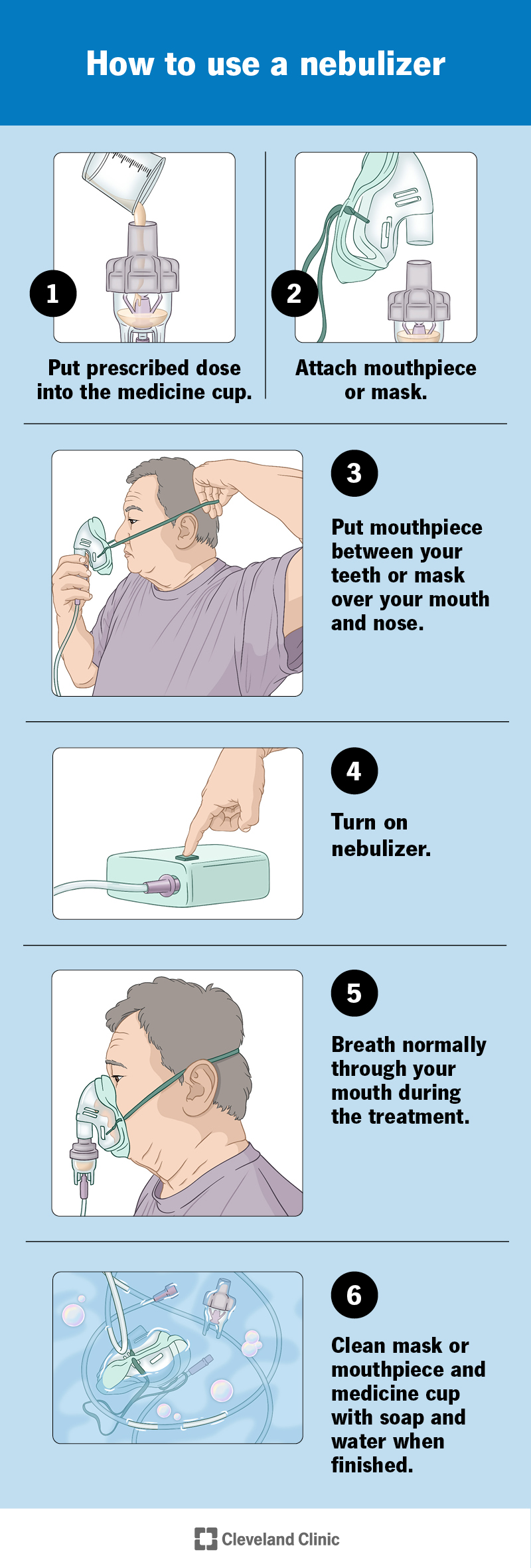
Image content: This image is available to view online.
View image online (https://my.clevelandclinic.org/-/scassets/images/org/health/articles/nebulizer-how-to-use)
Many types of nebulizers are set up slightly differently. Always read the directions and check with your provider or pharmacist if you have any questions about how to use the kind you have.
Advertisement
How long you’ll need to use a nebulizer depends on what you’re treating. Some people use them every day. Others only need them when breathing symptoms flare up. Talk to your provider about when to use a nebulizer and for how long.
The main benefit of using a nebulizer is that it can deliver medicine directly to your airways. They’re also helpful for kids and those who can’t use an inhaler.
There are some drawbacks, though. They can be noisy, which can bother kids in particular. They can sometimes be expensive, too.
Always talk to your healthcare provider if you have any issues with your nebulizer or the medication. Don’t hesitate to ask if you’re not sure how to use it. Make sure you talk to your pharmacist about whether nebulized medications can be used together.
Some medicines might make you feel jittery or shaky. Talk to your provider if you have bothersome symptoms.
Generally, yes. While you might be able to get one without a prescription, a healthcare provider still needs to prescribe the medicine that goes in it.
A nebulizer delivers medication right where you need it so you can breathe easier. It can help manage chronic lung conditions or get you through a flare-up of symptoms. Ask your provider how to use it properly and any other questions you have.
Advertisement



Sign up for our Health Essentials emails for expert guidance on nutrition, fitness, sleep, skin care and more.
Learn more about the Health Library and our editorial process.
Cleveland Clinic’s health articles are based on evidence-backed information and review by medical professionals to ensure accuracy, reliability and up-to-date clinical standards.
Cleveland Clinic’s health articles are based on evidence-backed information and review by medical professionals to ensure accuracy, reliability and up-to-date clinical standards.
Breathing issues can affect your life in many ways. Cleveland Clinic’s respiratory therapy program treats your symptoms so you can feel better day to day.
