



Pulsed field ablation is the latest way to perform cardiac ablation for atrial fibrillation. Using electrical pulses to destroy certain heart cells offers advantages over other methods. These include less risk to nearby tissue and faster procedure times.
Advertisement
Cleveland Clinic is a non-profit academic medical center. Advertising on our site helps support our mission. We do not endorse non-Cleveland Clinic products or services. Policy
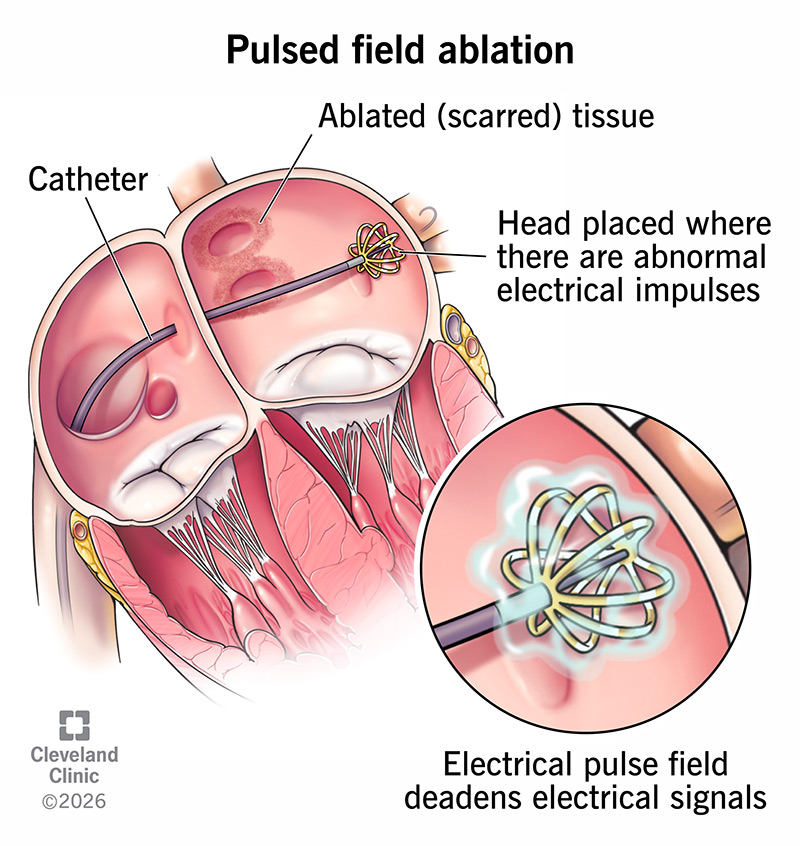
Image content: This image is available to view online.
View image online (https://my.clevelandclinic.org/-/scassets/images/org/health/articles/pulsed-field-ablation-illustration)
Pulsed field ablation is a procedure to treat atrial fibrillation (AFib) using electricity to zap and destroy areas of heart tissue where abnormal heart rhythms arise. Your healthcare provider may suggest this procedure if medicines haven’t worked for AFib.
Advertisement
Cleveland Clinic is a non-profit academic medical center. Advertising on our site helps support our mission. We do not endorse non-Cleveland Clinic products or services. Policy
Compared to older methods, this approach is very careful in selecting the right areas of tissue to target and less likely to damage tissues nearby. Because of this and other benefits, providers are using this approach more often than ever before. They’re also studying its possible use for abnormal heart rhythms in the lower heart chambers.
The U.S. Food and Drug Administration approved the first pulsed field ablation device in 2023.
Before pulsed field ablation for AFib, you may need to:
On the day of the procedure, wear comfortable clothes. You should also leave jewelry and other valuable items at home.
A pulsed field ablation procedure takes an average of two hours or less. During the procedure, your healthcare team will:
Advertisement
A pulsed field ablation procedure isn’t open surgery. It’s minimally invasive, lower risk and usually has a same-day recovery and discharge. It can help keep AFib from coming back in most people.
Benefits of pulsed field ablation over other ablation approaches include:
No procedure is without side effects and risks. Providers use the utmost caution to avoid side effects and quickly intervene when they rarely occur.
With this approach, you may have exposure to X-rays (fluoroscopy) for longer than you would with heat ablation. Possible pulsed field ablation side effects or risks include:
After pulsed field ablation, you’ll need to spend three to six hours resting in bed. You’ll likely go home the same day or the next day.
Before you go home, you’ll probably start taking blood thinners again to prevent blood clots. You can expect to take antiarrhythmic medicines to prevent AFib until the ablation takes effect. This may be a few months.
You’ll have follow-up visits with your healthcare team after one, three and six months. Then you’ll see your team every six months. These visits may include an EKG test to check for abnormal heart rhythms.
If you have arm weakness or face drooping, call 911 or your local emergency number. These stroke symptoms need care right away.
After your procedure, contact your provider if you have:
Having AFib can be frustrating, especially if medicines don’t work. But there are other options. A newer type of ablation could help while limiting the risks that come with older methods. Talk to your healthcare provider about which treatment is best for you. They can answer questions and address any concerns you have.
Advertisement



Sign up for our Health Essentials emails for expert guidance on nutrition, fitness, sleep, skin care and more.
Learn more about the Health Library and our editorial process.
Cleveland Clinic’s health articles are based on evidence-backed information and review by medical professionals to ensure accuracy, reliability and up-to-date clinical standards.
Cleveland Clinic’s health articles are based on evidence-backed information and review by medical professionals to ensure accuracy, reliability and up-to-date clinical standards.
When your heart rhythm is out of sync, the experts at Cleveland Clinic can find out why. We offer personalized care for all types of arrhythmias.
