



Toasted skin syndrome happens when low heat — like from laptops or heating pads — damages your skin over time. It causes a netlike rash. It’s usually harmless early on, but may lead to lasting dark spots if the heat continues. Most cases improve once you remove the heat source.
Advertisement
Cleveland Clinic is a non-profit academic medical center. Advertising on our site helps support our mission. We do not endorse non-Cleveland Clinic products or services. Policy
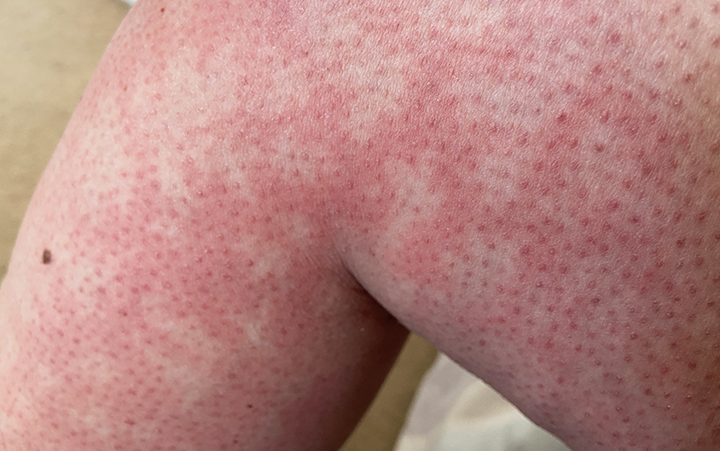
Image content: This image is available to view online.
View image online (https://my.clevelandclinic.org/-/scassets/images/org/health/articles/toasted-skin-syndrome)
Toasted skin syndrome, also called erythema ab igne, is a skin condition that comes from repeated and prolonged exposure to low levels of heat and occasional repeated high levels of heat. The heat is warm enough to damage your skin over time. But it’s not hot enough to cause a burn. It can cause a discolored, patchy rash.
Advertisement
Cleveland Clinic is a non-profit academic medical center. Advertising on our site helps support our mission. We do not endorse non-Cleveland Clinic products or services. Policy
Common heat sources include laptops, heating pads, car seat warmers and space heaters. The rash may feel itchy. It’s usually harmless in the early stages and often fades once you remove the heat source. In some cases, your skin may permanently stay darker in that area.
A healthcare provider can help you manage this condition if skin changes stick around.
Because low-level heat damages your skin slowly and doesn’t cause a true burn, you may not feel symptoms at first. If symptoms do occur, you might notice:
Changes you might see on your skin may include:
The rash may fade when you press on it early on. As the condition progresses, it no longer fades when you press it.
Signs and symptoms may appear on your lower back, belly (abdomen), thighs or legs. The location usually depends on the type of heat and where it touches your skin.
This condition happens after repeated exposure to heat in one area of your skin. Over weeks or months, heat can damage small blood vessels and pigment in your skin. This damage leads to the netlike pattern seen with this condition.
Advertisement
In the past, people developed this rash from open fires, wood-burning stoves or kerosene lamps. Today, it’s more often linked to modern heat sources like:
The following may increase your risk:
This condition usually isn’t dangerous. In most cases, the rash improves once you stop exposing your skin to heat.
In rare cases, long-term changes in the affected area could link to precancerous (early abnormal) or cancerous skin changes. Because of this, a healthcare provider should check any area that becomes thickened, develops sores or doesn’t improve after you stop using heat.
It isn’t always permanent. In many cases, your skin may slowly improve after you remove the heat source. It can take months to years for your skin to return to its usual color.
But long-term or repeated heat exposure could cause permanent skin changes. Some people develop a lasting darkening of their skin (hyperpigmentation).
Healthcare providers usually diagnose toasted skin syndrome by looking at your skin and asking about your health history.
Your provider will ask if you used a heat source on the affected area, like a heating pad or laptop, over weeks or months. They may also ask about ongoing pain that led you to use heat often.
In most cases, they won’t need to do any testing. If your skin has sores, thickened areas or it doesn’t improve, your provider may take a small skin sample (biopsy). A biopsy helps rule out other skin conditions.
The most important treatment is to stop using the heat source that caused the rash. Removing the heat early helps prevent further skin damage.
After you stop the heat exposure, many cases improve on their own.
If discoloration doesn’t get better, your healthcare provider may recommend:
Visit a healthcare provider if you:
The outlook for toasted skin syndrome is generally good. Most cases improve once you stop using the heat source. Limiting further exposure helps prevent more skin damage. If exposure continues for a long time, permanent skin discoloration (lasting dark patches) may occur.
Advertisement
If you rely on heat because you’re often cold or dealing with ongoing pain, making this change might be challenging. Talk with your healthcare provider about safer options that may help manage your symptoms while protecting your skin.
Toasted skin syndrome is preventable. You can lower your risk by:
Toast is usually something you want with your breakfast, not something you want happening to your skin over time. This condition can leave lasting marks if you use a heating pad, a laptop or space heater on the same spot, day after day.
If you give your skin a break from the heat, this is often reversible. Be sure to check in with your provider if you notice thickening, sores or color changes that don’t seem to go away. These might be signs of a rare but more serious problem.
Advertisement



Sign up for our Health Essentials emails for expert guidance on nutrition, fitness, sleep, skin care and more.
Learn more about the Health Library and our editorial process.
Cleveland Clinic’s health articles are based on evidence-backed information and review by medical professionals to ensure accuracy, reliability and up-to-date clinical standards.
Cleveland Clinic’s health articles are based on evidence-backed information and review by medical professionals to ensure accuracy, reliability and up-to-date clinical standards.