



Construction workers, rock climbers and others who scale tall structures on ropes are at risk for suspension syndrome. It’s when you faint, or feel like you might, while hanging in mid-air after a fall. Symptoms can set in after just a few minutes. Moving your legs while you wait for help may prevent this syndrome.
Advertisement
Cleveland Clinic is a non-profit academic medical center. Advertising on our site helps support our mission. We do not endorse non-Cleveland Clinic products or services. Policy
Suspension syndrome (formerly called suspension trauma) happens when a person becomes lightheaded, faints or (rarely) has cardiac arrest while hanging motionless in a harness or on a rope. It can also happen shortly after rescue. Suspension syndrome affects people who use ropes or harnesses for work or recreation. It’s rare and often preventable. Fast rescue is critical and can save a life.
Advertisement
Cleveland Clinic is a non-profit academic medical center. Advertising on our site helps support our mission. We do not endorse non-Cleveland Clinic products or services. Policy
Call 911 or your local emergency number if someone around you falls while on a rope and harness. Don’t delay, even if you think you can help the person. It’s impossible to tell if or when suspension syndrome might set in.
“Suspension syndrome” is the most accurate term for this condition. Older names, which healthcare providers don’t use anymore, include:
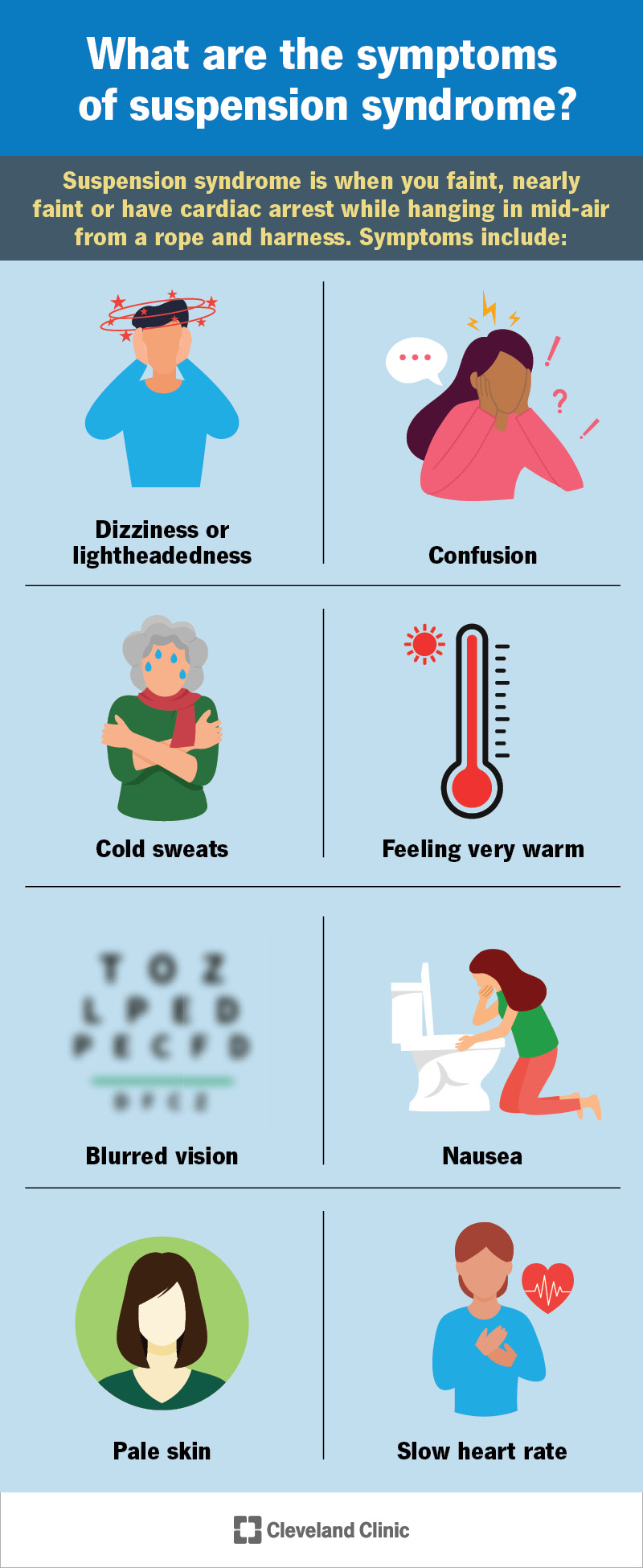
Image content: This image is available to view online.
View image online (https://my.clevelandclinic.org/-/scassets/images/org/health/articles/suspension-trauma-infographic)
There’s no way to predict when suspension syndrome symptoms may begin. In some people, they start after just a few minutes.
Symptoms can begin within minutes or after a longer time — there is no reliable timeline. Symptoms include:
Without help, you may faint, meaning you lose consciousness. It’s also rare but possible for your heart to stop beating (cardiac arrest).
Experts don’t fully understand what causes suspension syndrome. They know it happens when you’re passively hanging from a rope or harness. This means your feet are dangling in the air and can’t rest on anything solid.
Advertisement
There are many theories for what exactly causes this syndrome. One likely explanation is that your nervous system overreacts. This is called a vasovagal or neurocardiogenic reflex. This reflex causes your heart rate to slow down and your blood pressure to drop, leading to fainting.
Older theories suggested that blood pooling in your leg veins caused too little blood to reach your upper body. But experts now know the link isn’t that simple. While some blood does pool in your legs, the pooling itself likely isn’t the problem. It’s the fact that your nervous system kicks in and triggers changes in response to that.
You may be at risk of suspension syndrome if you have certain jobs or hobbies that require a rope and harness, including:
Diagnosis happens at the scene when first responders arrive. They’ll talk to you about your symptoms, if you’re able to speak. They’ll provide first aid and take you to a hospital. On the way, they’ll closely monitor your breathing, heart rate, blood pressure and blood oxygen levels.
Once you’re at the hospital, you may need blood tests to check electrolyte levels and kidney and liver function. Providers may also do CT scans or other imaging tests to check for injuries.
First responders will begin treating you as soon as possible. They’ll remove you from the harness and lay you down flat. This helps enough blood flow to your brain. You may feel your symptoms start to improve. If you’re not breathing or responding, they’ll start CPR. They’ll then take you to a hospital for further evaluation.
At the hospital, you may need medications, IV fluids or other treatments to help your body recover. Healthcare providers will also treat any injuries you might have.
Healthcare providers at the hospital will explain the follow-up visits you need. You should also tell your usual provider about what happened so they can make a note in your medical record.
Most people fully recover from suspension syndrome. It’s a scary but temporary experience. If you go into cardiac arrest and need CPR, you may develop complications. Your healthcare provider will explain what you can expect and the care you’ll need.
Very rarely, people die from suspension syndrome.
Yes, there’s a lot you can do to prevent suspension syndrome from happening. Here are some tips:
Advertisement
Suspension syndrome can be scary to think about. But a little extra planning can go a long way toward helping you prevent it. If your job or hobbies involve ropes and harnesses, make sure you’re comfortable with the equipment. Follow all the safety guidelines in your training. And don’t be afraid to ask questions if you’re not sure how to use something.
Advertisement



Sign up for our Health Essentials emails for expert guidance on nutrition, fitness, sleep, skin care and more.
Learn more about the Health Library and our editorial process.
Cleveland Clinic’s health articles are based on evidence-backed information and review by medical professionals to ensure accuracy, reliability and up-to-date clinical standards.
Cleveland Clinic’s health articles are based on evidence-backed information and review by medical professionals to ensure accuracy, reliability and up-to-date clinical standards.
Whether you need stitches, a broken bone set or think your appendix might be causing your abdominal pain, Cleveland Clinic’s emergency medicine team is here to help.
