Macerated skin is when your skin lightens and wrinkles from spending too much time in wet conditions. Mild cases go away after some air exposure. But over time, it can break down your skin’s protective barrier and put you at risk of infection. Treatment involves keeping the affected area clean and dry. Special bandages and creams can help.
Advertisement
Cleveland Clinic is a non-profit academic medical center. Advertising on our site helps support our mission. We do not endorse non-Cleveland Clinic products or services. Policy
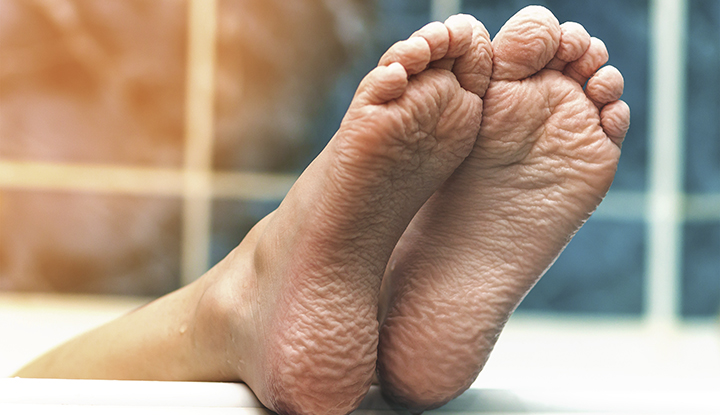
Image content: This image is available to view online.
View image online (https://my.clevelandclinic.org/-/scassets/images/org/health/articles/skin-maceration)
Skin maceration is when your skin becomes soft, wrinkly and discolored after being in wet conditions for too long.
Advertisement
Cleveland Clinic is a non-profit academic medical center. Advertising on our site helps support our mission. We do not endorse non-Cleveland Clinic products or services. Policy
Mild cases of skin maceration (pronounced “mas-uh-REY-shuhn”) can happen if you spend too much time in a bath or pool. When this occurs, your skin will return to its normal appearance after you let it dry out.
But in severe cases, too much exposure to moisture can cause your skin to break down. This can cause itchy or painful sores. It also increases your risk of infection. Severe skin maceration can happen if you spend a lot of time walking in wet shoes. It can also affect babies who don't have their diapers changed regularly.
Mild cases of skin maceration don’t need treatment, just a little extra care. But if you have a sore, you may need special bandages and prescription creams to help keep your skin clean and dry.
Macerated skin:
Severe skin maceration may have symptoms like:
Maceration most commonly affects areas with skin folds, like between your fingers or toes or around your genitals. It’s also common to notice it on the tops of your fingers, in the palms of your hands and on the soles of your feet. But it can affect any area of your skin that has exposure to a moist or wet environment for a long time.
Advertisement
Too much moisture causes your skin to soften and eventually break down. Water and sweat are common sources. But others may include:
Most people notice skin maceration after bathing or swimming for too long. But it can also develop when something wet stays on your skin, like:
Skin maceration is common. It can affect anyone at any age. You’ve probably experienced it after a long bath or a day in the swimming pool. But you may have an increased risk if you:
Bacterial infections can be a major complication. The top layer of your skin (epidermis) acts as a protective barrier. It helps keep germs that could cause infections out of your body. But macerated skin is weaker. It has a harder time keeping germs out. This increases your risk of infections. It’s also more likely to break down into an open sore due to friction — for example, if your skin rubs against clothing or your skin folds rub against each other.
Your healthcare provider can pretty easily diagnose it during a physical exam. They may also recommend a blood test or a culture test to rule out similar conditions, like an ulcer or infection.
Mild cases usually go away on their own after letting the area dry out.
If you have maceration from a wound or sore, gently clean the affected area with soap and clean water and pat it dry. Your healthcare provider may recommend covering it in a waxy, watertight (occlusive) bandage or an absorbent (hydrofiber) bandage. These bandages help protect the affected area from moisture and bacteria.
Your provider may also recommend over-the-counter medicated powders or a barrier cream that contains zinc oxide. These are especially helpful in areas with skin folds. They help prevent moisture buildup and repair your skin barrier.
If you need prolonged bed rest, it’s a good idea to reposition yourself every few hours. This helps prevent moisture from getting trapped between your skin and the bed. Moisture-wicking or breathable clothing can also help. Clothes and underwear that consist of synthetic materials help pull moisture away from your body. Cotton clothes and underwear absorb moisture.
In mild cases, prune-like skin should go away within an hour of exposing it to air.
Advertisement
If maceration causes sores or wounds, these may take up to a few days or even weeks to heal completely. Keeping your skin clean and dry can speed up the healing time. It’s also a good idea to regularly change your bandages, especially if they get wet or dirty.
Schedule an appointment with your provider if your skin doesn’t start to heal after a few days of airing out. You should also see your provider if you have signs of an infection, including pain, swelling or discoloration (meaning your skin looks red, purple, brown or black).
The overall outlook is good. Most people get better after letting their skin dry out or treating wounds. Be sure to follow your provider’s instructions on how to care for a wound. This includes cleaning it and changing bandages.
If you get a bacterial infection, it may go away on its own. But your healthcare provider may recommend antibiotics. Antibiotics can treat most bacterial infections.
It’s normal for your skin to get wrinkly after singing too many hits in the shower or washing a sink full of dishes without wearing gloves. But skin maceration is also your body’s way of telling you it’s time to dry out. Too much moisture can break down your skin barrier and lead to infections.
Advertisement
Taking a few extra steps — like wearing moisture-wicking clothes and applying a skin barrier cream — can make a big difference. Talk to your healthcare provider if you develop a wound that doesn’t get better after a few days. They can help prevent or treat an infection.
Advertisement



Sign up for our Health Essentials emails for expert guidance on nutrition, fitness, sleep, skin care and more.
Learn more about the Health Library and our editorial process.
Cleveland Clinic’s health articles are based on evidence-backed information and review by medical professionals to ensure accuracy, reliability and up-to-date clinical standards.
Cleveland Clinic’s health articles are based on evidence-backed information and review by medical professionals to ensure accuracy, reliability and up-to-date clinical standards.
Need care fast? Cleveland Clinic’s Express Care and Urgent Care locations treat everything from sprains to sinus infections — no appointment needed.