



Porokeratosis is a group of rare, precancerous skin conditions that cause small, circular and scaly bumps or patches with raised borders. There are many different types, which may affect different parts of your body. There’s no cure. But treatment can help lesions fade or go away.
Advertisement
Cleveland Clinic is a non-profit academic medical center. Advertising on our site helps support our mission. We do not endorse non-Cleveland Clinic products or services. Policy
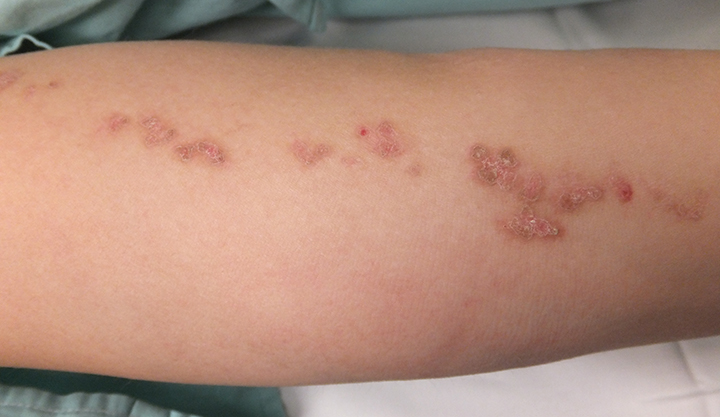
Image content: This image is available to view online.
View image online (https://my.clevelandclinic.org/-/scassets/images/org/health/articles/porokeratosis)
Porokeratosis is a group of skin conditions that cause circular, discolored skin lesions with rough borders. Experts don’t fully understand the exact cause. But they think it may occur when a group of abnormal keratinocytes produces an abnormal skin growth. Keratinocytes are the main type of cell in your outer layer of skin (epidermis). They produce the protein keratin, which helps support your skin and keeps your nails and hair healthy. When your body makes too many keratinocytes, these cells build up on the surface of your skin.
Advertisement
Cleveland Clinic is a non-profit academic medical center. Advertising on our site helps support our mission. We do not endorse non-Cleveland Clinic products or services. Policy
Porokeratosis (pronounced “pawr-oh-ker-uh-TOH-sis”) isn’t common. Depending on the type, lesions may appear on areas that get a lot of sun. These include your:
The lesions can be precancerous. This means they aren’t cancer. But they may have signs that suggest they’re likely to become cancer if you don’t get treatment. There’s no cure for porokeratosis. But treatment may help improve the appearance of lesions, reduce symptoms or treat lesions at higher risk for developing skin cancer.
There are many different types of porokeratosis. The most common types include:
Rarer types include:
Advertisement
Each type may look slightly different. But the main features are skin bumps that are:
The lesions also have ridge-like borders that are rough and slightly raised. They may be itchy. Over time, they may increase in number and expand into larger patches.
Porokeratosis can appear anywhere on your skin. But it most commonly affects areas that get a lot of sun. You may only have a few lesions, or you may have over 100.
Experts believe genetic variations contribute to it. They don’t know exactly what causes the variations. But certain triggers may make porokeratosis worse. These include:
You have a greater chance of getting porokeratosis if you:
There’s a chance that porokeratosis can lead to skin cancer. Some people develop squamous cell carcinoma or basal cell carcinoma. The more time you spend in the sun or the more exposure you have to UV rays or other forms of radiation, the more your risk of developing skin cancer increases.
Healthcare providers will first review your health history and ask about any symptoms. Then, they’ll examine the lesions. They often use a handheld instrument (dermatoscope) to take a closer look at your skin. They can usually make a porokeratosis diagnosis with a physical exam. But they may also remove a sample of skin tissue (skin biopsy) to confirm the diagnosis.
Your provider may refer you to a dermatologist.
In many cases, lesions usually expand slowly and don’t cause any troublesome symptoms. Your healthcare provider may not recommend treatment at first. But they’ll want to see you regularly (active surveillance) to look out for any changes.
If porokeratosis causes symptoms or bothers you, your provider may recommend creams or ointments that you rub on the lesions. These may include:
They may also recommend treatments like:
It’s important to note that not all treatments work for everyone. It may take a few tries to figure out which treatment works best for you. It’s also possible that none of the treatment options will work.
It can take several weeks or even months for porokeratosis lesions to go away. Some treatments may cause the lesions to fade. But they may not completely disappear. Your healthcare provider will explain what to expect based on your specific treatment plan.
Advertisement
Reach out to your healthcare provider if you notice porokeratosis symptoms. These may include skin color changes or growths. Schedule an appointment if lesions quickly change colors, grow or hurt.
It’s a chronic (long-term) condition that you’ll have throughout your life. There’s no cure. But treatment may help remove individual lesions or improve their symptoms or appearance.
Porokeratosis isn’t contagious. But it’s possible that you could pass the condition on to your biological children. If you have porokeratosis, talk to your primary care provider. They can let you know if it’s a good idea to talk to a genetic counselor.
Your outlook depends on what type you have. Some types affect more areas of skin than others or are more likely to appear during certain ages. Your healthcare provider will work with you to find the best treatment option.
Because some porokeratosis lesions can develop into skin cancer, it’s important to take extra steps to protect your skin. You can help reduce your risk by:
Advertisement
Noticing unexpected bumps or patches on your skin can feel like an unwelcome surprise, especially if they’re discolored or itchy. And if you learn you have porokeratosis, you might find yourself focusing on the worst case scenarios.
Take some comfort in knowing that most cases won’t turn to cancer. But because there’s a chance it could, you can reduce your risk by wearing sunscreen and protective clothing. You can also talk with your healthcare provider about treatments that may help lesions fade or go away.
Advertisement



Sign up for our Health Essentials emails for expert guidance on nutrition, fitness, sleep, skin care and more.
Learn more about the Health Library and our editorial process.
Cleveland Clinic’s health articles are based on evidence-backed information and review by medical professionals to ensure accuracy, reliability and up-to-date clinical standards.
Cleveland Clinic’s health articles are based on evidence-backed information and review by medical professionals to ensure accuracy, reliability and up-to-date clinical standards.
Every day, people see your skin, hair and nails. At Cleveland Clinic, our expert and caring dermatology team will make sure they’re healthy and strong.
