



Pelvic tilt is when your pelvis tips out of alignment. It’s anterior pelvic tilt if it leans too far forward. Posterior pelvic tilt is when it tips back, away from your front. Sitting for too long or too often is the most common cause. Strengthening and stretching muscles around your pelvis can help correct excessive tilt and relieve symptoms.
Advertisement
Cleveland Clinic is a non-profit academic medical center. Advertising on our site helps support our mission. We do not endorse non-Cleveland Clinic products or services. Policy
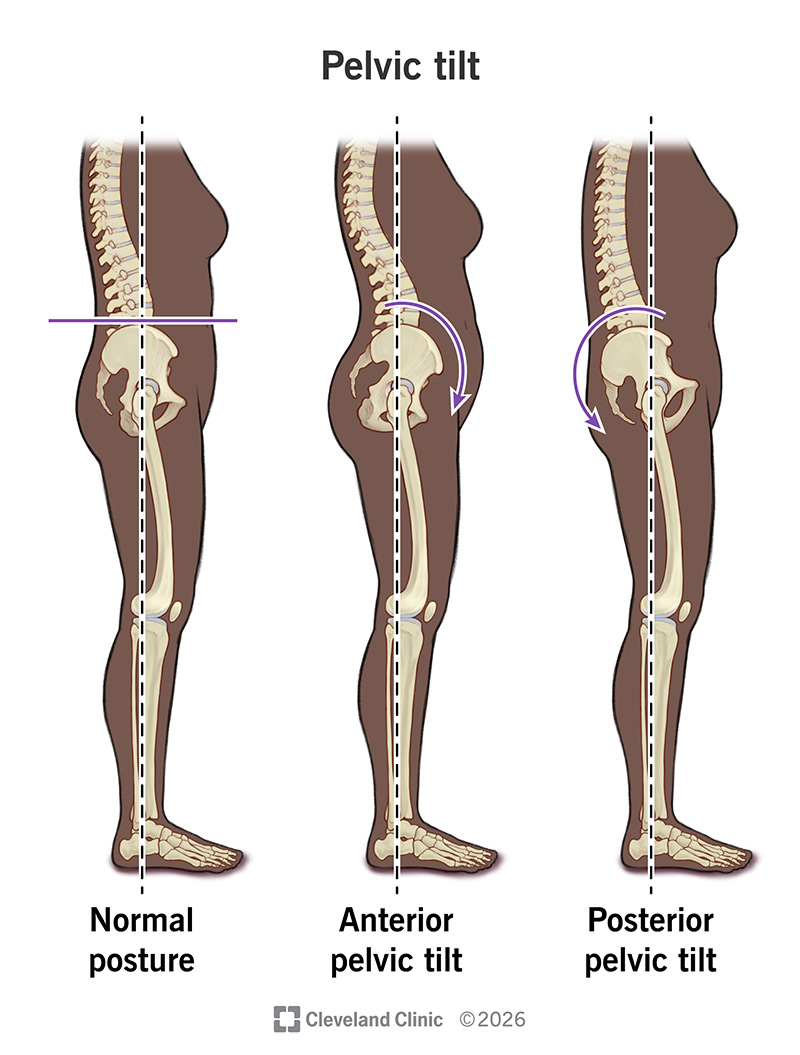
Image content: This image is available to view online.
View image online (https://my.clevelandclinic.org/-/scassets/images/org/health/articles/pelvic-tilt)
Pelvic tilt happens when your pelvis tips further forward or backward than it should.
Advertisement
Cleveland Clinic is a non-profit academic medical center. Advertising on our site helps support our mission. We do not endorse non-Cleveland Clinic products or services. Policy
It’s OK if your pelvis isn’t perfectly level all the time. It moves with you throughout your day. But if you have excessive pelvic tilt, your pelvis will consistently tip too far in one direction, far enough away from neutral that it starts to cause pain or other symptoms.
Healthcare providers classify pelvic tilt into two types. It depends on which direction your pelvis tilts:
You might not have any symptoms of pelvic tilt if it’s mild. But if your pelvis tips out of alignment for too long or too often, you might notice pain or discomfort in the muscles and other tissues around it. This commonly turns into back pain — especially lower back pain.
Excessive pelvic tilts may noticeably change your posture, especially when you’re standing straight. There’s no such thing as perfect posture. And it’s OK if you don’t stand or sit perfectly straight all the time.
But if you have anterior pelvic tilt, your butt will stick out, and your low back will arch because your pelvis is tipped forward. Posterior pelvic tilt can make your tailbone tuck under and low back flatten because your pelvis is tipped back too far.
Advertisement
Spending a lot of time in the same position is the most common cause of excessive pelvic tilt. Especially if you spend a lot of time sitting down.
You won’t develop pelvic tilt from one long gaming session or a movie marathon over the weekend. But your body will naturally adjust the angle of your pelvis over time if you spend days and days in the same kind of position. Sitting at a desk every day for work is one very common reason you may develop it.
Our bodies are very adaptable. Normally, this is a good thing. But sometimes, your body will change too much. If you sit a lot, muscles in your legs, abdomen and butt adjust to this.
Sitting a lot can also weaken the muscles around your pelvis, including your:
Normally, these muscles work together to help you maintain a stable, comfortable posture. But over time, they can weaken if you don’t use them often enough. As they lose strength or flexibility, they can’t hold your pelvis straight. And this can let it tilt forward or backward.
A healthcare provider can diagnose excessive pelvic tilt with a physical exam. They’ll ask about your health history and how you spend most of your time. Your provider can check your pelvic tilt by looking at your pelvis while you stand straight.
If they need to get a more specific measurement, they can check your pelvic angle. This is a quick, easy test that will let your provider know exactly how far in either direction your pelvis tilts. They’ll use either a physical or electronic device that measures the front and back of your pelvis, and if they’re out of alignment. It’s a bit like a level you’d use to hang a picture up. Instead of lining up the air bubble in the level, the device measures the difference in incline from front to back of your pelvis.
Your provider may order X-rays or other imaging tests to take pictures of your pelvis and the tissue around it. But this isn’t always needed.
Your provider may suggest you work with a physical therapist. They’ll give you customized stretches and exercises to help you manage excessive pelvic tilt.
Usually, strengthening weak muscles and stretching tight ones will help correct pelvic tilt. The stronger and more stable these muscles are, the better they’ll be able to hold your pelvis in a neutral position.
Talk to your physical therapist about your daily routine. Tell them what you do for work, or if you spend a lot of time sitting. Let them know the kinds of physical activities and hobbies you do. There’s no right or wrong answer. But knowing what you do can help them suggest the best kinds of pelvic tilt exercises for you.
Advertisement
It’s rare, but your provider may suggest surgery to correct a severe pelvic tilt. This is usually only if physical therapy doesn’t help and you still have intense pain. Or if the tilt is severe enough that it’s damaging joints in your spine or hips.
Visit a healthcare provider if you have pain that lasts for more than a few days in a row. Back pain is extremely common. And lots of issues can cause it. But that doesn’t mean you have to live with it. See a provider if you’re in pain more often than not, especially if it’s bad enough to make you change or avoid some parts of your daily routine.
You might have to make some small tweaks to your posture when you’re sitting. But you should notice less pain and discomfort as you strengthen the muscles around your pelvis.
Your healthcare provider will tell you what to expect if you need surgery to repair a pelvic tilt. They’ll give you a recovery timeline that matches your unique needs.
Remember, there’s no such thing as perfect or imperfect posture. Everyone’s body is slightly different. Try not to stress about your pelvic angle. Even if it’s causing symptoms, it’s correctable.
You may never notice you have excessive pelvic tilt. But it can cause common symptoms like back pain. Especially if you sit a lot in the same position for work, school or hobbies. The good news is that it usually responds well to physical therapy.
Advertisement
Just like any other kind of workout routine, you can’t jump right into the deep end. If your muscles already need a bit of help to begin with, doing too much too fast can increase your risk of injury. Take it slow. You’ll build up strength over time.
Advertisement



Sign up for our Health Essentials emails for expert guidance on nutrition, fitness, sleep, skin care and more.
Learn more about the Health Library and our editorial process.
Cleveland Clinic’s health articles are based on evidence-backed information and review by medical professionals to ensure accuracy, reliability and up-to-date clinical standards.
Cleveland Clinic’s health articles are based on evidence-backed information and review by medical professionals to ensure accuracy, reliability and up-to-date clinical standards.
Low back pain can be a constant interruption in your daily life. Cleveland Clinic’s experts can help craft a treatment plan to help you find relief.
