



Morgellons disease causes uncomfortable sensations like crawling, burning or stinging under your skin. These feelings can lead to scratching, sores and stress. It may relate to a signaling disconnect between your brain and your skin, even when medical tests don’t show a clear cause. Treatment focuses on both skin care and mental health support.
Advertisement
Cleveland Clinic is a non-profit academic medical center. Advertising on our site helps support our mission. We do not endorse non-Cleveland Clinic products or services. Policy
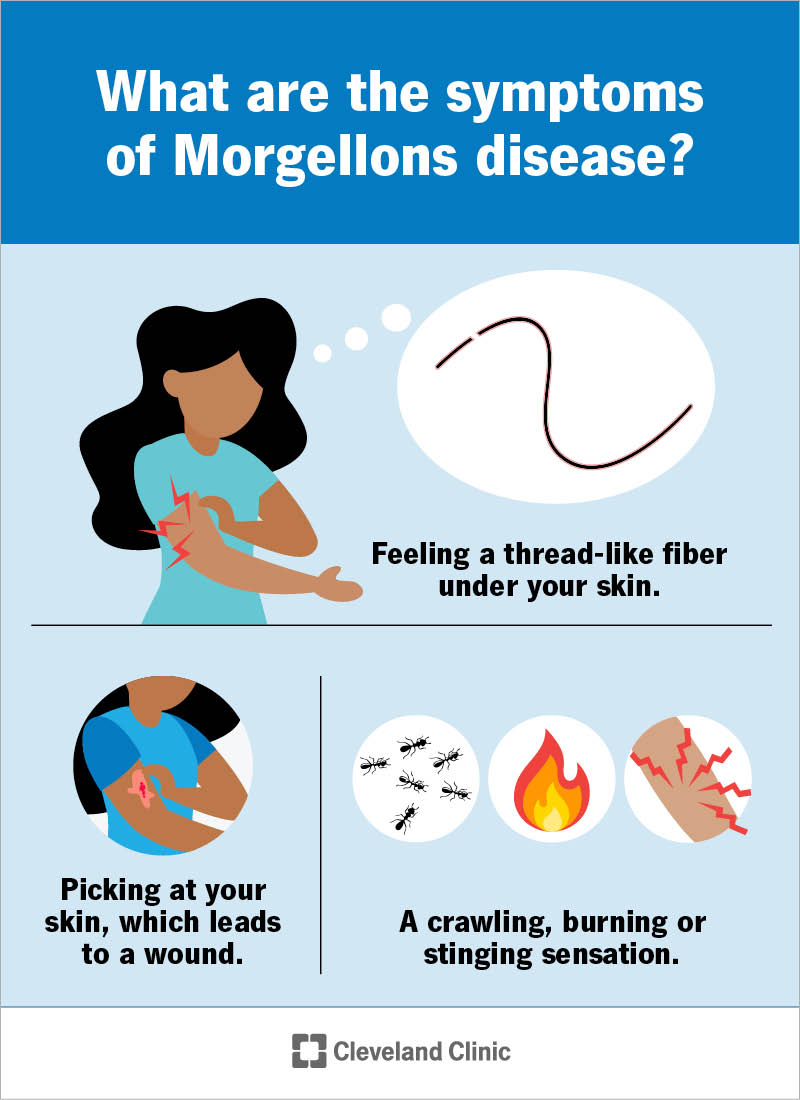
Image content: This image is available to view online.
View image online (https://my.clevelandclinic.org/-/scassets/images/org/health/articles/morgellons-disease)
Morgellons disease causes uncomfortable sensations on or under your skin. You may feel crawling, burning or biting. In some cases, you might notice fibers in your skin. Research shows these aren’t parasites or fabric. They’re usually made from skin proteins, hair or tiny materials that become visible when you have skin irritation or damage. But sometimes, there isn’t anything under your skin at all. This condition involves a disconnect between signals sent between your brain and your skin.
Advertisement
Cleveland Clinic is a non-profit academic medical center. Advertising on our site helps support our mission. We do not endorse non-Cleveland Clinic products or services. Policy
These sensations are real and feel very bothersome, even without a clear medical cause. You might scratch, pick at or try to remove what feels like the source of irritation. It can lead to open sores, wounds, infections or scars.
A healthcare provider can help you manage these symptoms.
Symptoms link to the sensation or belief that fibers or threadlike material is in or under your skin. You might even see a fiber under your skin. You may feel:
The discomfort might cause you to itch, scratch or pick at your skin to ease these feelings.
If you have this condition, you may feel and see fibers in your skin that you believe are causing uncomfortable symptoms. Many people describe these fibers as thin, threadlike strands or small particles that come out of sores. They may look white, black, blue, red or other bright colors. Some compare them to threads from clothing, pieces of straw or tiny black specks.
Research shows that these fibers aren’t cloth or fabric. They often come from skin proteins, hair or outside materials. Irritated or injured skin may make them easier to see.
Healthcare providers don’t know the exact cause of Morgellons disease. But most research suggests it’s related to how your brain and body process physical sensations. There might be a disconnect in the signals your brain and body send to each other. Your symptoms feel very real, but large studies haven’t found an infection, parasite or toxin that fully explains them.
Advertisement
Many medical experts consider Morgellons disease a form of delusional infestation (delusional parasitosis). This means your brain strongly signals that something’s wrong in your body, even though medical tests don’t show a clear physical explanation.
It’s complicated. Healthcare providers sometimes refer to Morgellons as a psychodermopathy. It’s a condition that involves both your mind and your skin. Because of this, successful treatment tends to involve a psychiatrist, a psychologist and a dermatologist working together to manage all your symptoms.
Because the cause isn’t well understood, it’s hard to know exactly what increases risk. Researchers found that this condition more often occurs in people who also have:
Morgellons disease may lead to several complications over time, like:
If you have these irritating symptoms, start by seeing a primary care provider or a dermatologist. They’ll examine your skin and ask about what’s going on. If needed, they may order tests like a blood test, a skin biopsy or cultures. These help rule out other skin or medical conditions that can cause similar symptoms.
You may feel the need to remove fibers or material you noticed in your skin to show to your provider. It’s important not to pick at your skin or try to remove anything yourself. This can cause wounds or lead to infection. If you notice a fiber or new skin change, take a clear photo and show it to your provider when you see them. During your visit, if there’s anything in your skin, they can safely remove it.
It can sometimes take a while for healthcare providers to figure out what’s going on because this condition isn’t common. You may get a referral to see different specialists as you seek a diagnosis.
Treatment depends on your symptoms and any related conditions you may have. Your provider may recommend one or more of the following:
Your care plan may change over time based on how you feel and how your symptoms respond to treatment.
See a healthcare provider if you:
Advertisement
This condition is usually long-lasting. You may notice uncomfortable skin sensations that come and go over time. These symptoms can affect your sleep, mood and daily routine.
Treatment may make symptoms easier to manage. But it often takes time. Symptoms may improve and later flare up again, especially if treatment changes or stops.
Your care team can work with you to find a management plan that fits your needs and reduces how much the condition affects your daily life.
Living with sensations that feel constant, stressful and hard to explain can take a real toll on your skin, your sleep and your peace of mind. Morgellons disease isn’t only about physical symptoms. It can affect how safe you feel in your own body and how comfortable you are going about your day.
What you’re feeling isn’t imagined or made up. Care focuses on supporting your mental and emotional health, along with physical symptoms. Relief often happens gradually, with ups and downs along the way. The goal is to find a plan that respects your experience and helps you regain a sense of control and comfort over time.
Advertisement



Sign up for our Health Essentials emails for expert guidance on nutrition, fitness, sleep, skin care and more.
Learn more about the Health Library and our editorial process.
Cleveland Clinic’s health articles are based on evidence-backed information and review by medical professionals to ensure accuracy, reliability and up-to-date clinical standards.
Cleveland Clinic’s health articles are based on evidence-backed information and review by medical professionals to ensure accuracy, reliability and up-to-date clinical standards.