



DOMS (delayed onset muscle soreness) is a common side effect of challenging your muscles. Muscle pain sets in one to three days after intense exercise. It fades as your muscles heal and rebuild themselves stronger. It’s usually nothing to worry about. But see a healthcare provider if you have severe pain or notice DOMS after most of your workouts.
Advertisement
Cleveland Clinic is a non-profit academic medical center. Advertising on our site helps support our mission. We do not endorse non-Cleveland Clinic products or services. Policy
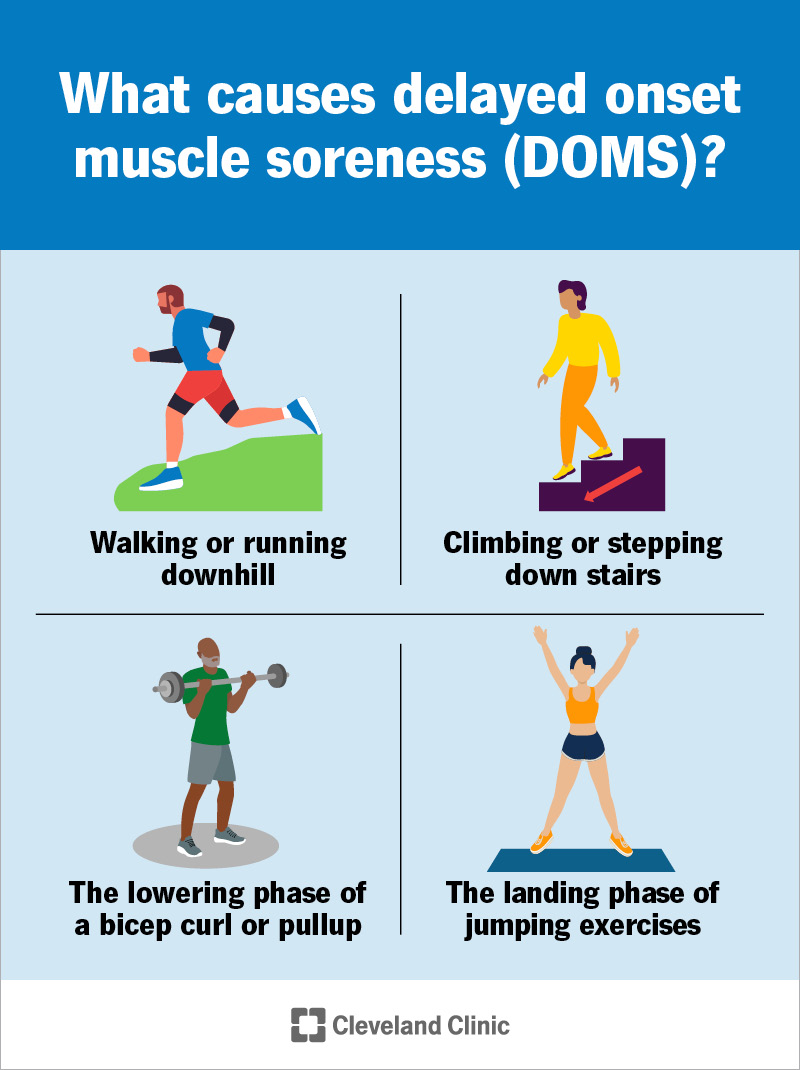
Image content: This image is available to view online.
View image online (https://my.clevelandclinic.org/-/scassets/images/org/health/articles/delayed-onset-muscle-soreness.jpg)
Delayed onset muscle soreness (DOMS) is muscle pain that happens after you do intense exercise. It’s called delayed onset because it starts one to three days after your workout.
Advertisement
Cleveland Clinic is a non-profit academic medical center. Advertising on our site helps support our mission. We do not endorse non-Cleveland Clinic products or services. Policy
DOMS usually happens after you try a new activity, kind of training or a workout that’s more intense than you’re used to.
Most of the time, DOMS is a sign your body is repairing and regrowing your muscle fibers after you use them differently. Feeling sore after a good workout can be a sign that you worked hard and accomplished your goals. But the common phrase “no pain, no gain” isn’t necessarily true. A workout can still be productive if you don’t feel DOMS.
You can usually manage DOMS at home. But visit a healthcare provider if you think you might have an injury, or if you experience pain that’s so severe you feel worried about it.
As you might be able to guess from its name, muscle soreness is the most common DOMS symptom. Everyone experiences pain differently. But DOMS has a few key characteristics. It usually:
Advertisement
You might have other symptoms, too, including:
Working your muscles too hard causes DOMS. It’s easy to overwork your muscles by accident. This is especially true when you’re starting a new sport or type of workout. Your muscles might not be used to the kinds of stress you’re asking them to go through.
Your muscles are made of thousands of little fibers that stretch and move with you. When you exercise, you can sometimes cause tiny tears in those fibers. That might sound scary. But if you’re working out safely, it can be a good thing. Your muscles grow when your body repairs those tears.
Some movements are more likely to lead to DOMS. These are known as eccentric exercises. This is a motion where you squeeze or tense a muscle while lengthening it. Examples of eccentric exercises include:
Most people don’t experience any complications from DOMS. But if you push your muscles too hard before they heal, you might have a higher risk of strains and other injuries.
If you’re overworking your muscles, your body will try to compensate to help take pressure off them. Your form might become unsafe without you noticing. This can shift too much stress to joints and increase your risk of injuries, like sprains.
It’s rare, but forcing yourself to overwork your muscles too often can lead to serious conditions like compartment syndrome or rhabdomyolysis. These are medical emergencies. Go to the emergency room if you think you have symptoms of either.
Pushing through DOMS and other symptoms without letting your body recover can also lead to overtraining syndrome.
You probably won’t need to see a healthcare provider if you have DOMS. You should be able to recognize the symptoms and manage them at home. But visit a provider if you have pain that’s bad enough to make you worried, or if you can’t move or use part of your body.
Your provider will ask when the pain first started, and which kinds of exercises you usually do. They might use a blood test if they think you have damaged muscles. Enzyme markers and creatine kinase in a sample of your blood can be signs of muscle injuries.
Rest is usually the best treatment for DOMS. This will give your muscles the time they need to repair themselves.
Everyone’s body heals at a different speed. There’s no hard and fast rule for how long you should take a break. The soreness and other symptoms usually last only a few days. Moving and using your sore muscles in your everyday routine should be OK. But try to avoid using those muscles for intense exercise while they’re sore.
Advertisement
If you’re used to training daily, ease up on the intensity. You can try targeting different muscles while your sore ones recover.
There aren’t any treatments specifically for DOMS. But there are lots of ways to manage muscle pain and stiffness at home. You might try:
Advertisement
Visit a healthcare provider if you have DOMS that doesn’t get better with rest. See a provider if:
DOMS usually lasts a few days after the exercise that started it. It rarely lasts more than five days. Everyone’s body heals at its own pace. But the pain should fade gradually. You might notice that it feels better each day until you feel like yourself again.
You probably can’t prevent DOMS all the time. But you can reduce your risk by easing into new activities or workouts. Try to always:
A physical therapist or athletic trainer can help you walk the line between pushing your limits and overdoing it. They’ll help you find the exercises to meet your goals safely over time. Getting stronger takes time. You can’t do it all at once.
Advertisement
Delayed onset muscle soreness is uncomfortable. But it’s not usually harmful or dangerous. DOMS is often an accidental side effect of pushing your body. But it isn’t the only indication you’re getting stronger. Your muscles will build up strength over time if you keep working. You don’t have to hurt after working out to accomplish your goals.
You can usually manage DOMS at home without seeing a healthcare provider. But listen to your body. Talk to a provider if you have DOMS often after your workouts. They’ll make sure you don’t have injuries and are staying safe.



Sign up for our Health Essentials emails for expert guidance on nutrition, fitness, sleep, skin care and more.
Learn more about the Health Library and our editorial process.
Cleveland Clinic’s health articles are based on evidence-backed information and review by medical professionals to ensure accuracy, reliability and up-to-date clinical standards.
Cleveland Clinic’s health articles are based on evidence-backed information and review by medical professionals to ensure accuracy, reliability and up-to-date clinical standards.
Cleveland Clinic’s primary care providers offer lifelong medical care. From sinus infections and high blood pressure to preventive screening, we’re here for you.
