



Hives are itchy, raised bumps or welts on your skin. They’re often random, without a known cause. Triggers could include heat, cold, physical pressure and stress. Sometimes, an allergic reaction causes them. They’re often red or the same color as the surrounding skin. Healthcare providers usually treat hives with antihistamines.
Advertisement
Cleveland Clinic is a non-profit academic medical center. Advertising on our site helps support our mission. We do not endorse non-Cleveland Clinic products or services. Policy
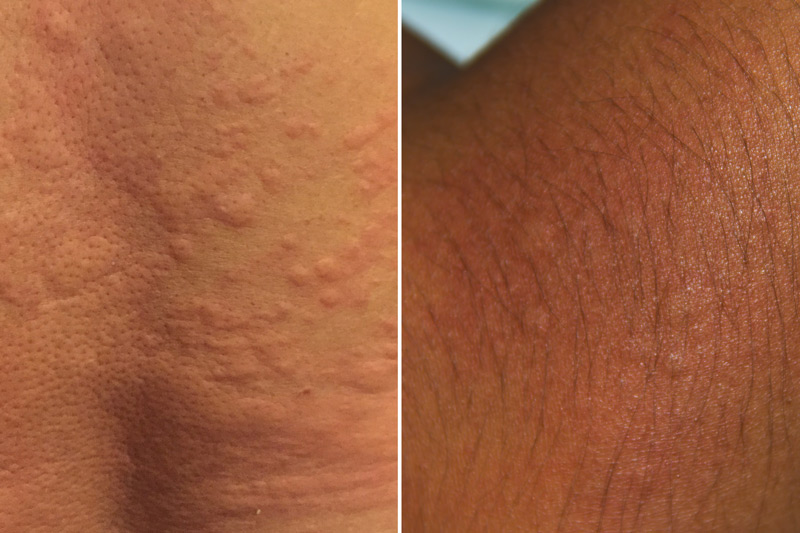
Image content: This image is available to view online.
View image online (https://my.clevelandclinic.org/-/scassets/images/org/health/articles/8630-hives)
Hives are itchy, raised bumps or welts that come and go on your skin. They’re most often red or skin-toned, but can look different depending on the color of your skin. They can be as small as a pencil eraser or as large as a dinner plate. Sometimes, you can also experience swelling deeper in your skin (angioedema).
Advertisement
Cleveland Clinic is a non-profit academic medical center. Advertising on our site helps support our mission. We do not endorse non-Cleveland Clinic products or services. Policy
Hives are common. They affect up to 20% of people, both kids and adults. In many cases, they’re harmless and short-lived. Sometimes, hives can become chronic. This means they last more than six weeks. These aren’t life-threatening, but they can be very bothersome and frustrating.
In rare cases, hives can be part of a severe allergic reaction or anaphylaxis. Call 911 or have someone take you to the emergency room if you’re having difficulty breathing, dizziness or swelling in your face, lips, tongue or throat.
Hives are raised and welt-like. They’re usually itchy. It can be easy to confuse hives with other types of rashes. Common features of hives include:
Hives can appear on their own or with swelling under the skin of your lips, tongue, mouth or throat (angioedema).
Most of the time, healthcare providers can’t determine the cause of hives. They often happen seemingly at random and not due to a specific allergy. Possible triggers may include:
Advertisement
Hives caused by an allergic reaction happen immediately after you’re exposed — for example, right after you eat a food you’re allergic to. In this case, you may also have other symptoms, like shortness of breath, vomiting or dizziness.
Anaphylaxis happens when you have a severe allergic reaction. Common anaphylaxis triggers include:
Sometimes, hives can be a sign of ongoing medical conditions, like autoimmune diseases.
Healthcare providers don’t completely understand why hives happen. You may be more likely to get hives if you have allergies, asthma or eczema. The tendency to have more than one of these allergic conditions is called atopy.
Hives themselves are usually harmless. But severe allergic reactions that cause hives can be life-threatening. Anaphylaxis is a severe reaction that can cause dangerously low blood pressure and make it difficult to breathe. Get help right away if you have symptoms of anaphylaxis.
A healthcare provider can diagnose hives by talking to you about your symptoms and looking at your skin. They might ask about things you may have touched or eaten, or other circumstances that could cause hives. In most cases, you won’t need a skin biopsy or blood tests. Your provider may refer you to an allergist or dermatologist if your hives are hard to manage.
Your provider may recommend allergy skin tests or blood tests if they think hives are part of an allergic reaction.
Hives aren’t permanent, but they can last a long time. Your healthcare provider might recommend treatments to make them less bothersome. Treatments could include:
If you’ve experienced anaphylaxis before, your provider will prescribe an epinephrine auto-injector to use if you have a severe reaction.
If you can determine what’s causing hives, you might be able to avoid triggers. This could include:
Advertisement
Hives often get better without treatment. Call your healthcare provider if you have severe itching or hives that keep coming back.
Go to the emergency room or call 911 if you have signs of anaphylaxis, including:
Hives usually go away on their own. Sometimes, they can last up to six weeks. Chronic hives can last months or years.
Dealing with hives can be uncomfortable, itchy and frustrating — especially if you’re unsure what’s causing them. If you’re frequently bothered by hives, talk to a healthcare provider about getting to the bottom of it. They may recommend seeing a dermatologist or an allergist for testing. Go to the emergency room right away if you have severe symptoms.
Advertisement



Sign up for our Health Essentials emails for expert guidance on nutrition, fitness, sleep, skin care and more.
Learn more about the Health Library and our editorial process.
Cleveland Clinic’s health articles are based on evidence-backed information and review by medical professionals to ensure accuracy, reliability and up-to-date clinical standards.
Cleveland Clinic’s health articles are based on evidence-backed information and review by medical professionals to ensure accuracy, reliability and up-to-date clinical standards.
Cleveland Clinic’s primary care providers offer lifelong medical care. From sinus infections and high blood pressure to preventive screening, we’re here for you.
