



A percutaneous endoscopic gastrostomy (PEG) is a surgery to place a feeding tube. Feeding tubes, or PEG tubes, allow you to receive nutrition through your stomach. You may need a PEG tube if you have difficulty swallowing or can’t get all the nutrition you need by mouth.
Advertisement
Cleveland Clinic is a non-profit academic medical center. Advertising on our site helps support our mission. We do not endorse non-Cleveland Clinic products or services. Policy
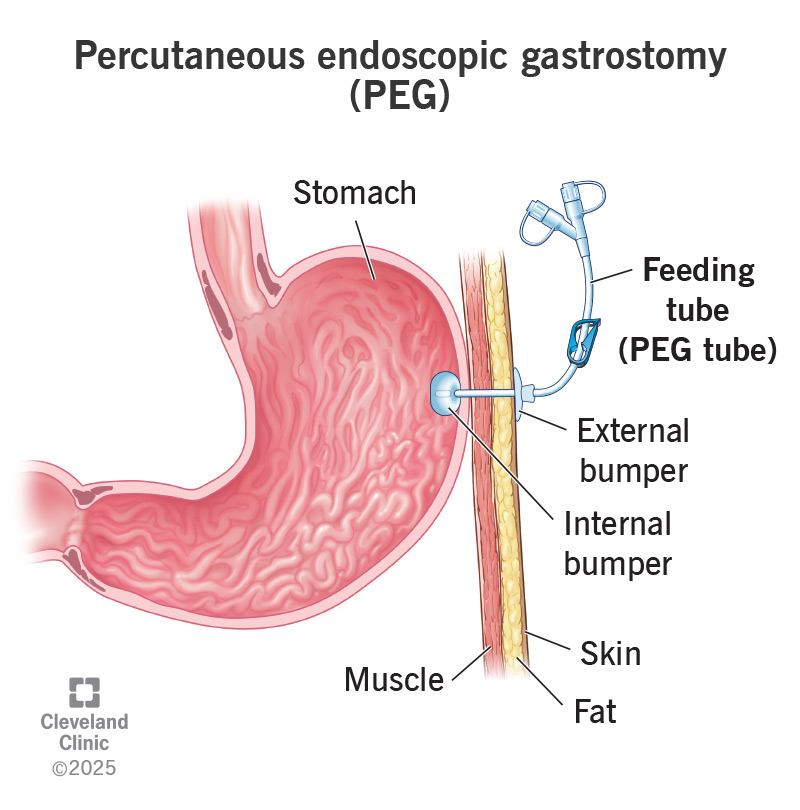
Image content: This image is available to view online.
View image online (https://my.clevelandclinic.org/-/scassets/images/org/health/articles/4911-percutaneous-endoscopic-gastrostomy.jpg)
A percutaneous endoscopic gastrostomy (PEG) is a procedure to place a feeding tube into your stomach. This tube is often called a PEG tube or a G tube. It gives you nutrition when you can’t safely chew or swallow.
Advertisement
Cleveland Clinic is a non-profit academic medical center. Advertising on our site helps support our mission. We do not endorse non-Cleveland Clinic products or services. Policy
You may need a PEG tube if you have difficulty swallowing or are unable to eat or drink on your own. This can happen due to things like:
Before surgery, you’ll meet with your surgeon to discuss the procedure. Tell your provider about your medical history and any medicines you’re taking. They may want to make medication adjustments before surgery.
Don’t eat or drink at least eight hours before the surgery. You also need to arrange for a ride home after the procedure.
Most healthcare providers place PEG tubes with endoscopic surgery. Endoscopic procedures use small incisions and a long, flexible instrument called an endoscope.
On the day of surgery, you receive intravenous (IV) anesthesia and antibiotics. The anesthesia helps you not feel pain during the procedure. Antibiotics prevent infection.
You may also receive a local anesthetic. A local anesthetic is an injection of numbing medicine. You receive this injection near where your surgeon makes the incision.
During percutaneous endoscopic gastrostomy, your provider:
Advertisement
The entire procedure only takes around 20 to 30 minutes. Usually, you can return home the same day or the next morning.
Yes. PEG tubes are about the width of a pen or pencil. You’ll see 6 to 12 inches of the tube coming out of the incision area. Around the tube is a disc called an external bumper. This bumper prevents the tube from going further into your stomach.
At the tip of the feeding tube is a small cap or plug. This plug prevents stomach acid or contents from leaking onto your skin or clothes. You can open this plug to receive food, water or medications.
PEG tubes are an important treatment if you have difficulty swallowing or are unable to get nutrition. After G tube placement, you receive nutrition and fluids through the tube.
Possible risks of a PEG tube include:
While rare, there can be complications when removing a PEG tube. A retained internal bumper occurs when the end of the tube is stuck in your stomach. You may need another surgery to remove the tube if this happens.
Your provider will explain the symptoms of a PEG tube complication and when to seek treatment. You’ll need to clean your PEG tube daily to reduce your risk of complications. Your care team will go over these instructions with you.
You’ll feel some pain afterward. This pain might be from the incision. Or you might have cramping from gas buildup in your digestive system. This pain should decrease within 24 to 48 hours.
You’ll have a bandage over the incision site. You may see some drainage around the incision for up to 48 hours. Usually, your surgeon will give you instructions to remove the bandage after one to two days.
After the area around your feeding tube heals, you’ll meet with a dietitian. This specialist explains how to use the PEG tube for your nutrition.
If you need a PEG tube because you have trouble swallowing, you might not be able to eat or drink as much as you used to. Some people can still have small bites or sips. Talk to your provider about what you can and can’t eat and drink.
PEG tubes can last for months or years. They may clog or wear down over time. If your G tube is wearing out, you may notice:
If you need a new PEG tube, your provider can replace the tube without invasive surgery or anesthesia. If you don’t need the tube anymore, your provider may remove the tube. The opening in your stomach closes on its own.
Advertisement
If your PEG tube accidentally falls out or moves, contact your healthcare provider right away. The opening in your stomach where the G tube goes can close very quickly. If the tube dislodges, it’s important to receive medical treatment within 24 hours.
Otherwise, you should see the provider who placed the tube every six to 12 months to make sure the tube is in good condition.
If your PEG tube accidentally falls out or moves, contact your healthcare provider right away. The opening in your stomach where the G tube goes can close very quickly. If the tube dislodges, it’s important to receive medical treatment within 24 hours.
It’s normal to have mixed feelings about having this procedure and about getting food through a tube. You may feel relieved that you can get the nutrients you need, but worry about people noticing your feeding tube. Share these thoughts with your healthcare team so they can help you get comfortable and confident with your PEG tube.
Advertisement



Sign up for our Health Essentials emails for expert guidance on nutrition, fitness, sleep, skin care and more.
Learn more about the Health Library and our editorial process.
Cleveland Clinic’s health articles are based on evidence-backed information and review by medical professionals to ensure accuracy, reliability and up-to-date clinical standards.
Cleveland Clinic’s health articles are based on evidence-backed information and review by medical professionals to ensure accuracy, reliability and up-to-date clinical standards.
Having an endoscopy can be lifesaving. Cleveland Clinic’s providers will help you feel comfortable with the process so you can get the care you need.
