



Hand, foot and mouth disease is a common illness, especially in children. It often makes the rounds through schools and daycares. But kids aren’t the only ones who can catch it. Fortunately, it usually isn’t serious and typically gets better on its own within several days.
Advertisement
Cleveland Clinic is a non-profit academic medical center. Advertising on our site helps support our mission. We do not endorse non-Cleveland Clinic products or services. Policy
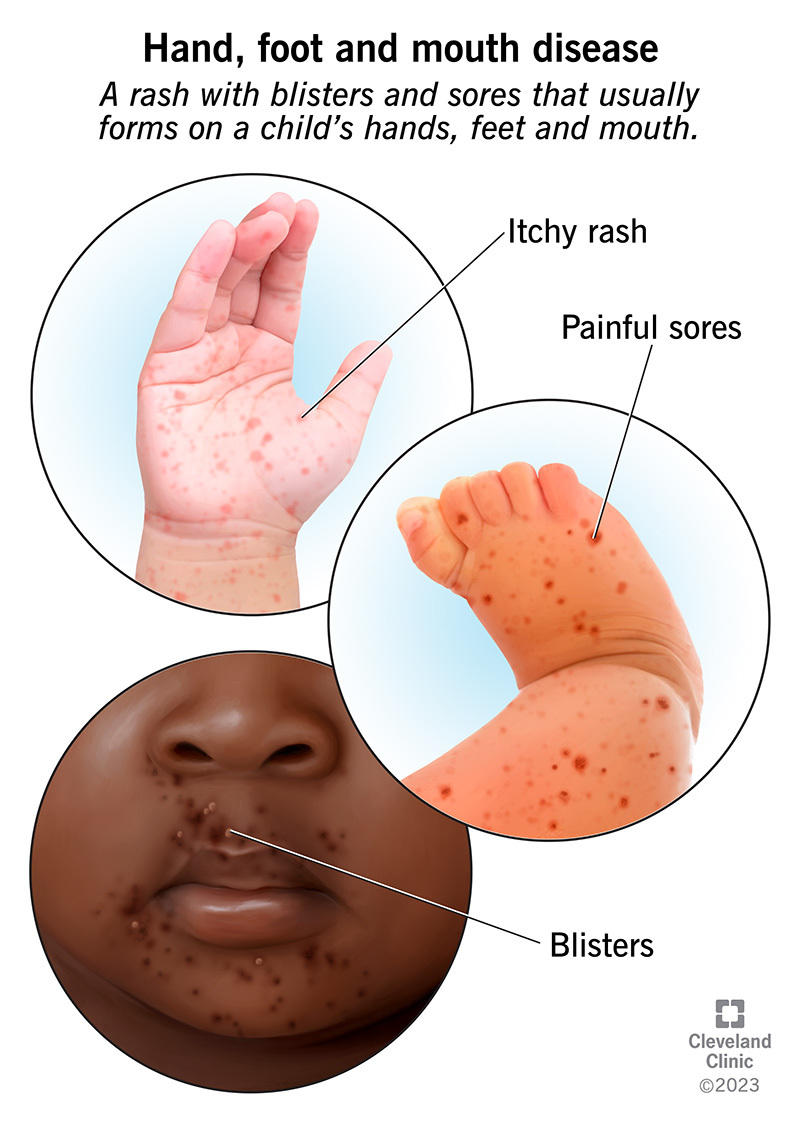
Image content: This image is available to view online.
View image online (https://my.clevelandclinic.org/-/scassets/images/org/health/articles/11129-hand-foot-and-mouth)
Hand, foot and mouth disease (HFMD) is a very contagious and common viral illness in children that causes a low fever, skin rash and painful mouth sores. It's very common before age 10, but you can catch it at any age.
Advertisement
Cleveland Clinic is a non-profit academic medical center. Advertising on our site helps support our mission. We do not endorse non-Cleveland Clinic products or services. Policy
HFMD gets its name because symptoms are usually easiest to see on the hands, feet and mouth. Most of the time, it’s not serious and will go away on its own within one to two weeks. Around 1 in 8 children who get it never show symptoms.
Even after symptoms fade, HFMD can remain contagious for several weeks. It also spreads quickly. That’s why children can get it so easily in day cares, schools and other childcare settings. And because more than one virus can cause it, you can get it more than once.
HFMD symptoms usually start within a week of catching the virus. The symptoms come in two stages.
The first stage causes vague viral illness symptoms that last a couple days. These include:
After a couple days, symptoms often change. They may include:
Advertisement
Most skin symptoms of HFMD usually last about one to two weeks. Some skin peeling on your child’s hands or feet can happen after a couple weeks, but it’s nothing to worry about.
In some cases, older children and adults who catch a virus that can cause HFMD may not show any symptoms.
HFMD is a viral illness, but there’s more than one virus that can cause it. Some viruses are more likely to cause certain symptoms. And there are specific viruses that are more likely to cause severe illness.
The four main viruses that can cause HFMD include:
Several other viruses can also cause HFMD, but they’re a lot less common. They’re usually types of coxsackievirus, enterovirus or echovirus. Some of the viruses listed above can also cause a similar and related condition called herpangina. Some of these viruses can also cause widespread rashes and fevers, without the classic hand, foot and mouth symptoms.
Yes, the viruses that cause HFMD are extremely contagious. They usually spread in certain ways, like:
Babies and children under the age of 5 are most likely to get hand, foot and mouth disease. Infants and children in daycare and schools are more likely to get it. Other risk factors include:
Advertisement
HFMD usually doesn’t cause complications. But some strains are more likely to lead to serious issues, including:
Healthcare providers can usually diagnose HFMD with a physical exam alone. But they may also run lab tests to rule out other conditions or issues. They may also use lab tests to find out exactly which virus is causing it. That's because other viruses can appear very similar to HFMD and because some viruses have a higher risk of serious complications.
Advertisement
There's no direct treatment for HFMD. Treatment focuses on symptoms and complications. Some examples include:
Treatment may vary based on complications or other factors. Your child’s healthcare provider can tell you more about what to expect.
Hand, foot and mouth disease is usually not a dangerous condition. Nearly all children who get it make a full recovery within a week or two. And adults who get it often never show any symptoms.
HFMD typically doesn’t cause long-term effects, either. The skin rash usually doesn’t leave scars, and the mouth sores usually don’t cause lingering issues. For cases that cause nail loss, you can expect your nails to grow back within a month or two.
Serious complications are possible, but they’re rare.
HFMD is very contagious, but there’s a lot you can do to keep it from spreading:
Advertisement
HFMD can still spread through poop for weeks after symptoms end. So, staying vigilant about preventing the spread is still important even when you or your child feel better.
Hand, foot and mouth disease is an unwelcome guest for everybody. And if your child goes to school or daycare with another kid who has it, the urge to sanitize everything is understandable. Protecting yourself and your children from the viruses that cause HFMD can be challenging, but it's possible. And children can be your partner in preventing the spread of HFMD if you teach them good hygiene habits early on.
If you have questions about HFMD, or if you think you or your child might have it, talk to a healthcare provider. They can help you understand what to expect and how to manage this condition. They can also tell you any warning signs to watch for that mean your child needs medical care.



Sign up for our Health Essentials emails for expert guidance on nutrition, fitness, sleep, skin care and more.
Learn more about the Health Library and our editorial process.
Cleveland Clinic’s health articles are based on evidence-backed information and review by medical professionals to ensure accuracy, reliability and up-to-date clinical standards.
Cleveland Clinic’s health articles are based on evidence-backed information and review by medical professionals to ensure accuracy, reliability and up-to-date clinical standards.
As your child grows, you need healthcare providers by your side to guide you through each step. Cleveland Clinic Children’s is there with care you can trust.
