



Adult ADHD can make it hard to focus, stay organized or manage impulses. Symptoms start in childhood but may not be recognized until later. A provider can help you understand what’s going on and find treatment that supports you.
Advertisement
Cleveland Clinic is a non-profit academic medical center. Advertising on our site helps support our mission. We do not endorse non-Cleveland Clinic products or services. Policy
Adult attention-deficit/hyperactivity disorder (ADHD) is a mental health disorder that affects how you focus, stay organized and manage impulses.
Advertisement
Cleveland Clinic is a non-profit academic medical center. Advertising on our site helps support our mission. We do not endorse non-Cleveland Clinic products or services. Policy
You may have trouble paying attention, keeping track of tasks, making appointments or staying on time. Many people also feel restless (physically and mentally). Healthcare providers may describe symptoms as mild to severe.
ADHD in adults is relatively common. In a 2023 study, an estimated 15.5 million people over age 18 in the U.S. had a current ADHD diagnosis.
Symptoms start in childhood, but not everyone is diagnosed early. Some people don’t realize they have ADHD until symptoms interfere with work, school or daily life.
A healthcare provider can help you understand this condition and find a treatment plan that works for you.
There are three main types of ADHD:
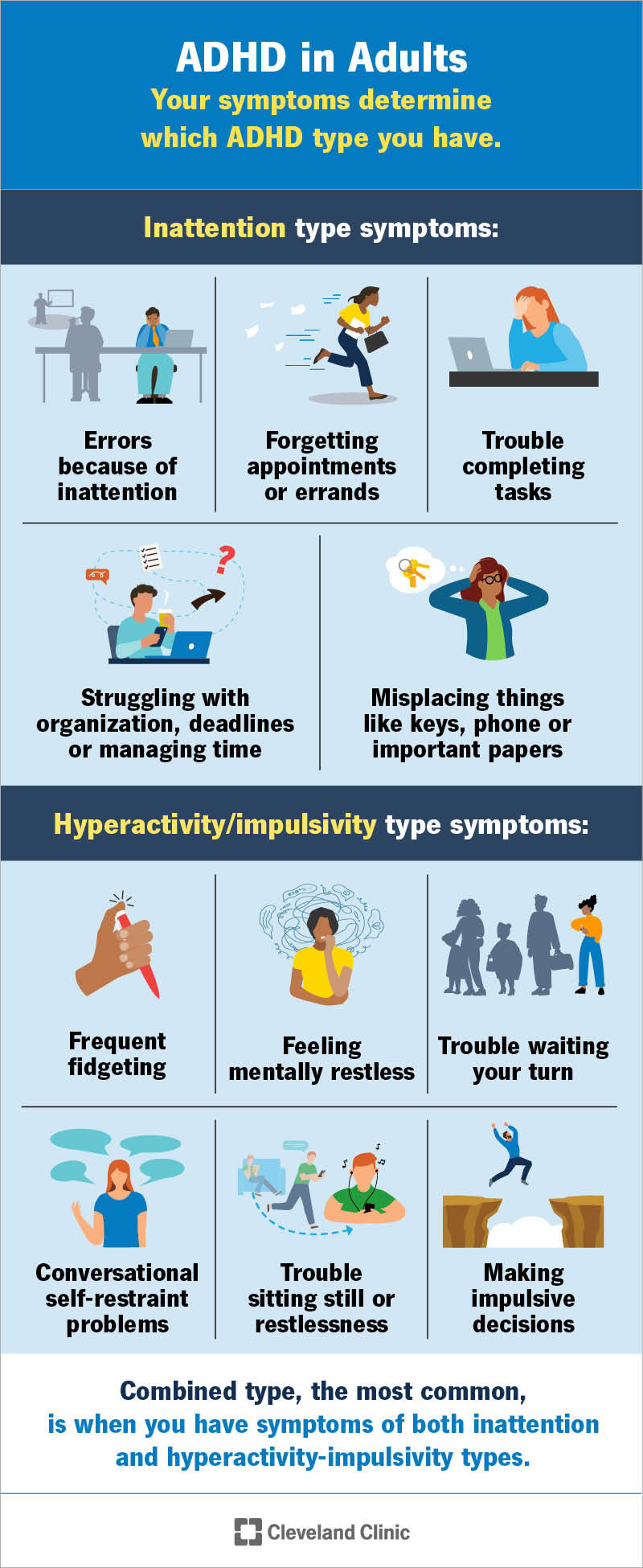
Image content: This image is available to view online.
View image online (https://my.clevelandclinic.org/-/scassets/images/org/health/articles/5197-adhd-in-adults)
ADHD in adults can look different from person to person. Symptoms can show up in different ways as you get older. Many people notice patterns that make everyday tasks feel harder than expected.
Common symptoms include:
Advertisement
Examples of adult ADHD habits are:
These patterns can affect work, relationships and daily routines.
The exact cause of ADHD isn’t known. Experts believe several factors may play a role. These include:
These factors don’t fully explain ADHD on their own. But they help researchers understand why symptoms happen.
ADHD can affect any adult. But you may have a higher risk if you have:
Adult ADHD can affect more than just your ability to focus. It can show up in many parts of your life, like:
Many adults also have mental health disorders like anxiety or depression. These may make symptoms feel worse.
A healthcare provider — usually a psychologist or psychiatrist — can diagnose attention deficit/hyperactivity disorder. They’ll ask about your current symptoms and any problems you may have had as a child. You may also fill out questionnaires so your provider can understand how ADHD affects your routine. They’ll compare this information with the criteria in the DSM-5.
Advertisement
Adult ADHD testing usually includes several steps. Your healthcare provider will:
Once they review all this information together, your provider can determine whether your symptoms match ADHD and what type you may have.
Treatment for adult ADHD usually includes:
Advertisement
Some people do well with one treatment. Others need a combination of both.
Medications are often a key part of treatment because they help balance brain chemicals that affect attention and self-control. There are two options:
These medications may cause side effects. Your provider will review them with you before you start treatment. They’ll check in regularly to make sure the medicine stays safe and offers the right benefits.
Therapy can help you build practical tools for everyday life. It may include:
Therapy often works best with medication, but it can still be helpful on its own.
See a healthcare provider if you struggle with attention, organization or impulse control, and these problems are making your daily routine hard. Many people think ADHD only affects children. But adults can have it, too — and it’s never too late to get checked.
Advertisement
If you have adult attention-deficit/hyperactivity disorder, you’ll need regular follow-up visits with your provider, especially if you take medications. These visits help your provider make sure the treatment is working. They’ll also watch for any side effects. If something feels off or you notice new symptoms, let them know.
ADHD often looks different from how it did in childhood. Maybe you used to have trouble sitting still in class, but now you notice other challenges. Maybe it’s only focusing on topics that really interest you at work. Or letting clean laundry pile up on a chair in your room because you’ll “get to it later.”
Symptoms show up differently for everyone. Your experience is personal, and it may not match a textbook description. But you don’t have to keep struggling with habits or patterns that get in the way of your goals.
A healthcare provider can help you figure out whether ADHD is the cause and guide you toward treatment options that make daily life easier to manage. With support, you can build on your strengths and find work or routines that match how your brain functions best.
Adult ADHD isn’t just about attention or restlessness. It’s often about patterns that don’t quite line up with your effort or intention. When things that seem simple for others feel scattered or overwhelming, it can wear on your confidence and energy.
Treatment doesn’t look to “fix” who you are. Instead, it’s about working with how your brain processes information, builds habits and responds to everything around you. With the right tools and support, it may be easier to shift from just managing to feeling more in control — on your own terms. Don’t wait to reach out if you need help.



Sign up for our Health Essentials emails for expert guidance on nutrition, fitness, sleep, skin care and more.
Learn more about the Health Library and our editorial process.
Cleveland Clinic’s health articles are based on evidence-backed information and review by medical professionals to ensure accuracy, reliability and up-to-date clinical standards.
Cleveland Clinic’s health articles are based on evidence-backed information and review by medical professionals to ensure accuracy, reliability and up-to-date clinical standards.
Your mental well-being is just as important as your physical well-being. Cleveland Clinic’s mental health experts can help you live life to the fullest.
