



Aplastic anemia is a rare blood disorder when you don’t have enough blood cells and platelets. It typically happens when your immune system destroys stem cells in your bone marrow. Common symptoms are fatigue, frequent bleeding or bruising, and shortness of breath. Treatment may include immunosuppressants or allogeneic stem cell transplant.
Advertisement
Cleveland Clinic is a non-profit academic medical center. Advertising on our site helps support our mission. We do not endorse non-Cleveland Clinic products or services. Policy
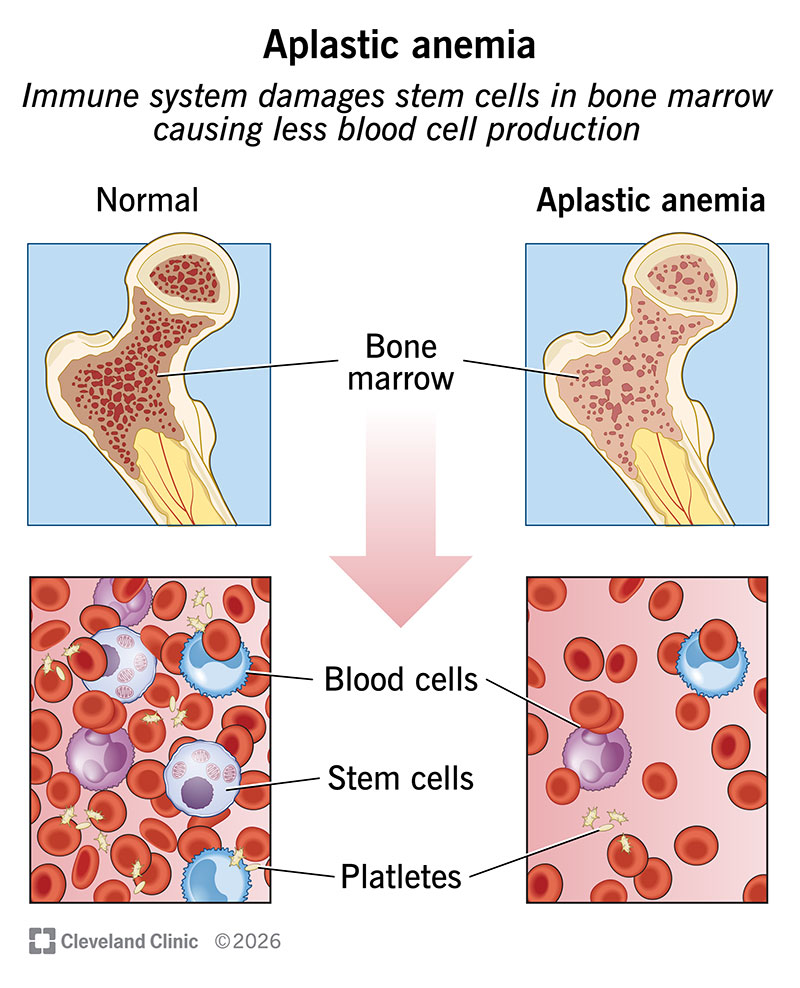
Image content: This image is available to view online.
View image online (https://my.clevelandclinic.org/-/scassets/images/org/health/articles/16747-aplastic-anemia)
Aplastic anemia is a rare but serious blood disorder. It typically happens when your immune system mistakenly damages or destroys blood stem cells in your bone marrow. Stem cells make blood cells and platelets. Without healthy stem cells, you don’t have enough blood cells and platelets.
Advertisement
Cleveland Clinic is a non-profit academic medical center. Advertising on our site helps support our mission. We do not endorse non-Cleveland Clinic products or services. Policy
Anyone can develop aplastic anemia, but it usually affects people aged 15 to 25 and those aged 60 and older. It’s very rare. The National Institutes of Health (U.S.) estimates it affects 2 out of 1 million people each year.
Some treatments can manage your symptoms or keep your immune system from attacking stem cells. But a stem cell transplant (bone marrow transplant) using donated stem cells is the only cure.
The two types are:
Symptoms typically take weeks to months to develop. Aplastic anemia symptoms may be mild, moderate or severe. Some common symptoms include:
Other, less serious issues may cause these symptoms. But you should talk to a healthcare provider if you’ve been sick for several weeks.
This condition typically happens when your immune system attacks stem cells in your bone marrow. Experts don’t know exactly what triggers the attacks. Some other causes include:
Advertisement
The rare blood disorder, paroxysmal nocturnal hemoglobinuria, and pregnancy are other potential causes.
Aplastic anemia can be life-threatening. It can lead to serious issues like:
Healthcare providers diagnose aplastic anemia by doing physical examinations, blood tests and genetic tests. Tests may include:
Treatments vary depending on your situation. Treatments include:
Treatments for more serious forms may include:
Other treatments manage issues that aplastic anemia may cause. For example, you may take antibiotics for bacterial infections. Blood transfusions may ease some symptoms.
A successful stem cell transplant may cure it. Children and people aged 40 and younger are more likely to be cured after stem cell transplant.
Some treatments cause side effects. Contact your provider if:
Advertisement
Many things may affect your prognosis, or what you can expect after treatment. In some cases, an allogeneic stem cell transplant may cure this disease. Other times, treatment may help manage symptoms and reduce your risk for complications.
Stem cell transplants and immunosuppressive therapy are helping people live longer. One study showed that, in some cases, the disease was still in remission 25 years after treatment. But many things affect life expectancy. Ask your healthcare provider what you may expect. They know you and your experience with aplastic anemia. They’re your best source of information.
No, but people with aplastic anemia may develop acute myeloid leukemia.
Aplastic anemia typically happens when your immune system destroys blood stem cells in your bone marrow. Experts aren’t sure what triggers the attacks. It can be frustrating and scary when there’s no known reason why you feel sick and tired. Fortunately, a healthcare provider can treat the condition even if they don’t know the cause. If you have aplastic anemia, they’ll outline your treatment options and explain what you can expect.
Advertisement



Sign up for our Health Essentials emails for expert guidance on nutrition, fitness, sleep, skin care and more.
Learn more about the Health Library and our editorial process.
Cleveland Clinic’s health articles are based on evidence-backed information and review by medical professionals to ensure accuracy, reliability and up-to-date clinical standards.
Cleveland Clinic’s health articles are based on evidence-backed information and review by medical professionals to ensure accuracy, reliability and up-to-date clinical standards.
Your child can get relief from pediatric aplastic anemia with personalized diagnosis and treatment at Cleveland Clinic Children’s.
