



Ovulation is when your ovary releases an egg. It happens around the 14th day of a 28-day menstrual cycle. But the exact timing can vary. There are methods to track when you’re ovulating, like checking your cervical mucus or using an ovulation predictor kit.
Advertisement
Cleveland Clinic is a non-profit academic medical center. Advertising on our site helps support our mission. We do not endorse non-Cleveland Clinic products or services. Policy
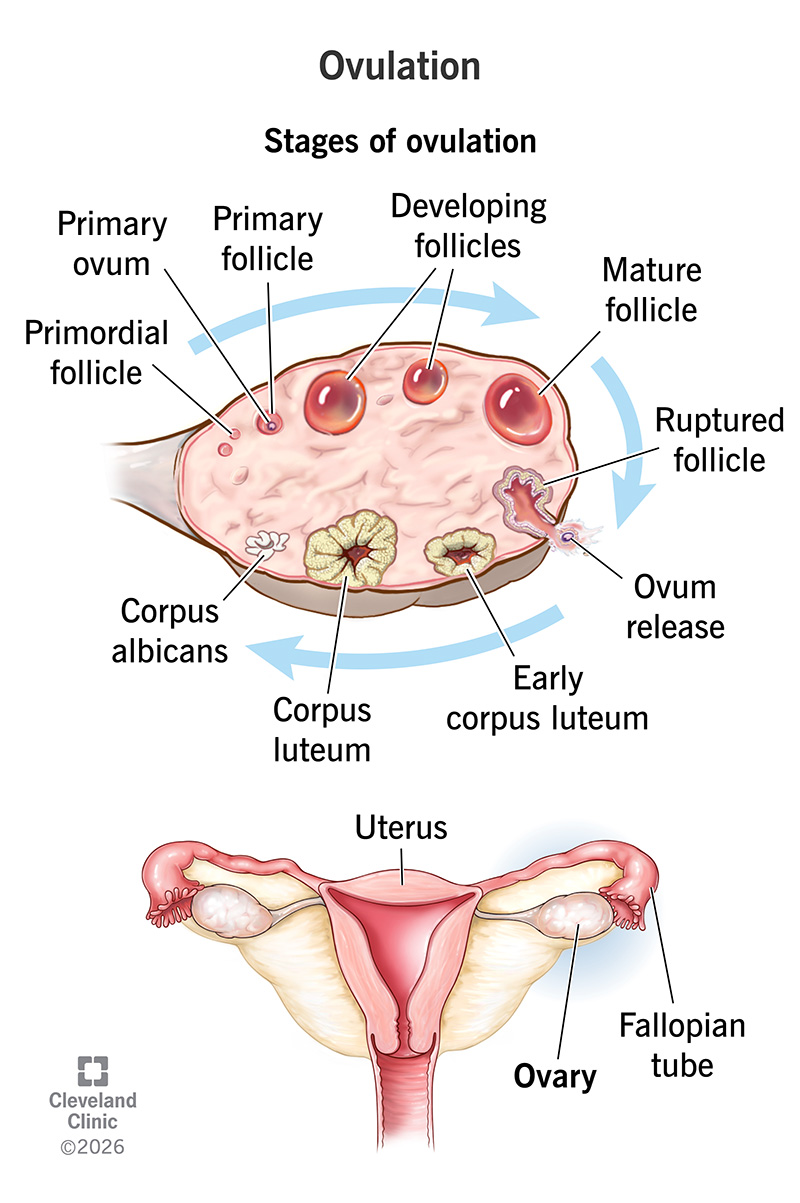
Image content: This image is available to view online.
View image online (https://my.clevelandclinic.org/-/scassets/images/org/health/articles/23439-ovulation-1)
Ovulation is a phase in your menstrual cycle when your ovary releases an egg. The egg travels down your fallopian tube, where it can be fertilized by sperm. This can start a pregnancy. On average, this happens on day 14 of a 28-day menstrual cycle (remember that day 1 is the first day of your period).
Advertisement
Cleveland Clinic is a non-profit academic medical center. Advertising on our site helps support our mission. We do not endorse non-Cleveland Clinic products or services. Policy
This is what happens:
It takes only a few seconds for your ovary to release the egg. An egg survives about 12 to 24 hours after ovulation before your body reabsorbs it. But signs and symptoms can happen for days before you ovulate.
It happens about 14 days after your period begins (if you have a 28-day cycle). The exact timing varies because everyone’s cycle length is different. A “normal” cycle is anything between 21 and 35 days, so this means ovulation is unique to you. In general, it happens about halfway through your cycle. You may find it helpful to track your menstrual cycle using an app on your phone or a calendar.
Pinpointing ovulation can be tricky. There are several ways you can track your cycle and estimate when you should ovulate.
Here are some ways you can do it:
Advertisement
Not everyone has signs or symptoms. If you do, the most common are:
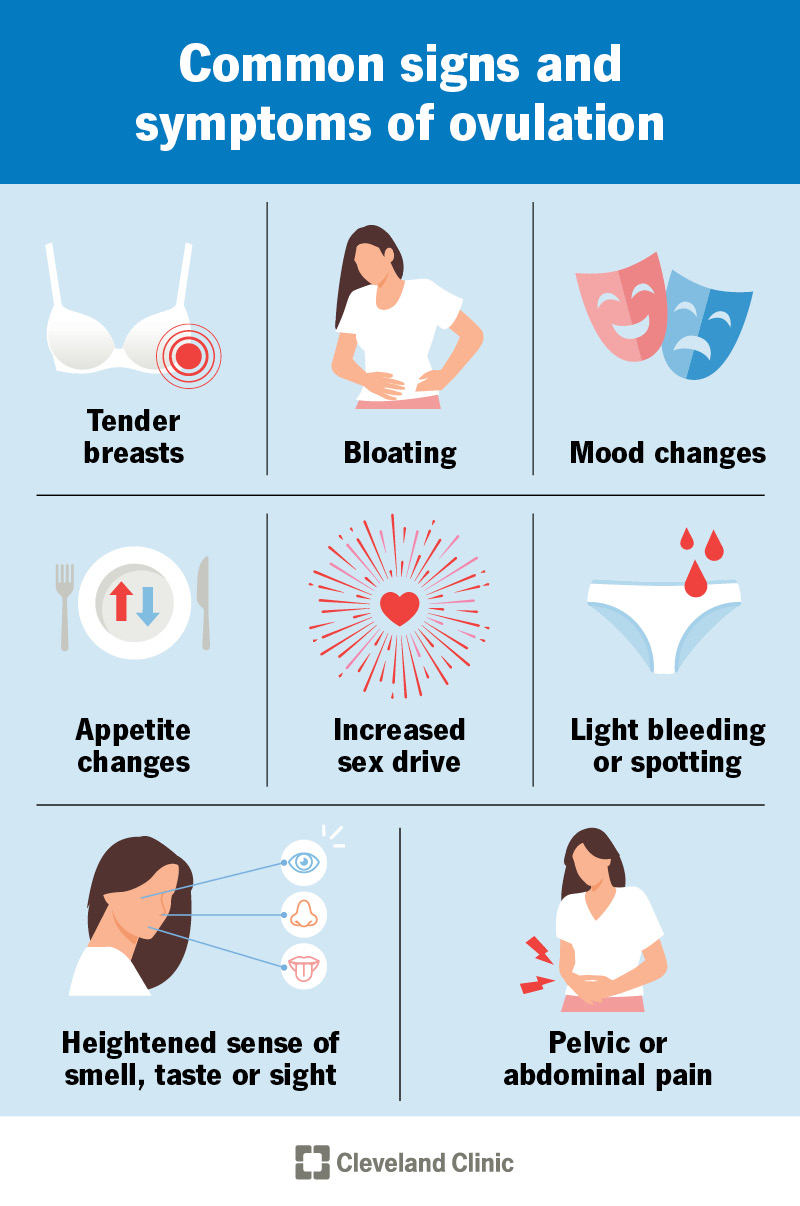
Image content: This image is available to view online.
View image online (https://my.clevelandclinic.org/-/scassets/images/org/health/articles/23439-ovulation-2)
Ovulation is when your ovary releases an egg. It happens around the 14th day of your cycle. Without ovulation, it's hard to get pregnant or have regular periods.
Yes. Ovulation pain (or Mittelschmerz) is cramping or pelvic pain that happens around ovulation. You typically feel pain in your lower abdomen and pelvis, in the middle or on one side. The pain may happen when an egg breaks out of the follicle.
Even though your egg only lives for 24 hours, sperm can live in your uterus for between three and five days. This means sex may lead to pregnancy from about five days before ovulation to one day after.
No. If you’re taking combined hormonal birth control (containing both estrogen and progesterone), then you shouldn’t ovulate. Keep in mind, this is only the case if you’re using it exactly as prescribed. The hormones in birth control work by stopping ovulation and thickening cervical mucus. If you’re taking progesterone-only birth control, you’ll continue to ovulate.
Yes. You can ovulate but not get your period. Technically, if you’re ovulating regularly, you should also get your period regularly. But it’s possible to get your period without actually ovulating and to ovulate but not have a true period.
Advertisement
Yes, there are fertility medications that help you. Talk to your healthcare provider about your symptoms and goals (like whether you wish to become pregnant). They can work with you on the best treatment.
Certain health conditions or life events may affect ovulation or cause you to stop ovulating. Some of these are:
Things like exercising too much, stress or having obesity can also affect it.
You may not be ovulating if you go months without a period (amenorrhea). Contact your healthcare provider if this happens so they can find the cause.
Ovulation is a process that happens during your menstrual cycle. The exact timing of ovulation varies from person to person and even from cycle to cycle. Without ovulation, it’s hard for you to get pregnant or have regular periods.
There are many ways to predict when you’ll ovulate. Knowing when you ovulate can help you either get pregnant or avoid a pregnancy. There are several health conditions that affect ovulation. Contact your healthcare provider if you’re worried that you’re not ovulating.
Advertisement



Sign up for our Health Essentials emails for expert guidance on nutrition, fitness, sleep, skin care and more.
Learn more about the Health Library and our editorial process.
Cleveland Clinic’s health articles are based on evidence-backed information and review by medical professionals to ensure accuracy, reliability and up-to-date clinical standards.
Cleveland Clinic’s health articles are based on evidence-backed information and review by medical professionals to ensure accuracy, reliability and up-to-date clinical standards.
From routine pelvic exams to high-risk pregnancies, Cleveland Clinic’s Ob/Gyns are here for you at any point in life.
