



Postural orthostatic tachycardia syndrome (POTS) is a condition that causes a number of symptoms when you transition from lying down to standing up, such as a fast heart rate, dizziness and fatigue. While there’s no cure, several treatments and lifestyle changes can help manage the symptoms of POTS.
Advertisement
Cleveland Clinic is a non-profit academic medical center. Advertising on our site helps support our mission. We do not endorse non-Cleveland Clinic products or services. Policy
Postural orthostatic tachycardia syndrome (POTS) is a condition that causes your heart to beat faster than normal when you go from sitting or lying down to standing up. It’s a type of orthostatic intolerance.
Advertisement
Cleveland Clinic is a non-profit academic medical center. Advertising on our site helps support our mission. We do not endorse non-Cleveland Clinic products or services. Policy
Each word of POTS has a meaning:
Normally, your body’s autonomic nervous system balances your heart rate and blood pressure to keep your blood flowing at a healthy pace, no matter what position your body is in. If you have POTS, your body can’t balance blood vessel constriction (squeezing) and heart rate response. This means that your body can’t keep blood flow to your brain and other organs steady and stable. This causes a variety of symptoms.
Each case is different. You may see symptoms come and go over a period of years. In most cases, changes in diet, medications and physical activity can improve quality of life.
POTS is fairly common. It affects over 500,000 people in the United States alone. Most people with POTS are females aged 15 to 50 years. But males can also have the syndrome.
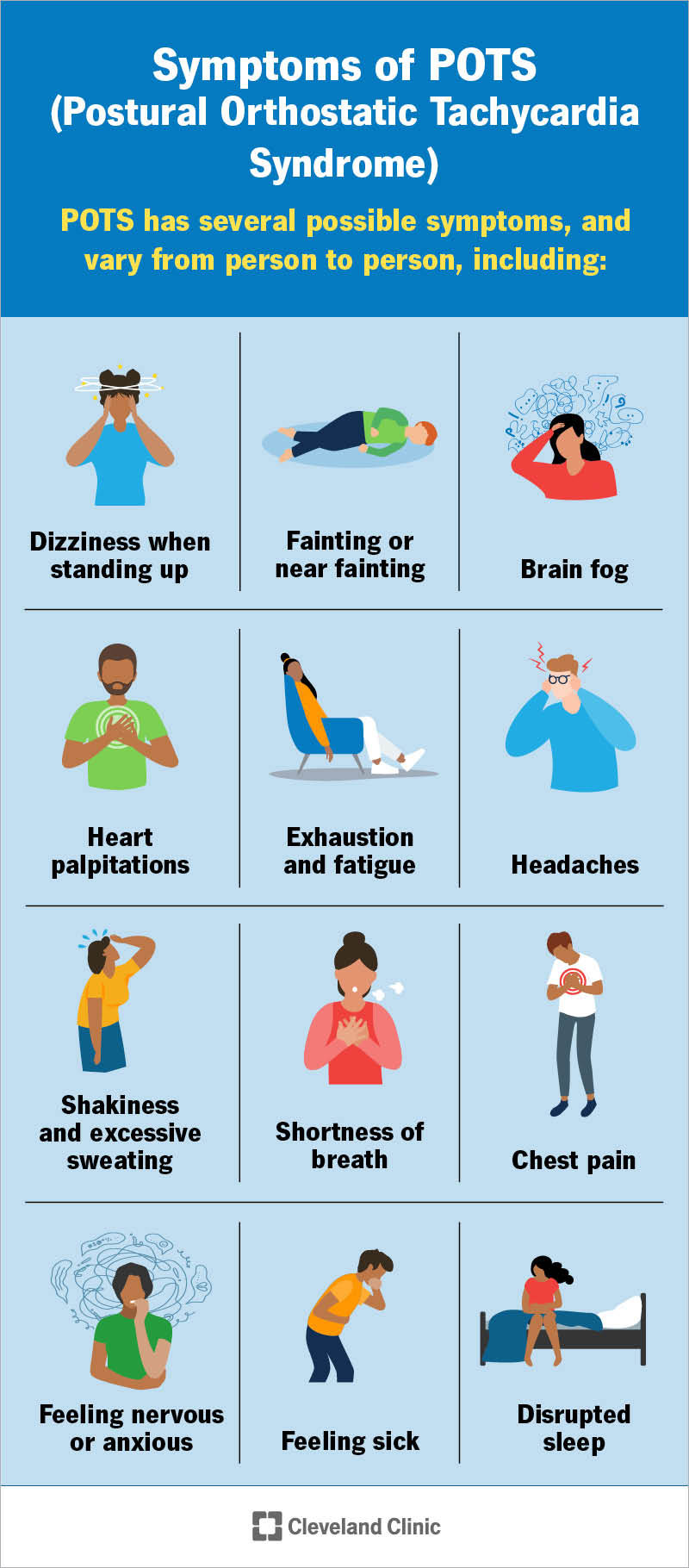
Image content: This image is available to view online.
View image online (https://my.clevelandclinic.org/-/scassets/images/org/health/articles/pots)
You can develop POTS suddenly or gradually. Symptoms happen immediately or a few minutes after sitting up or standing. Lying down may help them go away.
POTS has several possible symptoms, and they vary from person to person. They may include:
Advertisement
Certain situations can trigger POTS symptoms or make them worse, like:
Researchers aren’t sure what causes POTS. Multiple factors may lead to it. They’ve grouped POTS into different types, including:
Researchers are still learning about this condition. There’s growing evidence that the syndrome might be an autoimmune disease. A few studies have also looked at a potential genetic cause of POTS. They found a change in the SLC6A2 gene that may play a role.
You’re at higher risk of developing POTS if you have:
The following stressors may trigger the development of POTS:
While POTS isn’t life-threatening, it can greatly interfere with daily living and tasks. Simple activities, like showering, standing to cook or walking up stairs, can trigger symptoms.
The biggest physical risk is getting hurt if you faint and fall.
POTS can be difficult to diagnose due to the many symptoms that can occur over time. You may have symptoms for months to years before finally being diagnosed with the condition.
A healthcare provider will ask questions about your symptoms, medications and medical history. They’ll also do a physical exam.
Advertisement
A tilt table test is the main way providers diagnose POTS. It measures your heart rate and blood pressure as you change posture and position.
Your provider may suggest other tests to help confirm a POTS diagnosis or rule out other possible causes of your symptoms. These tests include:
There’s no cure for POTS. Instead, healthcare providers use several strategies to manage the symptoms. They tailor the treatment plan based on your symptoms and what works best for you.
The main forms of treatment include physical activity and nutrition changes. Compression therapy can also help push blood up from your legs to help reduce symptoms.
Exercise and physical activity are key to managing POTS.
Your provider may recommend a cardiac rehab program (even if you have a healthy heart). This exercise program helps recondition your cardiovascular system. Some of the best data for treating POTS comes from cardiac rehab.
Advertisement
Reclined aerobic exercises, like swimming, rowing and recumbent bicycling, are often the most beneficial. Strengthening your core and leg muscles also helps.
Your provider will give you specific instructions. But here are some things to keep in mind as you start to move your body:
Adjusting how you eat and drink is another important part of managing POTS symptoms.
If you have the hypovolemic (low blood volume) form of POTS, your healthcare provider may suggest increasing your fluid and salt intake. This increases the amount of blood in your body.
Advertisement
Eating a large meal can make symptoms of POTS worse. This is because your body redirects a lot of blood to aid in digestion. So, providers often recommend eating several smaller meals throughout the day instead of two or three large ones.
A dietitian can help you with an eating plan. General guidelines for dietary changes include:
POTS can disrupt your sleep. Because sleep is very important for overall health, you should prioritize it.
It may help to raise the head of your bed six to 10 inches to help alleviate symptoms. The entire bed must be at an angle. Raising the head of the bed will increase fluid volume in your circulation in the morning. This may help you wake up more easily.
Practicing proper sleep hygiene can also help. Talk to your provider if POTS is significantly disrupting your sleep.
The U.S. Food and Drug Administration (FDA) doesn’t approve any medications for POTS treatment. But providers sometimes prescribe medications to help certain symptoms.
These medications may include:
All these medications have potential side effects. Your provider will work with you to see if medication is right for you.
The prognosis (outlook) is generally good. People with POTS have a typical life expectancy. But it can severely disrupt daily living. This can take a toll on your mental health.
POTS symptoms may come and go for years. In about 8 out of 10 cases, the condition improves. But many people have symptoms that remain.
No two people with POTS are affected in the same way. So, it may take time to figure out what treatments work for you. Having a care team that specializes in POTS can help.
Postural orthostatic tachycardia syndrome can be challenging to live with. Here are some things you can do to help take care of yourself:
Knowing your triggers can help you manage POTS. Some general guidelines for preventing flare-ups include:
A POTS (postural orthostatic tachycardia syndrome) diagnosis often means changing how you go about your day — from staying hydrated and getting enough salt to moving slowly. This can feel like a lot. Finding a routine and treatment plan that eases your symptoms can take time. But it’s possible. Your healthcare team will be your guide. Lean on them — and loved ones — for support.



Sign up for our Health Essentials emails for expert guidance on nutrition, fitness, sleep, skin care and more.
Learn more about the Health Library and our editorial process.
Cleveland Clinic’s health articles are based on evidence-backed information and review by medical professionals to ensure accuracy, reliability and up-to-date clinical standards.
Cleveland Clinic’s health articles are based on evidence-backed information and review by medical professionals to ensure accuracy, reliability and up-to-date clinical standards.
Postural orthostatic tachycardia syndrome (POTS) can get in the way of your daily life. At Cleveland Clinic, our experts can create a treatment plan that helps.
